Obesity Increases the Risk of Metabolic Diseases
Ptosis Raises the Risk of Headaches, Fatigue, and Safety Accidents
During the Lunar New Year holidays, when you see family for the first time in a while, it is worth paying close attention to weight gain or drooping eyelids that you may have usually dismissed as "just getting older." Experts explain that these changes may be signs of diseases that require treatment, rather than simple aging.

According to Professor Park Daegeun of the Division of Gastrointestinal Surgery at Kyung Hee University Hospital on the 17th, body weight and abdominal obesity are health indicators that are directly linked to quality of life, regardless of age. Not all obesity can be resolved solely through personal willpower or lifestyle changes. If weight continues to increase despite exercise and dietary control, or if you have severe obesity with a body mass index (BMI) of 35 or higher, it should be recognized as a "disease" that is difficult to manage with personal efforts alone.
Professor Park said, "In cases of severe obesity, the long-term weight-loss effect of exercise, diet, and medication can be limited, and people may experience yo-yo weight regain or discomfort from the side effects of medication and dietary therapy," adding, "Most importantly, it can trigger various metabolic diseases such as diabetes and hypertension, which not only reduce quality of life but can also be life-threatening, so active treatment is necessary."
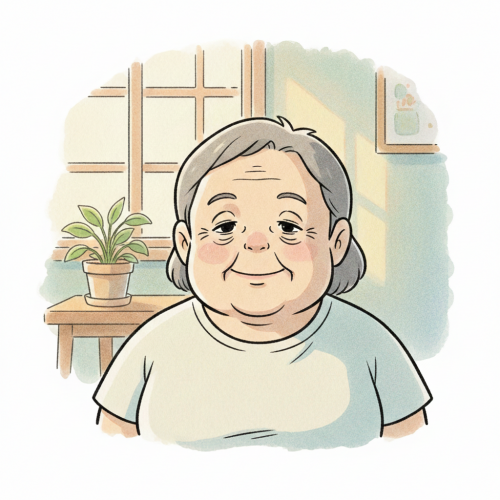 Experts advise that weight gain and drooping eyelids may be early signs of a disease rather than mere effects of aging. AI-generated image
If you have severe obesity (BMI of 35 or higher) along with comorbidities such as diabetes or hypertension, you should consider surgical treatment after consulting with a specialist medical team. In Korea, severe obesity surgery has been covered by the national health insurance system since 2019.
Professor Park said, "The representative surgical methods are sleeve gastrectomy and Roux-en-Y gastric bypass," and added, "Both procedures are highly effective for weight loss and improvement of metabolic diseases, but each has advantages and disadvantages, so consultation with a specialist to match the procedure to the patient's condition and comorbidities is essential."
In a sleeve gastrectomy, part of the stomach is removed to limit food intake and induce early satiety; the operation time is about two hours, making it relatively simple, and it has little impact on endoscopic examinations. Roux-en-Y gastric bypass creates a small stomach pouch and connects it to the small intestine, and can be considered when there are comorbidities such as diabetes.
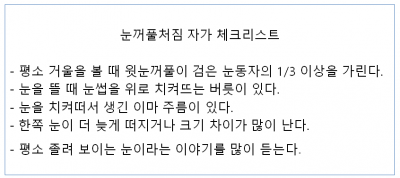
Just as noticeable as changes in body shape is drooping of the eyelids. Ptosis caused by aging is often regarded merely as an issue of looking sleepy, but in reality it is a condition that can affect the visual field and everyday safety.
When the eyelids block the visual field, people unconsciously tense the forehead muscles. This can lead to headaches, eye fatigue, and neck and shoulder pain. In severe cases, it can cause visual field impairment, increasing the risk of accidents while walking.
Professor Park Inki of the Department of Ophthalmology at Kyung Hee University Hospital said, "Ptosis is a condition in which the upper eyelid abnormally droops when looking straight ahead, so that only about half of the black pupil is visible," adding, "It is often left untreated because people think it is merely a cosmetic issue, but treatment approaches differ depending on the symptoms and causes, so an accurate diagnosis is necessary."
The most common cause of ptosis is weakening of the levator muscle that lifts the upper eyelid. When the eyelids droop, the upper part of the visual field is blocked, and in trying to compensate, people open their eyes wider, which makes them feel fatigued more easily. The goal of surgery is to align the height of both eyelids when looking straight ahead, and temporary discomfort may occur when looking downward or closing the eyes after surgery, so preoperative consultation and thorough explanation are important.
Professor Park said, "It is important to distinguish between age-related eyelid skin laxity and ptosis," adding, "If there is only skin laxity, it can be improved with a relatively simple operation, and if necessary, it can be performed at the same time as double-eyelid surgery."
© The Asia Business Daily(www.asiae.co.kr). All rights reserved.
![Clutching a Stolen Dior Bag, Saying "I Hate Being Poor but Real"... The Grotesque Con of a "Human Knockoff" [Slate]](https://cwcontent.asiae.co.kr/asiaresize/183/2026021902243444107_1771435474.jpg)


















