Full-Fledged Researcher-Led Startups Based on Original Technologies from Government-Funded Institutes
Selected in Semiconductors, Bio, AI, and Other Fields
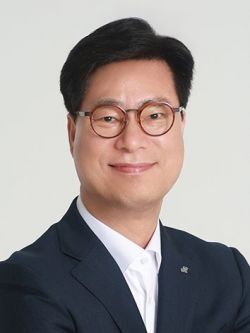
The National Research Council of Science & Technology (NST) and Korea Science & Technology Holdings (KST) have selected nine preliminary startup teams for the 3rd cohort of the "Deep Tech Startup Planning Challenge Program for Government-Funded Research Institutes" and begun full-scale support.
As of February 12, according to NST, the selected preliminary founders are: ▲ Nam Kihwan (Korea Research Institute of Standards and Science - Next-generation non-clinical alternative testing technology based on biomimetic micro-physiological systems) ▲ Lee Kyungryun (Korea Research Institute of Bioscience and Biotechnology - Converged AI-based non-clinical data interpretation and prediction service for pharmaceutical and bio companies) ▲ Woo Euijeon (Korea Research Institute of Bioscience and Biotechnology - Protein therapeutics for suppressing colorectal cancer and AI-based protein design platform) ▲ Lee Daehun (Korea Institute of Machinery and Materials - Low-cost clean hydrogen-ammonia and high-value-added carbon material production platform) ▲ Jung Heon (Korea Institute of Energy Research - Bio-jet fuel production and biomass pyrolysis oil gasification and liquefaction technology) ▲ Kang Changgu (Korea Atomic Energy Research Institute - Advanced semiconductor packaging convergence-type startup item) ▲ Yoo Seungnam (Korea Atomic Energy Research Institute - Virtual-environment-based universal robot control and analysis solution) ▲ Cho Sangjin (Korea Atomic Energy Research Institute - Precision position control device for mechanical robots) ▲ Lee Minyoung (Korea Institute of Materials Science - Plasmonic microarray liquid biopsy diagnostic platform).
Deep-tech startups originating from government-funded research institutes are a technology-based startup model in which researchers directly pursue commercialization based on the research achievements of government-funded research institutions.
NST explained that the 3rd cohort of preliminary startup teams was selected through a comprehensive evaluation of technological excellence, marketability, and commercialization potential, focusing on cutting-edge technology fields such as semiconductors, bio, AI, robotics, and energy.
The program upgrades the startup ideas of researchers who possess technologies from government-funded research institutes into business models (BMs), and supports the entire startup life cycle, including team building, linkage with government support programs, incorporation, and investment connections. For each selected team, a dedicated working group will be formed with participation from the technology licensing office (TLO) of the relevant institute, KST, and private expert organizations to provide close support for establishing technology commercialization strategies, and for IP, regulatory, and market consulting, as well as preparing IR packages.
Starting with this cohort, the program will run an industry-demand-based open innovation (OI) matching-type startup planning track in parallel with the open call format. By introducing a "bottom-up" collaboration model that discovers demand-side companies around the technologies held by researchers, the program aims to strengthen links to demonstration and commercialization.
Kim Youngsik, Chairman of the National Research Council of Science & Technology, said, "By providing close support to the teams selected for the 3rd cohort and discovering preliminary founders starting from industrial demand, we will revitalize the deep-tech startup ecosystem of government-funded research institutes and strengthen practical startup connections that simultaneously take technology and the market into account."
© The Asia Business Daily(www.asiae.co.kr). All rights reserved.
















