First Luncheon in Five Months Since September Meeting Last Year
Prices, Exchange Rate, Real Estate, and Korea?US Tariff Negotiations Expected on the Agenda
Bipartisan Cooperation Likely to Be Urged Over Delays in Legislative Procedures Including the
On February 12, President Lee Jaemyung will invite Jung Cheongrae, leader of the Democratic Party, and Jang Donghyuk, leader of the People Power Party, to the Blue House for a luncheon meeting. As the ruling and opposition parties have continued to confront each other over issues such as the second comprehensive special counsel, judicial reform, prosecutorial reform, the Administrative Integration Act, and the confirmation hearing for the candidate for Minister of the Ministry of Planning and Budget, this move is seen as an attempt to send a message of "unity and cooperation" ahead of the Lunar New Year holidays. In particular, he is expected to call for bipartisan cooperation to overcome difficulties in state affairs caused by delays in various legislative procedures, including the passage of a special act for managing strategic investment between South Korea and the United States (the Special Act on Investment in the United States).
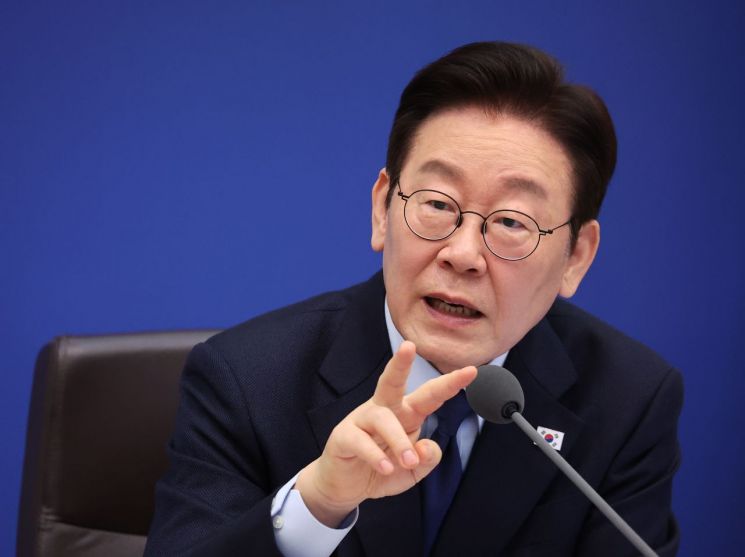
According to the Blue House, this meeting, arranged at the invitation of President Lee, was prepared as an opportunity to discuss ways for bipartisan cooperation to restore people’s livelihoods and stabilize state affairs. As President Lee has said he will not limit the agenda and will discuss measures for bipartisan cooperation, a candid exchange of views on overall state affairs is expected.
This luncheon meeting comes about five months after the luncheon between the leaders of the ruling and opposition parties on September 8 last year. At that time, they agreed in principle to form a "ruling-opposition-government council on people’s livelihoods and the economy," but no meaningful progress has been made as confrontation over key pending issues has continued since then.
In this meeting, political circles expect that, since Jang has publicly raised issues such as prices and exchange rates, real estate in the Seoul metropolitan area, responses to U.S.-driven trade pressure, and the push for a special counsel as open agenda items in his recent speech as leader of the negotiation bloc, these related issues are highly likely to be brought up intensively at the luncheon as well. In fact, during his visit the previous day to Korea Energy Engineering University in Naju, South Jeolla Province, Jang said, "One of the biggest pending issues is tariffs and administrative integration," adding, "Ahead of the holidays, I will candidly share views on various issues that are tightening the lives of ordinary people, such as prices, exchange rates, and real estate problems."
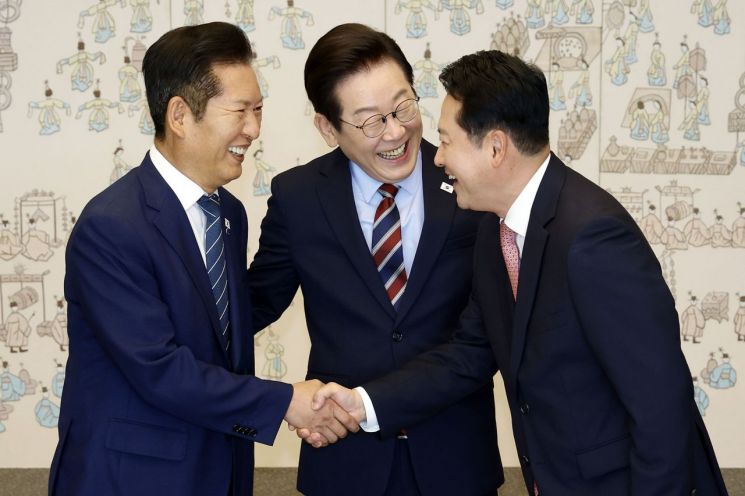 In September of last year at the Yongsan Presidential Office, President Lee Jaemyung, Jeong Cheongrae, leader of the Democratic Party (left), and Jang Donghyuk, leader of the People Power Party, were meeting and exchanging greetings ahead of a luncheon. Yonhap News
The president and the ruling party are expected to ask for the opposition’s cooperation on the Special Act on Investment in the United States, on real estate stabilization measures, and on legislation related to strengthening essential medical services. Regarding the Special Act on Investment in the United States, which is the most pressing issue, the ruling and opposition parties have set a goal of finalizing the members of the special committee and passing the bill by as early as the end of this month, but it remains uncertain whether discussions will proceed smoothly. The People Power Party has consistently argued that the memorandum of understanding (MOU) concluded between South Korea and the United States requires ratification by the National Assembly.
President Lee is highly concerned about the National Assembly’s legislative procedures needed to implement national policy tasks. In various meetings, including Cabinet meetings, he has repeatedly pointed to the National Assembly’s slow legislation, saying, "At the current legislative pace, it is difficult to respond proactively to changes in the international community." At this meeting as well, he is highly likely to once again emphasize bipartisan cooperation to resolve the "legislative bottleneck." The special committee plans to hold its first plenary session on this day to vote on the election of its chair and the appointment of its secretary. It will also receive briefings on pending issues from relevant agencies such as the Ministry of Finance and Economy and the Ministry of Trade and Industry.
Tensions between the ruling and opposition parties continue over the "second comprehensive special counsel," and the legislative battle over judicial and prosecutorial reform is also ongoing. The ruling party has already announced its policy of speeding up the handling of "reform legislation" during the provisional National Assembly session in February, including judicial reform bills and bills related to the establishment of the Public Prosecution Service and the Serious Crimes Investigation Agency. The schedule surrounding the Administrative Integration Act is also tight. On February 9, the National Assembly’s Public Administration and Security Committee held public hearings on special bills on administrative integration by region, including Daejeon-South Chungcheong, Gwangju-South Jeolla, and Daegu-North Gyeongsang, and began deliberations. The ruling and opposition parties have set a target of holding the bill review subcommittee on the 10th and 11th and adopting the bill at the plenary committee meeting on the 12th. As Prime Minister Kim Minseok has said, "Realistically, if the relevant laws do not pass the plenary session by the end of February, integration before the local elections will be impossible," there is not much time left.
Lee Guyoun, Senior Presidential Secretary for Public Relations and Communication, appeared on MBC Radio on the 11th and said, "Overall, the legislative pace of the 22nd National Assembly is not fast compared to the historical average. President Lee must be frustrated with that aspect," adding, "He seems to feel a certain sense of urgency." He went on to say, "In the early days of an administration, livelihood-related bills or reform bills must be pushed through quickly," explaining, "It is difficult to do those things in the latter part of a term."
Meanwhile, the "one-on-one meeting between the president and the opposition party leader" that Jang has been calling for is unlikely to materialize at this meeting. In a briefing on the 11th, Blue House Chief of Staff Kang Hunsik drew a line on the possibility of such a one-on-one, saying, "At this point, communication between the two parties is more important."
© The Asia Business Daily(www.asiae.co.kr). All rights reserved.


















