Korea Customs Service, Export and Import Trends for February 1-10
Semiconductor Exports Up 137.6%
Buoyed by the semiconductor boom, exports in February are on an upward trend. As of the 10th of this month, semiconductor exports had increased by more than 137%, driving overall export growth.
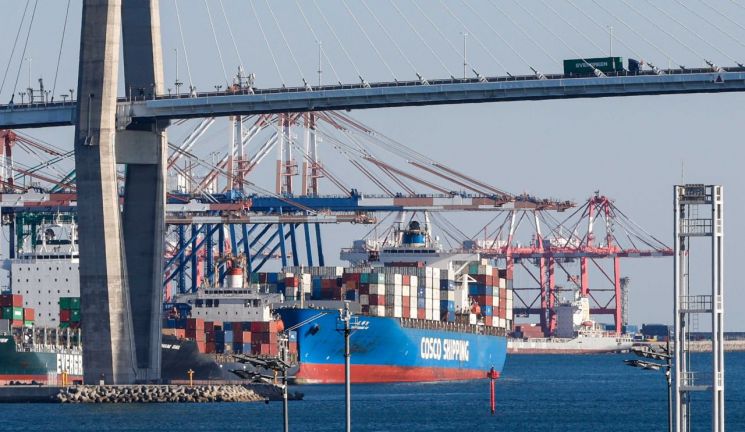
According to the export and import statistics for February 1 to 10 released by the Korea Customs Service on the 11th, exports amounted to 21.4 billion dollars, up 44.4% from the same period a year earlier.
The number of working days was 7.5, which is 0.5 days more than the 7.0 days recorded in the same period last year. Taking this into account, average daily exports came to 2.85 billion dollars, an increase of 34.8%.
By item, compared with the same period a year earlier, exports increased for semiconductors (137.6%), petroleum products (40.1%), steel products (29.3%), wireless communication devices (27.9%), and computer peripherals (90.2%). In contrast, exports of passenger cars (-2.6%) and ships (-29.0%) declined. With semiconductor exports rising sharply, the share of semiconductors in total exports reached 31.5%, expanding by 12.3 percentage points.
Exports to all of the top 10 trading partners increased. Compared with the same period a year earlier, exports to China rose 54.1%, while exports to the United States (38.5%), Vietnam (38.1%), the European Union (EU, 12.2%), Taiwan (101.4%), Japan (31.1%), Malaysia (136.1%), and India (35.1%) also increased.
Imports for February 1 to 10 amounted to 20.7 billion dollars, up 21.1% from the same period a year earlier. Among the top 10 major items, imports increased for 7 items, including semiconductors (32.2%), semiconductor manufacturing equipment (69.1%), and precision instruments (22.0%), while only 3 items saw declines: crude oil (-19.7%), gas (-2.2%), and petroleum products (-14.1%). Imports of energy sources such as crude oil, gas, and coal fell by 11.9%. By country, imports from 9 major partners increased, including China (65.5%), the EU (39.4%), the United States (4.0%), and Japan (0.5%), while imports from Saudi Arabia declined (-30.3%).
As of the 10th of this month, the trade balance recorded a surplus of 644 million dollars. Including this, the cumulative trade surplus for the year reached 9.359 billion dollars.
Although exports are performing well this month, it remains to be seen whether the growth trend will be maintained for February as a whole. Due to the Lunar New Year holidays, the total number of working days in February is 19, which is 3 days fewer than the 22 days recorded in the same period last year.
Meanwhile, exports in January this year rose 33.9% year-on-year to 65.85 billion dollars, marking eight consecutive months of growth since June last year.
© The Asia Business Daily(www.asiae.co.kr). All rights reserved.
![Clutching a Stolen Dior Bag, Saying "I Hate Being Poor but Real"... The Grotesque Con of a "Human Knockoff" [Slate]](https://cwcontent.asiae.co.kr/asiaresize/183/2026021902243444107_1771435474.jpg)











