Mobile Lotto sales resume after 24 years
But the "lucky spot" illusion still drives 70,000 weekly ticket sales
"Despair over asset markets pushes people into small-money, high-risk bets"
"I went all-in on Nvidia and now I can't sleep. I don't even want to look at Bitcoin."
On the afternoon of the 9th, at a Lotto retailer in Sanggye-dong, Nowon-gu, Seoul. Despite sub-zero temperatures, a long line of people holding cash instead of smartphones stretched out in front of the shop. Starting that day, mobile sales of Lotto were permitted for the first time in 24 years, ushering in an era of "at-home purchases," but the fever for so-called "lucky spots" remained as strong as ever. At this outlet alone, about 80,000 tickets are sold per week, and about 320,000 per month. Thanks to its track record of producing 55 first-prize winners and 252 second-prize winners, nearby roads become gridlocked with cars lined up to buy tickets on weekends.
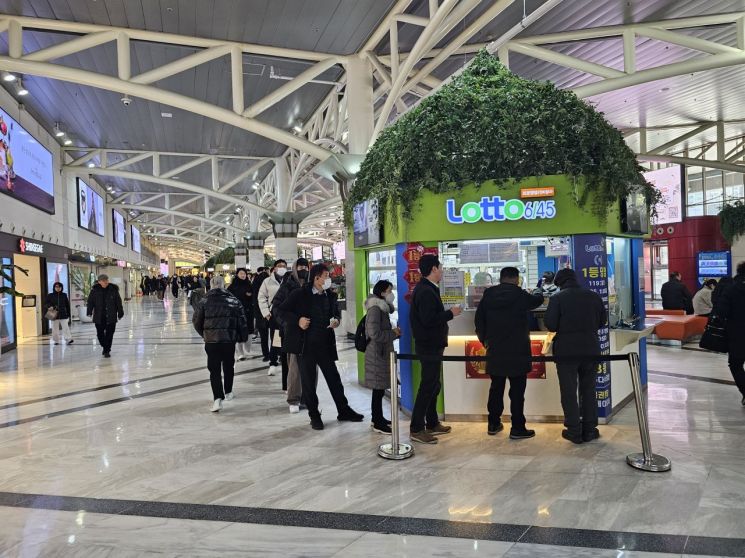 On the afternoon of the 6th, a long line of people waiting to buy lottery tickets stretched in front of a Lotto sales outlet inside the Express Bus Terminal in Seocho-gu, Seoul. Although mobile purchases of Lotto were permitted for the first time in 24 years, offline outlets known as 'lucky spots' continued to draw visitors. Photo by Park Hosu
The reason people are braving the cold and the inconvenience instead of choosing the "convenience of mobile" seems to lie in their expectations about the "energy of a lucky spot." Office worker Noh Taejin (45) said, "I have this vague, uneasy feeling that there might be some kind of manipulation with mobile," adding, "If I'm going to buy anyway, it only feels like it's truly mine when I draw a paper ticket at a place known for good luck."
Another change visible on site was the influx of younger customers, drawn by their expectations of these lucky spots. The "Lotto line," once considered the domain of middle-aged and older people, has now seen a large influx of people in their 20s and 30s. A staff member at the outlet said, "We have seen a noticeable increase in young customers, and the purchase rate of 'Speetto' scratch tickets, which allow you to check the result on the spot, has also risen sharply."
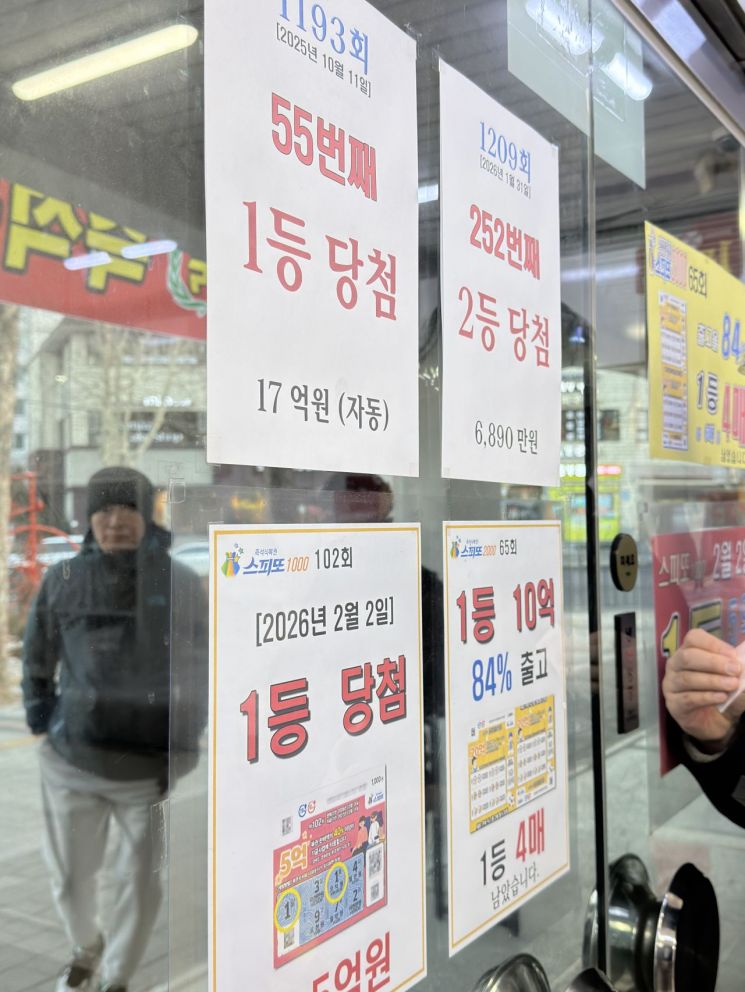 A history of past winners is posted on the glass window of a Lotto retailer in Sanggye-dong, Nowon-gu, Seoul. This place is known as a lottery hotspot for having produced 55 first-prize winners and 252 second-prize winners. Park Hosu, Reporter
Even though Lotto mobile sales have begun for the first time in 24 years, making purchases much more convenient, people are still flocking to offline lucky spots without letup. Analysts say that behind the scenes of people enduring the cold and inconvenience to stand in line lies a sense of fatigue toward asset markets and a psychology of turning to probability in the face of an uncertain future.
According to Donghaeng Lottery, the lottery operator, lottery sales last year reached 6.7507 trillion won, the highest level on record. From 4.1538 trillion won in 2017, sales jumped by 13% to the 5.4 trillion won range in 2020, the first year of COVID-19, and have set new records every year since. Paradoxically, the size of a "big score" has been shrinking. While total sales have hit record highs, the number of winners has increased, pushing the first-prize payout down to about 1.4 billion won after tax. There is a nearly fourfold gap between what the public considers an appropriate winning amount (5.22 billion won) and the actual payout.
The psychology of seeking out lottery lucky spots is analyzed as stemming from real-world anxiety. Choi Chul, a professor in the Department of Consumer Economics at Sookmyung Women's University, said, "The reason there are many winners at so-called lucky spots is simply because their sales volume is overwhelming; the location itself has nothing to do with probability," adding, "It reflects a growing tendency among people who lack realistic alternatives to cling to something to rely on."
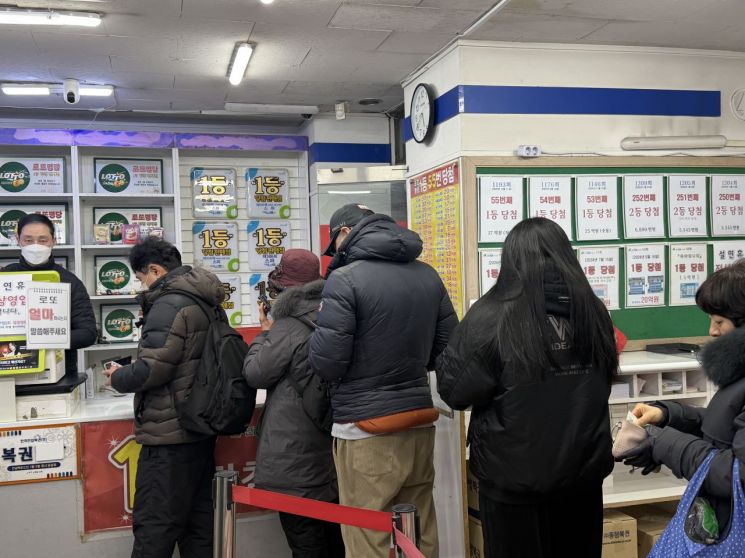
In particular, the rush of young people to lucky spots is rooted in a sense of despair about the asset market. Office worker Na (36), whom we met at a famous lucky spot in the Express Bus Terminal area in Seocho-gu, Seoul, said, "After losing my monthly salary in coins, all I was left with was a sense of emptiness," confessing, "Stocks burn you even if you study them, but Lotto's simplicity of 'either nothing or a win' is strangely comforting."
Yang Joonmo, an economics professor at Yonsei University, defined this as a "paradox of buying risk." He said, "Ordinary people usually spend money to avoid risk, but now we are in the paradoxical situation where they are paying money to buy probability," and pointed out, "With real estate far too expensive, and stocks and coins instilling fear that you could lose a large sum of money, the public is being pushed into the swamp of 'small-money, high-risk' bets."
© The Asia Business Daily(www.asiae.co.kr). All rights reserved.
![Clutching a Stolen Dior Bag, Saying "I Hate Being Poor but Real"... The Grotesque Con of a "Human Knockoff" [Slate]](https://cwcontent.asiae.co.kr/asiaresize/183/2026021902243444107_1771435474.jpg)


















