Defendant's DNA Detected on Insulating Tape
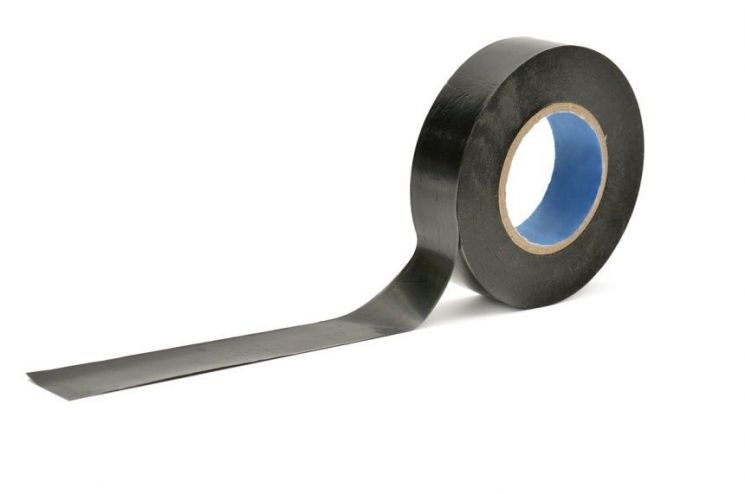
The decisive piece of physical evidence that proved guilt in the 'Ansan couple robbery-murder' case, which had remained unsolved for 25 years, was a 'black insulation tape' that initially drew little attention. Because it bore no fingerprints or bloodstains, this tape had not been regarded as important evidence at the time. However, the police collected it at the scene and kept it in storage, and it later became the key to solving this long-term cold case.
Court: "The defendant, who has no potential for rehabilitation, must be isolated from society"
According to Yonhap News on the 10th, the 12th Criminal Division of the Jeonju District Court (Presiding Judge Kim Dohyung) sentenced Mr. Lee (45), who had been indicted on charges of robbery-murder, to life imprisonment. The court stated, "There is a need to permanently isolate the defendant from society, as he has no potential for rehabilitation or reformation."
The key issue in this trial was the admissibility of the black insulation tape found at the crime scene. Since this tape, on which Lee's DNA was detected, was effectively the only physical evidence proving the crime, prosecutors and Lee's defense counsel had engaged in an intense legal battle over it.
On this day, the court systematically refuted Lee's arguments that "the police suddenly inserted a tape that had not been at the scene as evidence" and that "the tape may have been contaminated or damaged over time." First, regarding the claim that the tape had not been at the crime scene, the court explained, "If you look at the seizure report prepared by the police on the day of the incident, this tape is listed in the inventory," adding, "Also, in the photographs taken of the scene, you can see a black bundle that appears to be that tape placed on the sofa, from which the police officer is said to have collected it."
As for the possibility of contamination or damage to the tape, the court said, "Because there were no bloodstains or fingerprints on the tape, it was considered low-priority evidence in the early stages of the investigation," and continued, "The police say they put five pieces of evidence into a zipper bag, then placed that inside a plastic bag to prevent contamination, stored it in the evidence room, and later sent it to the National Forensic Service. This is consistent with the testimony of the National Forensic Service researcher."
Lee's claim that he had "never even been to Ansan" was also not accepted. The court found this unconvincing based on his past criminal record and records of visits to administrative agencies. The court stated, "The defendant already has a record of climbing gas pipes and committing crimes of rape, robbery, and theft in Jeonju, North Jeolla Province, and throughout the Gyeonggi Province area," and pointed out, "In addition, in 2001, the year the crime occurred, he obtained a seal certificate in Wongok-dong, Danwon-gu, Ansan-si, and on September 8 of that year, the day of the crime, he filed a vehicle transfer registration report in Ansan." When the court rejected all of his claims and ordered his permanent isolation, Lee gave a brief reply of "Yes" and followed the correctional officer back to the detention center.
The 'Ansan couple robbery-murder' case from 25 years ago that nearly remained a cold case
The crime occurred at around 3 a.m. on September 8, 2001, at a multiplex housing unit in Gojan-dong, Danwon-gu, Ansan-si. Lee was indicted on charges of climbing a gas pipe with an accomplice to break in, stabbing a married couple, Mr. A (then 37) and his wife, who were sleeping in the master bedroom, with a weapon, and then fleeing. He stabbed Mr. A, the husband who fiercely resisted after seeing the intruders, more than 20 times in the neck, heart, and other areas, killing him. He also stabbed Mr. A's wife (then 33) with a weapon, inflicting severe injuries, and they fled after stealing 1 million won in cash.
The case remained unsolved for a long time, but the investigation was reopened in July 2015 after an amendment to the Criminal Procedure Act abolished the statute of limitations for robbery-murder. With advances in forensic science, the police and prosecution subsequently identified Lee, who was serving a 13-year prison sentence after being convicted of aggravated rape in 2017, as a suspect. The decisive clue was the black insulation tape collected from the scene at the time. The DNA detected on this tape became the lead that revealed the truth of a 25-year-old cold case.
© The Asia Business Daily(www.asiae.co.kr). All rights reserved.


















