President Lee Jaemyung: "If One Person Buys Hundreds of Homes, Shortages Are Inevitable"
Registered Rental Business Incentives Cut as Stock Declines
Attention on Whether Units Registered Around 2018 Will Hit the Market
President Lee Jaemyung has pointed out problems with privately owned purchase-based rental housing. Purchase-based rental is a method in which existing homes are bought and then supplied to tenants, allowing for short-term supply, and it has been actively utilized by public institutions such as Korea Land and Housing Corporation (LH). It appears that pressure is now being extended from multi-homeowners to private rental business operators as well.
On the 8th, President Lee wrote on X (formerly Twitter), "If we allow a single person to buy up and accumulate hundreds of homes, then no matter how many tens of thousands of homes we build and supply, it will inevitably be insufficient, will it not?" He then added, "I am seeking opinions on whether we should allow purchase-based rentals instead of construction-based rentals." Following the decision to end the temporary suspension of heavy capital gains tax on multi-homeowners, he has begun gathering public opinion on whether to improve the purchase-based rental system.
The rental business registration system was introduced in 1994 with the aim of stabilizing tenants' housing. Initially, it was operated to the extent of granting benefits to "model" landlords, but starting in 2017, various incentives were provided to expand the supply of rental housing and induce registrations. When private entities purchased existing homes and registered as rental business operators, they received various tax benefits, while in return the annual rent increase rate was capped at 5% for up to eight years.
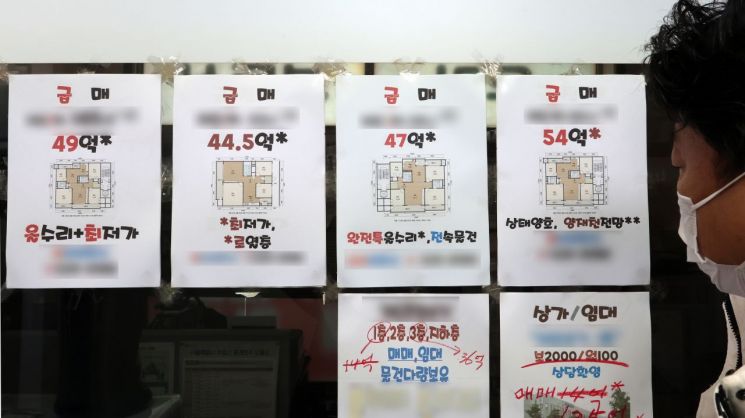
However, from the early days of its introduction, criticism was raised that the benefits for rental business operators were excessive, leading to a gradual reduction of tax incentives, and in 2020 the registration-based rental business system for apartments was abolished. At that time, some pointed out that rising prices of small homes were partly due to rental business operators abusing various tax benefits and buying homes as if they were shopping. There are also projections that, for purchase-based rental apartments that saw a large volume of registrations around 2018, the number of units coming onto the market could increase as their rental periods come to an end.
According to statistics from the Ministry of Land, Infrastructure and Transport, as of 2024 the stock of privately owned purchase-based rentals stands at 123,409 apartment units (including both short-term and long-term) and 312,788 multi-unit and multi-family homes. Compared with 2020, when there were 244,944 apartment units and 329,675 multi-unit and multi-family homes, the number of apartments has been cut roughly in half. Looking only at apartments in Seoul, the number has shrunk from 73,510 units to 44,275 units. With no incentives in place, new purchases have dried up, and the stock is on a downward trend.
An official at the Ministry of Land, Infrastructure and Transport said, "Since problems stemming from excessive tax benefits for registered rental business operators have been consistently raised, we plan to review their impact on the rental market and their effectiveness in stabilizing housing, and then decide whether to reform the system."
© The Asia Business Daily(www.asiae.co.kr). All rights reserved.

















