Securing a Record Number of Seats Unmatched Even by Abe
SDF’s Existence Likely to Be Enshrined in the Constitution, Along with Revisions to Non-Nuclear Principles
Neighboring Countries Voice Concerns Over Japan’s Expanding Military Power
The landslide victory of Japan’s ruling Liberal Democratic Party (LDP) in the House of Representatives general election is expected to mark a major turning point in the country’s security policy. Discussions on “military buildup” and “reviewing nuclear policy,” which had been taboo since Japan’s defeat in World War II, are gaining renewed momentum.
The Tokyo Shimbun analyzed on the 9th that “Prime Minister Sanae Takaichi aims to implement the hardline conservative agenda, including a fundamental overhaul of security policy and constitutional revision,” adding, “This so-called ‘Takaichi line’ is expected to accelerate rapidly in the Diet session that will soon convene.”
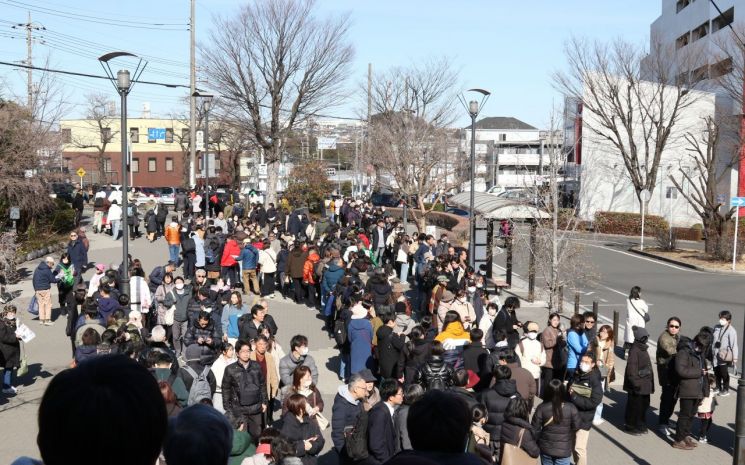
The outlook is based on the overwhelming number of seats the LDP secured in this election. In the latest House of Representatives race, the LDP won 316 out of a total of 465 seats, surpassing on its own the 310-seat threshold required to initiate a constitutional amendment. This is the largest number of seats the party has held since its founding, a result that even the Shinzo Abe administrations, which ruled twice, failed to achieve. Taking into account the 14 seats held by the pro-amendment party Sanseito and other opposition forces that favor revision, it appears possible to amend the constitution without major resistance.
The LDP is expected to start by explicitly stipulating the existence of the Self-Defense Forces (SDF) in the constitution. Article 9, Paragraph 1 of the Japanese Constitution renounces war, and Paragraph 2 states that Japan will not maintain land, sea, and air forces or other war potential. As a result, there has been ongoing controversy over the legal status of the SDF, which in practice functions as a military. Through constitutional revision, the party plans to codify language such as “(The provisions of Article 9) shall not prevent the taking of necessary self-defense measures,” thereby putting an end to the debate over the SDF’s existence.
The timing for revising the “three key security documents,” which Prime Minister Takaichi had declared would be reviewed within this year, is also expected to be moved up. Among these, the likelihood has grown that the “Three Non-Nuclear Principles” will be altered. These principles were announced in 1967 by then-Prime Minister Eisaku Sato, who declared that Japan would “not possess, not produce, and not permit the introduction of nuclear weapons.” Takaichi is pushing to revise the “no introduction” clause in light of the United States’ extended deterrence.
Furthermore, the government plans to increase defense spending to 11 trillion yen (approximately 102 trillion won), exceeding 2% of gross domestic product (GDP), and to abolish the “five categories” that set conditions for arms exports, thereby expanding weapons exports. Until now, Japan’s defense equipment exports have been limited to five non-lethal purposes: rescue, transport, vigilance, surveillance, and minesweeping.
As the prospect grows that Japan’s postwar-restrained military power will expand, China, which is in conflict with Japan, has expressed concern. The Global Times of China stated that “Prime Minister Takaichi will strengthen Japan’s military capabilities by pursuing constitutional revision and military buildup,” adding, “In particular, she will intensify efforts to contain China. On issues involving Taiwan and the South China Sea, she is expected to take a tougher stance than any previous administration.”
Since taking office and throughout the general election campaign, Prime Minister Takaichi has consistently declared that she would move to shift Japan’s security strategy. In her opening remarks at the first party leaders’ debate between the ruling and opposition blocs on January 26, held after the dissolution of the House of Representatives, she said, “We will conduct a major review of security policy within this year,” and emphasized, “Japan will independently, based on our own thinking, firmly develop the necessary defense capabilities.” During a campaign rally in Niigata Prefecture on February 2, she also appealed for support, saying, “Please help us so that we can carry out the necessary constitutional revision to protect the pride of the Self-Defense Forces and to ensure that they are firmly established as a fully capable organization.”
© The Asia Business Daily(www.asiae.co.kr). All rights reserved.

















