Algorithm-Driven Mechanical Trading
Potential for 80 Billion Dollars in Selling Over a Month
The U.S. stock market rebounded sharply last week, recovering most of its midweek losses, but a warning has emerged that algorithm-based funds are set to carry out massive sell-offs this week.
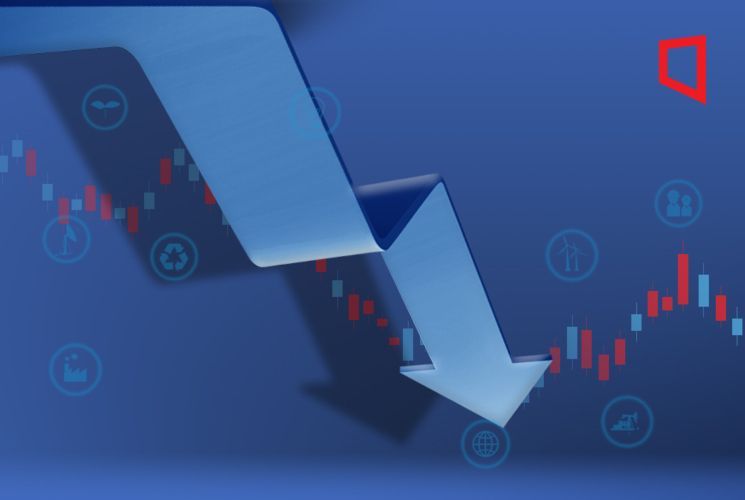
On the 9th (local time), Bloomberg, citing a Goldman Sachs report, reported that Commodity Trading Adviser (CTA) funds are expected to maintain a net-selling stance in the Standard & Poor's (S&P) 500 index over the coming week, regardless of the market's direction. CTAs are hedge funds that primarily invest in derivatives centered on the commodity futures market. They follow market trends based on algorithms and trade mechanically.
Goldman Sachs, a leading investment bank (IB) on Wall Street, warned that if the downtrend resumes, roughly 33 billion dollars (about 48.3186 trillion won) of sell orders could hit the market this week alone. If the S&P 500 index falls below the 6707 level, additional selling of up to 80 billion dollars could occur over the next month. Even if the market moves sideways, about 15.4 billion dollars of selling is expected over the week, and even in a rising market, it is projected that around 8.7 billion dollars worth of stocks will be sold.
Investor anxiety has intensified. Goldman Sachs said, "Changes in option dealers' positions are also fueling stock market volatility," adding, "The so-called 'long gamma' positions, which had been acting as a buffer and capping the index's break above the 7000 level, are now estimated to have shifted to 'short gamma'." Long gamma positions dampen volatility by selling when the market rises and buying when it falls, whereas short gamma refers to a situation where more is sold as the index declines and more is bought as it rises. This means dealers are in a position where they have to dump additional stocks to respond to volatility.
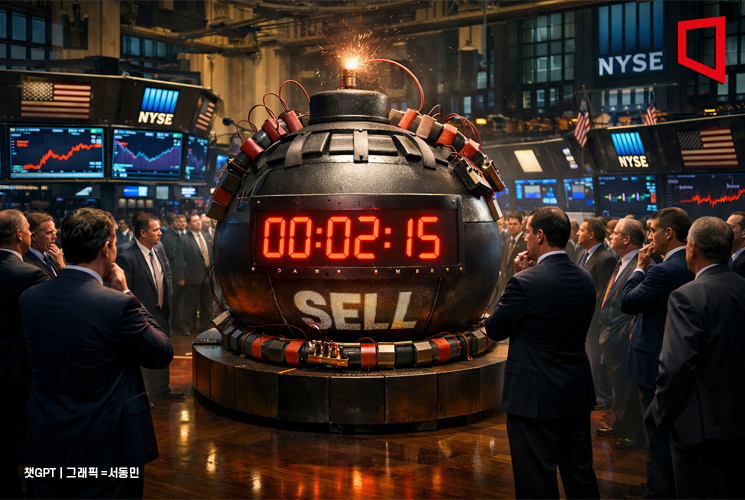
Goldman Sachs warned, "As immediate reallocations of capital for risk-off purposes have become difficult, intraday volatility has intensified, and this is becoming an obstacle to the overall price trend stabilizing," adding, "Buckle up."
Seasonal factors are also unfavorable. Historically, February is a month when volatility increases as the strong inflows of funds seen in January fade. Goldman Sachs also cited as a key factor the fact that retail investors, who had been buying stocks on every dip, are starting to show signs of fatigue. Over two days last week, retail investors were net sellers of about 690 million dollars. This suggests their willingness to buy has weakened. In particular, as cryptocurrency-related stocks have been hit, investor sentiment has deteriorated further, leading to projections that a solid rebound like last year's will be difficult.
Meanwhile, early last week the S&P 500 and Nasdaq 100 plunged, and only the S&P 500 rebounded, surging 2% on the 6th. Fears that Anthropic's new artificial intelligence (AI) tool could disrupt existing industries wiped out billions of dollars in market capitalization from software (SW), financial services, and asset management stocks.
© The Asia Business Daily(www.asiae.co.kr). All rights reserved.


















