CSIS "The Boundaries of Technological Hegemony" report
"AI operates in a 'stack' multilayer structure, making interdependence inevitable"
"South Korea also faces persistent geopolitical burdens and demographic variables"
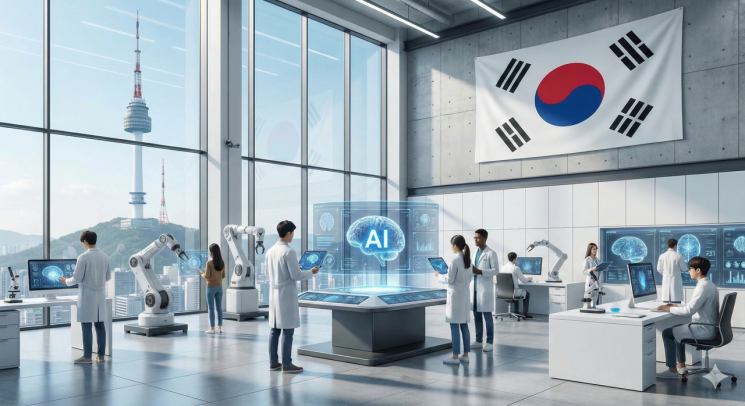
The Center for Strategic and International Studies (CSIS), one of the leading think tanks in the United States, has assessed South Korea as a country with semiconductor dominance and artificial intelligence (AI) ambitions, while also diagnosing that, structurally, it will be difficult to achieve AI sovereignty at the level of a single nation.
On February 9, CSIS released its latest report, "Tech Edge," which takes an in-depth look at South Korea as it moves to strengthen its AI sovereignty amid intensifying U.S.-China competition in AI technologies. CSIS evaluated South Korea not as a mere latecomer chasing others in the AI race, but as a U.S. AI technology partner that has already secured global influence in certain key areas. It noted that SK hynix holds a market share of more than 50% in high-bandwidth memory (HBM), which is essential for accelerating AI development, and that South Korea's research and development (R&D) investment is about 5% of its gross domestic product (GDP), placing it among the highest in the world.
However, CSIS pointed out that South Korea's AI sovereignty strategy is constrained not by a lack of technological capability, but by structural limits inherent in the technological architecture itself, making full realization difficult in practice. The core factor highlighted by CSIS is how AI technology operates. AI does not function as a single product or model, but as a multi-layered "stack" that spans semiconductors, servers, data centers, and AI models. As AI has evolved into a system in which multiple technologies interlock across different layers, CSIS assessed that it will not be easy for South Korea to achieve "complete technological independence."
CSIS particularly underscored that, although South Korea has world-class competitiveness in certain critical segments of the overall AI stack, such as memory semiconductors, a substantial portion of AI compute and infrastructure still depends on global companies. While South Korean firms hold strengths in semiconductors, the graphics processing units (GPUs) that handle large-scale computation, as well as cloud and data center infrastructure, are concentrated in global big tech (large information technology companies), making such dependence unavoidable. CSIS assessed that "this kind of interdependent structure can enhance technological competitiveness, but it also imposes fundamental limits on achieving technological sovereignty premised on complete independence."
CSIS also cited South Korea's geopolitical position and demographic structure as variables in the execution of its AI strategy. South Korea maintains a security alliance with the United States and its largest trading relationship with China, which means that, as U.S.-China rivalry for hegemony intensifies, the burden on companies in choosing their technology strategies and supply chains will inevitably increase. CSIS further noted that population decline driven by low birth rates and an aging society could simultaneously weaken the government's investment capacity and the pool of skilled AI talent, thereby weighing on the sustainability of South Korea's AI competitiveness.
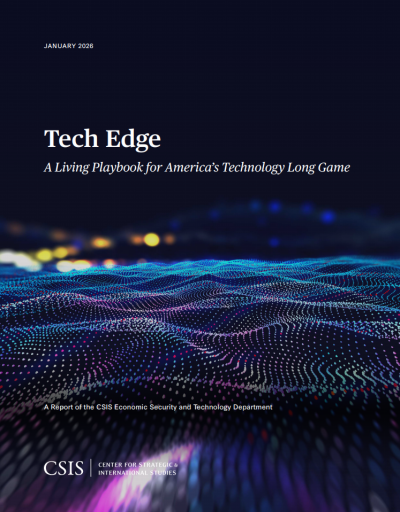 The "Tech Edge" report, published on the 20th of last month by the U.S. foreign policy and national security think tank the Center for Strategic and International Studies (CSIS).
© The Asia Business Daily(www.asiae.co.kr). All rights reserved.
![Clutching a Stolen Dior Bag, Saying "I Hate Being Poor but Real"... The Grotesque Con of a "Human Knockoff" [Slate]](https://cwcontent.asiae.co.kr/asiaresize/183/2026021902243444107_1771435474.jpg)

















