Senior Judge Ji Guyoun Transferred to Seoul Northern District Court
Transfer Effective on 23rd... Verdict Scheduled for 19th
All Insurrection Cases of Yoon Suk Yeol, Kim Yonghyun, and Cho Jiho
Handled by Criminal Division 25 (Panel Court)
Firs
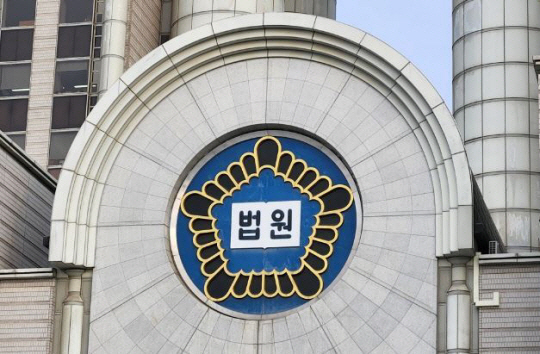
Presiding Judge Ji Guyon of the Seoul Central District Court, who is overseeing the sedition case against former President Yoon Suk Yeol as the alleged ringleader of an insurrection, will be transferred to the Seoul Northern District Court after delivering the first-instance verdict in the sedition trial.
On the 6th, the Supreme Court announced its regular personnel appointments for judges at the level of district court presiding judge and below. With the exception of transfers to the newly established Daejeon, Daegu, and Gwangju Bankruptcy Courts (effective March 1), the appointments take effect on the 23rd of this month.
Presiding Judge Ji Guyon, head of the Criminal Division 25 (collegiate panel) of the Seoul Central District Court, who is presiding over the sedition case involving former President Yoon, former Defense Minister Kim Yonghyun, former National Police Agency Commissioner General Cho Jiho, and others, will move to the Seoul Northern District Court. As the sedition case is scheduled for a first-instance verdict on the 19th, prior to his transfer, Presiding Judge Ji is expected to hand down the ruling as planned.
Presiding Judge Woo Inseong, head of Criminal Division 27 (collegiate panel) of the Seoul Central District Court, who sentenced First Lady Kim Keonhee to one year and eight months in prison in the first-instance trial over alleged stock price manipulation involving Deutsche Motors and other charges, will remain at the Seoul Central District Court.
This panel is also hearing, among the cases indicted by the three special prosecutors (sedition, Kim Keonhee, and the death-in-the-line-of-duty Marine case), allegations that former President Yoon exerted improper pressure on the investigation into the death of Corporal Chae, as well as the case involving suspicions that Kim engineered a mass enrollment of members of the Unification Church into the People Power Party.
Presiding Judge Cho Hyungwoo, who is overseeing the case against former Defense Minister Lee Jongseop concerning charges including harboring a criminal in connection with his appointment as ambassador to Australia by former President Yoon, and Presiding Judge Ryu Kyungjin, who is overseeing the perjury case against former President Yoon Suk Yeol, will also remain at the Seoul Central District Court.
Presiding Judge Lee Jingwan, head of Criminal Division 33 (collegiate panel) of the Seoul Central District Court, who last month sentenced former Prime Minister Han Ducksoo to 23 years in prison on charges including participation in important duties related to sedition, and Presiding Judge Baek Daehyun, head of Criminal Division 35 (collegiate panel), who sentenced former President Yoon to five years in prison on charges including obstruction of arrest, will likewise remain at the Seoul Central District Court.
However, the personnel decisions announced on this day only determine to which court each judge will be assigned, so the presiding judges in these cases could still be replaced depending on subsequent adjustments to case assignments within each court. As a rule, case assignments are decided about two weeks after the regular personnel appointments.
Meanwhile, Presiding Judge Lee Hyeonbok, who is overseeing the bribery case against former President Moon Jaein, will take honorary retirement as of the 23rd. This panel has also been hearing the case involving allegations that Kim sold public offices, as well as the case in which former President Yoon is charged with announcing false information. Presiding Judge Lee is reportedly set to join a major law firm.
In this round of regular personnel appointments, the Supreme Court newly appointed 132 judges as presiding judges of district courts. Of these, 60 are women, accounting for 45.5%. Among the 22 newly appointed heads of support divisions, 5 are women (22.7%).
To strengthen its capacity for work related to the judiciary's budget and facilities, as well as statutory review, and to smoothly advance major judicial policy tasks such as the publication of written judgments, live broadcasting of trials, and the introduction of artificial intelligence (AI) systems to support trials, the Supreme Court added one Planning and Coordination Officer to the Planning and Coordination Office of the Court Administration Office. It also created a new position of Judicial Artificial Intelligence Policy Officer to systematically establish judicial AI policies.
To improve the efficiency and expertise of training for new judges and support for lectures at law schools, the Judicial Research and Training Institute also gained one additional professor position.
© The Asia Business Daily(www.asiae.co.kr). All rights reserved.