Court: "Crime Not Proven"
Prosecution Sought 12-Year Term but Lost
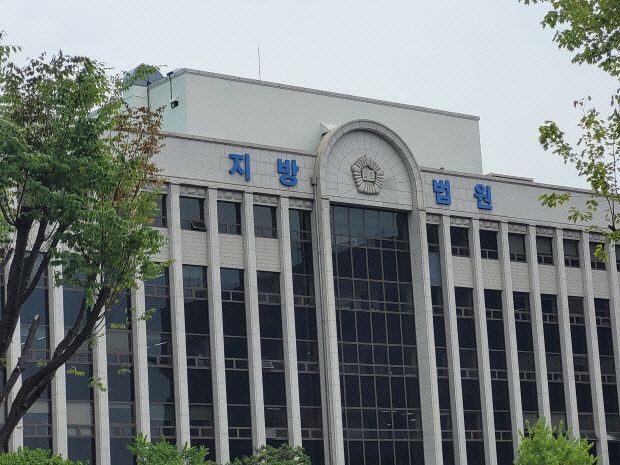
A former aide to a National Assembly member, who was put on trial on charges of receiving tens of millions of won in bribes in exchange for helping secure selection in a state subsidy project, was acquitted in the first trial.
On the 6th, the 11th Criminal Division of the Gwangju District Court (Presiding Judge Kim Songhyeon) found defendant A not guilty of bribery and other charges under the Act on the Aggravated Punishment, etc. of Specific Crimes. The court also acquitted businessman B, who had been indicted alongside A on charges of offering bribes, for the same reasons.
A was indicted on charges that, in 2019, while working as an aide to a Democratic Party of Korea National Assembly member representing a constituency in South Jeolla Province, he received 100 million won in cash from B in return for using his influence to secure selection in a state subsidy project.
However, the court held that it was difficult to conclude that the charges had been proven beyond a reasonable doubt based solely on the evidence submitted by the prosecution.
The court questioned the admissibility of the evidence, stating that it could not rule out the possibility that the main pieces of evidence submitted, including recorded phone calls, had been edited.
In particular, the court accepted A's side's consistent assertion that "the nature of the money was a personal loan, and the amount was also 50 million won."
The court also cited as a basis for its decision the fact that B testified that he "lent the money in the expectation that it would be helpful for the business and out of concern about potential disadvantages if he refused, and that he intended to get the money back later."
Previously, based on a tip-off submitted to the Democratic Party of Korea, the prosecution launched an investigation and, at the final hearing, demanded a heavy sentence of 12 years in prison, a fine of 300 million won, and forfeiture of 100 million won for A, and 3 years in prison for B, but the court did not accept these sentencing recommendations.
The prosecution plans to closely review the written first-instance judgment before deciding whether to appeal.
© The Asia Business Daily(www.asiae.co.kr). All rights reserved.