Full-scale launch of mobile sales for the first time in 24 years
Mobile web purchases available from 12:00 p.m. on the 9th
Per-draw purchases capped at 5,000 won per person
After its launch in 2002, Lotto lottery tickets have been confined for 24 years to the framework of "visiting retail outlets" and "purchasing via PC," but they are finally coming to smartphones. At the same time, the government has decided to completely overhaul the lottery fund allocation system, which has remained unchanged for 22 years since the enactment of the Lottery Act in 2004, so that it better reflects on-site needs.
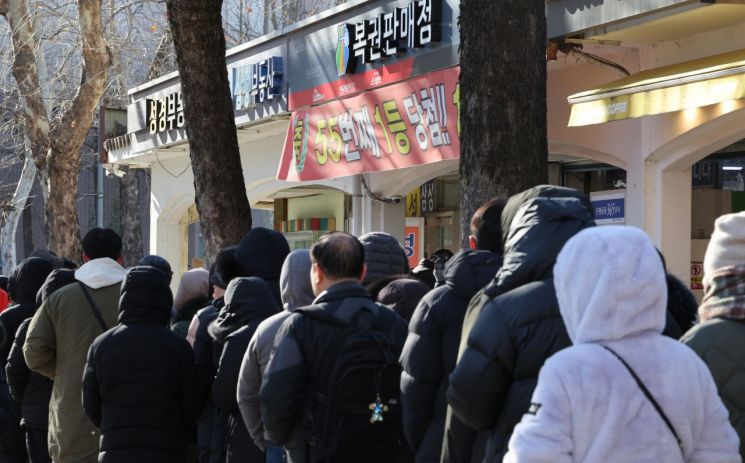
Pilot operation of 'Lotto in your hand' from the 9th... Purchase limit of 5,000 won per person
On the 6th, the Lottery Commission of the Ministry of Planning and Budget held a plenary meeting chaired by Vice Minister Im Gigiun, who is acting Minister of Planning and Budget, and reviewed and approved plans for a pilot operation of mobile sales services for Lotto lottery tickets and for reform of the statutory lottery fund allocation system. Accordingly, starting at 12:00 p.m. on the 9th, consumers will be able to access the Donghaeng Lottery mobile website to purchase Lotto tickets. This will be available only via the mobile web, without a separate application (app). Until now, Lotto tickets could only be purchased by visiting lottery retail outlets in person or via PC internet.
During the pilot period, purchases will only be possible on weekdays (Monday to Friday). The purchase limit per person per draw will be restricted to 5,000 won or less. The government has capped the mobile purchase limit at a small amount due to concerns over the "spread of gambling." This measure reflects criticism that, given the high accessibility of mobile channels, the risk of excessive immersion is greater. In addition, the scale of mobile sales, including PC purchases, will be limited to within 5% of the previous year's total sales.

Lee Yonguk, Secretary General of the Lottery Commission, explained, "With mobile, real-name registration is mandatory, which actually makes it easier to manage gambling risks," adding, "If a person reaches the 5,000 won limit per draw, the system immediately blocks further purchases, enabling real-time preventive measures."
Proposals raised in some quarters to "increase purchase prices or adjust odds in order to raise prize money" were excluded from this reform. An official from the Lottery Commission drew a clear line, saying, "Raising the purchase price or manipulating the winning odds to increase prize money could excessively fuel gambling impulses and increase the financial burden on low-income groups, so we did not consider such measures."
The government plans to analyze the effects of the pilot operation in the first half of the year and decide in the second half whether to expand mobile sales. In particular, regarding concerns that mobile sales could reduce the sales of existing offline outlets, the government plans to conduct a detailed analysis of actual sales changes during the pilot period and prepare a package of win-win measures for both online and offline channels, including support for low-sales outlets.
Lottery fund to remove 'silos' for the first time in 22 years... "More funding for those who perform better"
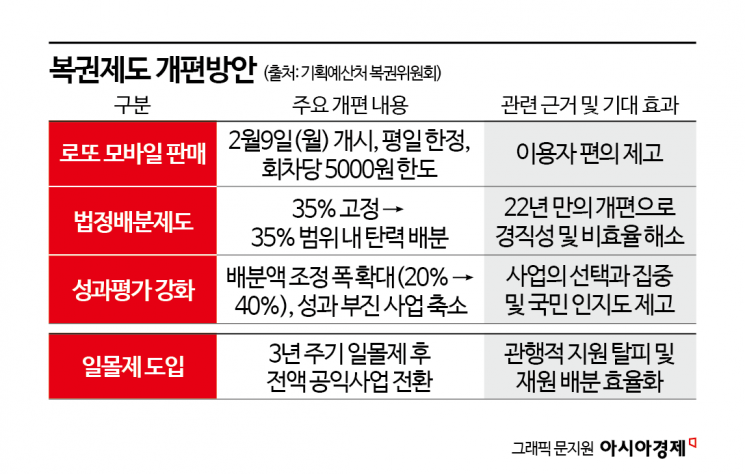
The method of allocating lottery funds will also be shifted to a more efficiency-oriented approach. Under the "statutory allocation system" introduced in 2004, 35% of lottery proceeds have been distributed at fixed ratios to 10 institutions. However, because the allocation ratios have remained fixed for more than 20 years, the system has been criticized for severe rigidity, including its failure to reflect changing fiscal needs over time and the emergence of institutions with surplus funds.
To address this, the government has decided to relax the fixed 35% allocation ratio to "within 35%" to increase flexibility, and to significantly expand the range of adjustments to allocation amounts based on performance evaluations from the current 20% to 40%. In particular, to prevent habitual, automatic support, it will introduce a three-year sunset clause for statutory allocations. After the sunset period, all projects will be reviewed from scratch, with a plan to shift them to public-interest projects such as support for vulnerable groups.
Vice Minister Im stated, "I believe this institutional reform will greatly contribute to redefining lottery culture as easy everyday sharing and giving, and to strengthening welfare for the disadvantaged, by enhancing the perceived effectiveness and convenience of purchasing lottery tickets."
© The Asia Business Daily(www.asiae.co.kr). All rights reserved.