Change in Production Plan at Kumamoto Second Plant
3 nm Chips Previously Produced Only in Taiwan
Taiwan Semiconductor Manufacturing Company (TSMC), the world's largest foundry (contract semiconductor manufacturer), will begin producing 3-nanometer (nm) semiconductors at its plant in Japan. As Japan's first 3 nm production base, analysts say this marks the point at which the government-led strategy to revive the semiconductor industry has started to yield concrete results.
The Nihon Keizai Shimbun (Nikkei) reported on the 5th that TSMC Chairman Mark Liu visited the prime minister's office in Tokyo and conveyed this plan to Prime Minister Sanae Takaichi.
The site that will serve as the 3 nm production base is TSMC's second plant in Kumamoto Prefecture. The second plant, scheduled to begin operations in December next year, had originally been planned to produce 6-12 nm products used in telecommunications equipment and other devices. However, in light of sluggish demand, construction was temporarily suspended late last year and a change in product lineup has been under review. TSMC is currently manufacturing 12-28 nm products at its first plant in Kumamoto.
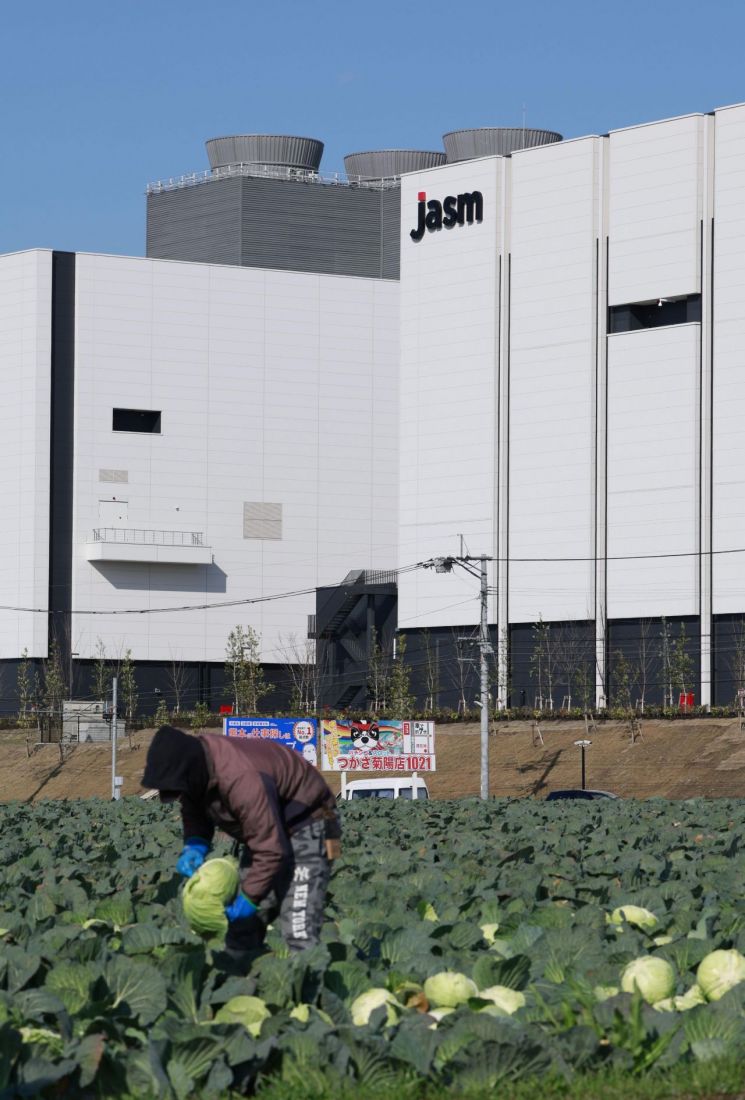 Taiwan Semiconductor Manufacturing Company (TSMC)'s Plant No. 1 in Kumamoto Prefecture, Kyushu, Japan. Yonhap News.
TSMC will revise its existing plan and fully shift the facility to producing semiconductors for artificial intelligence (AI). The Nikkei reported, "3 nm products are used in the core components and peripheral circuits of next-generation AI semiconductors being developed by companies such as Nvidia in the United States, and demand is expected to grow."
This could be a major opportunity for Japan, which has made the "revival of the semiconductor industry" a national strategy. TSMC is currently producing all of its 3 nm products in Taiwan. From next year, it plans to begin production in the United States as well. With the construction of new data centers in Japan and a resulting surge in demand for AI semiconductors, domestic production of 3 nm semiconductors is expected to strengthen the supply chain, according to the Nikkei.
Following TSMC, the "2 nm production" project being promoted by Japan's Rapidus is also gaining momentum. On this day, the Nikkei reported that private-sector investment in Rapidus is expected to exceed 160 billion yen (149.05 billion won). The number of investing companies has also increased sharply from the previous 8 to 30. The Japanese government is focusing on reviving the industry on all fronts, including by directly investing in semiconductor companies and persuading private companies to invest.
In fact, Chairman Liu also expressed his gratitude for the Japanese government's generous support during his meeting with Prime Minister Takaichi that day. He said, "I expect that the prime minister's forward-looking semiconductor policy will bring great benefits to Japan's semiconductor industry."
© The Asia Business Daily(www.asiae.co.kr). All rights reserved.