President Lee Jaemyung Issues Daily Warnings on the Real Estate Market
What Tax Experts Are Predicting
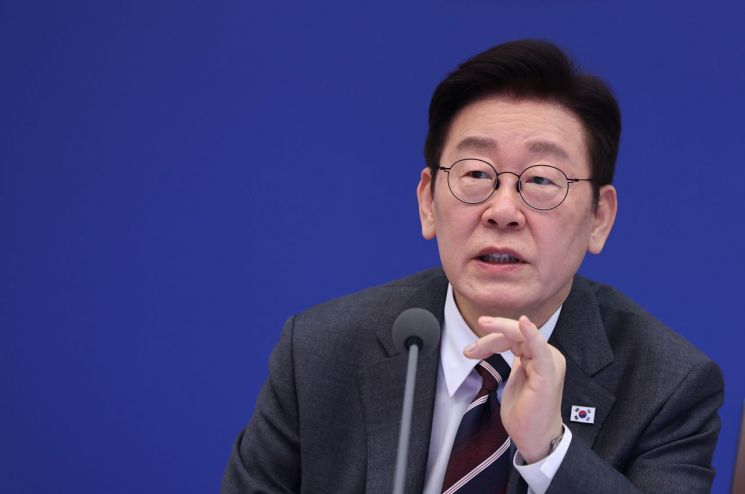
President Lee Jaemyung has once again stated his intention not to grant tax benefits for a single high-value non-residential home, following his stance on multiple-home owners. Observers interpret this as President Lee, who has strongly criticized multiple-home owners, expanding his target to include owners of one expensive home that they do not live in. The market expects a reform of the long-term holding special deduction for capital gains tax.
On February 5, President Lee wrote on X (formerly Twitter), "Switching to a single smart property, if it is not for residential use, it will be more beneficial not to do even that." He also attached and linked an article reporting that demand for high-priced single homes in prime locations has increased as the end of the temporary suspension of heavier capital gains taxation on multiple-home owners approaches.
His remarks are widely seen as signaling a policy move to curb the trend of preferring a single "smart" investment property rather than an actual residence. In particular, the prevailing view is that even for single-home owners, if the property is for investment, there is a high possibility that the long-term holding special deduction for capital gains tax will be revised.
On January 23, President Lee had already said, "It seems strange to reduce taxes not only for multiple-home owners but also for single-home owners if the property is for speculation rather than residential use," adding, "The long-term holding special deduction effectively blocks listings and encourages speculation."
The long-term holding special deduction is a system under which, even if the transfer price exceeds 1.2 billion won, up to 80% of the capital gains can be deducted if the owner has lived in the property for 10 years before selling. In the case of a single-home owner household, up to 80% can be deducted, while multiple-home owners can receive up to a 30% deduction. For multiple-home owners, when the temporary suspension of heavier capital gains taxation on May 9 ends, this benefit will also disappear.
Single-home owner households can receive a deduction of 4 percentage points per year for both the holding period and the residence period, up to a maximum of 40%. If they own and live in the home for more than 10 years, they receive an 80% reduction in capital gains tax. Proposals under discussion include halving this 4-percentage-point rate or requiring a full 20 years to qualify for the 80% deduction. Tax accountant Kim Dohoon at KB Kookmin Bank predicted, "There has long been talk that the benefits of the long-term holding special deduction are too large, so rather than abolishing it, the government is more likely to move in the direction of reducing the benefit."
Woobyeong-tak, a senior consultant at Shinhan Premier Pass Finder, also said, "It reads as an intention to revise the long-term holding special deduction," adding, "There is a high possibility that they will refer to the Democratic Party's past proposal to reduce the deduction." When drawing up its 2021 tax reform plan, the Democratic Party reviewed a plan to adjust the long-term holding special deduction for capital gains tax by gain brackets. The proposed deduction rates by gain bracket were 10% for gains exceeding 2 billion won, 20% for more than 1 billion won up to 2 billion won, 30% for more than 500 million won up to 1 billion won, and 40% for 500 million won or less. However, the bill failed to pass the National Assembly due to criticism that it amounted to heavier capital gains taxation.
However, a complete abolition of the long-term holding special deduction does not appear very likely. When a recent rumor spread that the deduction for single-home owners would be abolished, the Ministry of Land, Infrastructure and Transport stated, "Claims that President Lee directly mentioned abolishing the long-term holding special deduction for capital gains tax are completely untrue."
Other measures that continue to be discussed include tightening the property tax burden by subdividing the taxable base brackets and increasing, by presidential decree, the fair market value ratio and the ratio used to bring publicly announced prices closer to market prices. Property tax is calculated by multiplying the publicly announced price, the fair market value ratio, and the tax rate. By raising the fair market value ratio, the tax burden on high-priced single homes can be increased.
A simulation requested from consultant Woo on high-priced apartments in Seoul, assuming the fair market value ratio rises from 60% to 80%, showed the following changes in tax burden: for an 84-square-meter unit in Acro River Park, the estimated total property tax rose from 21.25 million won to 22.78 million won, an increase of 1.53 million won; for an 84-square-meter unit in Raemian Prestige, it increased from 17.03 million won to 19.04 million won, or about 2 million won.
© The Asia Business Daily(www.asiae.co.kr). All rights reserved.