Act to Protect Victims of the Japanese Military Sexual Slavery System Passes National Assembly Committee on February 5
Exceptions to Criminal Penalties Include Art, Research, and News Reporting
Fact-Finding Survey to Be Conducted on Installation and Management of Commemorative Statues
From now on, anyone who spreads false information about victims of the Japanese military sexual slavery system will face up to five years in prison or a fine of up to 50 million won.
The Ministry of Gender Equality and Family announced that, at the plenary session of the National Assembly’s Gender Equality and Family Committee held on February 5, an amendment to the Act on the Protection, Support and Commemorative Projects for Victims of the Japanese Military Sexual Slavery System was passed to this effect. The amendment prohibits acts that defame the honor of victims of the Japanese military sexual slavery system and provides a legal basis for punishing the dissemination of false information. The law will take effect three months after its promulgation.
The scope of punishable acts includes a wide range of forms such as the use of publications or information and communications networks, exhibitions and performances, assemblies, and lectures. Those who disseminate false information may be sentenced to up to five years in prison or fined up to 50 million won.
The Ministry of Gender Equality and Family stated, “By stipulating that those who disseminate false information can be subject to criminal punishment, we have, for the first time, established a substantive and binding legal basis for protecting the honor of the victims.”
However, the bill that emerged after negotiations between the ruling and opposition parties includes exceptions under which the dissemination of false information will not be punished. No punishment will be imposed if the act is for: (i) art or scholarship; (ii) research or academic theories; (iii) reporting on current affairs or the course of historical events; or (iv) other purposes similar to these. In this regard, the Ministry explained, “We excluded legitimate freedom of expression from the scope of punishment in consideration of harmony with constitutionally guaranteed basic rights.”
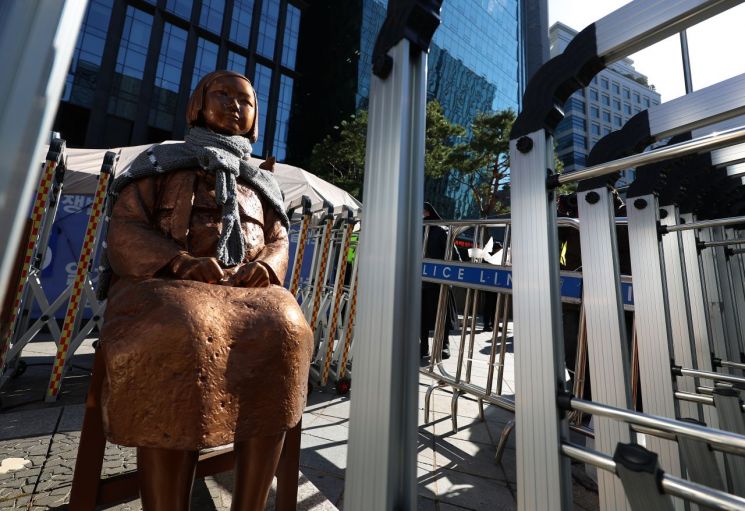
Statues such as the Statue of Peace, which commemorate and mourn the victims of the Japanese military sexual slavery system, have become subject to a government fact-finding survey to determine their installation and management status. The amendment also includes a provision requiring the heads of local governments and others to cooperate with the fact-finding survey.
The Ministry of Gender Equality and Family said, “Through the enactment and revision of local ordinances, we will continue consultations and provide support to local governments so that commemorative statues can be designated and managed as public monuments,” adding, “We also plan to continuously promote commemorative projects aimed at protecting the honor of the victims and spreading an accurate understanding of history.”
Minister Won Minkyoung of the Ministry of Gender Equality and Family stated, “This amendment represents progress that reflects the public consensus that we must protect the honor of victims of the Japanese military sexual slavery system and pass down historical facts without distortion,” and added, “We hope that this will serve as an opportunity for respect for the victims and a fact-based understanding of history to spread even more widely throughout our society.”
© The Asia Business Daily(www.asiae.co.kr). All rights reserved.

















