World's First Commercialization of Electric Furnace-Blast Furnace Hybrid Process
Full-Scale Mass Production Begins in February
Hyundai Steel has begun mass production of its "carbon-reduced steel sheet," which emits approximately 20% less carbon compared to products made using the traditional blast furnace method, and is now working to expand sales of these products.
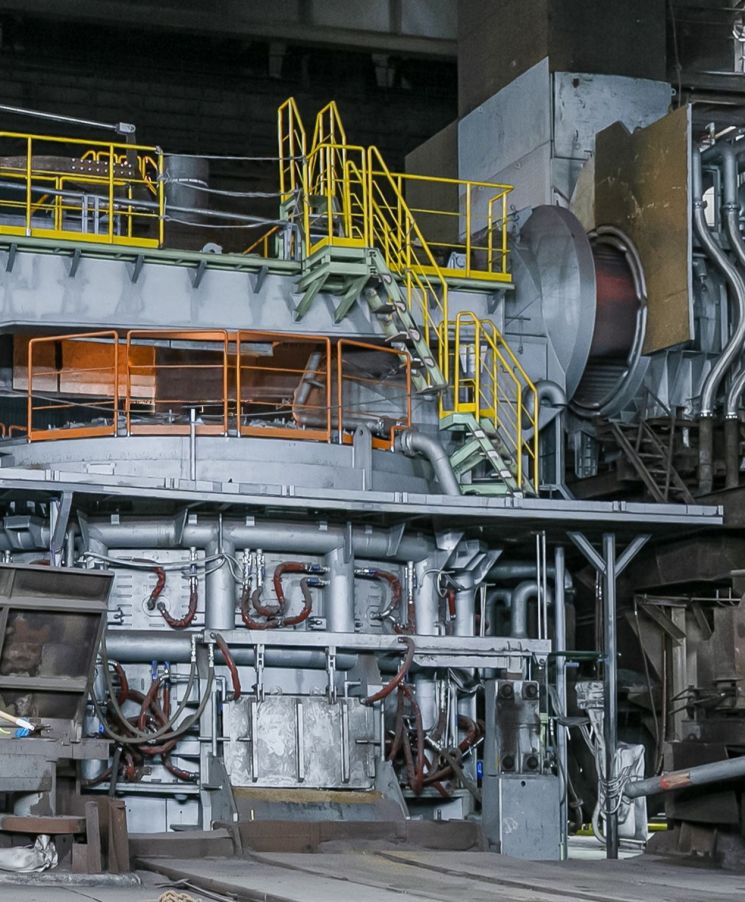 Electric furnace used in the electric furnace-basic oxygen furnace combined process at Hyundai Steel Dangjin Steelworks. Provided by Hyundai Steel
Hyundai Steel announced on February 3 that it has successfully commercialized, for the first time in the world, the "electric furnace-basic oxygen furnace combined process," which utilizes both electric furnace and blast furnace molten iron by combining its accumulated operational know-how in electric furnaces with its blast furnace technology. As a result, the company has succeeded in mass-producing carbon-reduced steel sheets, with full-scale production beginning in February this year.
Previously, since April 2023, Hyundai Steel has been verifying the productivity of carbon-reduced steel sheets using its existing electric furnace at the Dangjin Steelworks. The company explained that it conducted thorough pre-verification of the entire process to ensure stable operation and quality competitiveness of the electric furnace-basic oxygen furnace combined process.
In addition, Hyundai Steel has established a mass production system by conducting customer evaluations and steel grade approval procedures in parallel. Currently, the company has completed certification for a total of 25 steel grades, including two types of carbon-reduced steel sheets now in mass production, and plans to add 28 more by the end of the year, expanding the total number of certified steel grades to 53.
The launch of this mass production system is significant as a proactive response aligned with the carbon reduction roadmap of Hyundai Motor Group's finished vehicle affiliates. Starting this year, Hyundai Motor and Kia plan to partially apply carbon-reduced steel materials to vehicles produced domestically and in Europe. Accordingly, Hyundai Steel will convert the major automotive steel sheets supplied to these factories to carbon-reduced products and will gradually expand both the types and quantities of applicable steel grades.
Hyundai Steel is also expanding the application of carbon-reduced products beyond automobiles to a wide range of demand industries, including energy steel. In the automotive sector, the company is collaborating with global automakers and parts suppliers, while in the energy steel sector, it has completed the production and evaluation of carbon-reduced heavy plates for offshore wind substructures and confirmed the suitability of the materials with customers. Based on these achievements, Hyundai Steel is currently undergoing various global certifications and tests to further strengthen its market competitiveness.
A Hyundai Steel representative stated, "We are leading the supply of carbon-reduced steel materials through the electric furnace-basic oxygen furnace combined process, which combines our unrivaled electric furnace operational expertise with our blast furnace technology," adding, "By proactively responding to the carbon reduction demands of our global customers, we will actively support the transition to carbon neutrality in key demand industries such as automotive and energy steel."
© The Asia Business Daily(www.asiae.co.kr). All rights reserved.

















