KDCA Designated as First-Class Notifiable Infectious Disease Last Year
Urges Adherence to Preventive Measures Such as Avoiding Raw Date Palm Sap
Recently, following the occurrence of a Nipah virus infection case in West Bengal, India, the health authorities have urged travelers to exercise caution regarding infection when visiting the region.
According to the Korea Disease Control and Prevention Agency (KDCA) on January 30, Nipah virus infection is a highly dangerous disease with a fatality rate of 40-75%, and there are currently no vaccines or treatments available. The KDCA designated Nipah virus infection as a first-class notifiable infectious disease in September last year and has been preparing to prevent its entry into Korea.
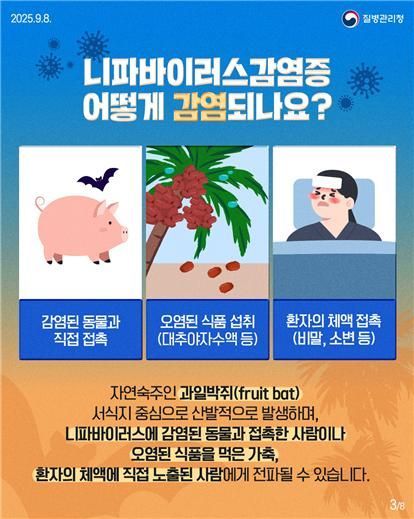
The main routes of Nipah virus transmission are contact with infected animals such as fruit bats and pigs, or consumption of contaminated food. Human-to-human transmission is also possible through close contact with the bodily fluids of infected patients.
In the early stages of infection, symptoms such as fever, headache, and muscle pain appear, along with neurological symptoms like dizziness, drowsiness, and decreased consciousness. The disease can progress to a severe stage and may result in death.
The KDCA has recommended the following preventive measures: avoid contact with animals, refrain from consuming raw date palm sap, avoid contact with sick individuals, wash hands frequently, and do not touch your face with contaminated hands.
Reflecting on global infectious disease trends and risk assessments, the KDCA designated India and Bangladesh as quarantine management areas in September last year. The agency has been providing advance guidance, such as sending infectious disease prevention information via text messages to those departing for these countries. Travelers who experience suspected symptoms such as fever upon entry must report their health status to quarantine officers using Q-CODE or the health declaration form.
Medical institutions are also required to immediately report to the KDCA or the local public health center if a patient with a history of travel to a country (region) where Nipah virus infection has occurred, or with a history of animal contact, presents with related suspected symptoms.
Im Seungkwan, Commissioner of the KDCA, stated, "Although there have been no additional confirmed cases of Nipah virus infection outside India this year, the high fatality rate means that people must be careful not to be exposed to the risk," and emphasized, "It is essential to exercise thorough caution when visiting these countries."
© The Asia Business Daily(www.asiae.co.kr). All rights reserved.

















