Japanese Media: "China's Gold Reserves Estimated at 5,500 Tons"
As international gold prices continue to hit record highs day after day, there are estimates that China may be holding significantly more gold than its official disclosures suggest. Some analysts interpret this as a move to stockpile strategic resources in light of the ongoing US-China power rivalry.
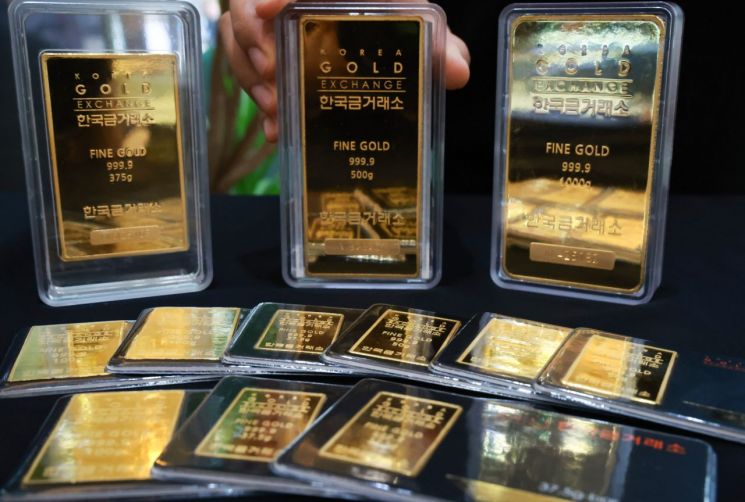
On January 28, Nikkei Asia, citing analysis from Australia and New Zealand Banking Group (ANZ), reported, "China's gold reserves are estimated at around 5,500 tons, which is more than double the figure China has publicly announced."
If this estimate is accurate, China would become the world's second-largest gold holder after the United States, which holds over 8,000 tons. Nikkei Asia noted, "Regardless of the accuracy, ANZ's analysis suggests that China is accumulating strategic resources in preparation for a potential solidification of a US-China bipolar order."
Since announcing its "New Mineral Exploration Strategy" in 2011, China has been expanding exploration and mining of various resources, including crude oil, natural gas, gold, copper, uranium, and rare earth elements. In line with this approach, China has also accelerated its gold purchases. According to Chinese media outlet International Finance News, the People's Bank of China has increased its gold reserves for 14 consecutive months. Data from the State Administration of Foreign Exchange of China shows that as of the end of December last year, China's gold reserves stood at 74.15 million ounces (2,306 tons), up 30,000 ounces from the end of November of the same year (74.12 million ounces).
China's resource acquisition strategy is also evident in its recruitment efforts. The media reported, "Major state-owned resource development companies such as Zijin Mining Group are strengthening recruitment of talent in metallurgy, geological surveying, and mine development."
Meanwhile, on January 29, international gold prices surpassed $5,500 per ounce for the first time in history. According to Investing.com, as of 3 p.m. that day, spot gold was trading at $5,584.26 per ounce.
In addition, China has been continuously reducing its holdings of US Treasury bonds. According to ANZ, China's holdings of US Treasuries have fallen below $700 billion (approximately 999 trillion won). This is about half of its previous peak, and China's share of US government debt-currently at $38 trillion (about 5,420 trillion won)-accounts for only around 2%. If ANZ's estimates are correct, the value of China's gold holdings now exceeds its holdings of US Treasuries.
Nikkei Asia reported, "Analysts believe that if Chinese President Xi Jinping had chosen a more hardline strategy, China would have significantly increased its purchases of US Treasuries." The report added, "If China still held about 10% of US government debt as it did in the past, the level of pressure exerted on China by US President Donald Trump over the past year might have been different."
Some analysts suggest that China's move to reduce its US Treasury holdings is driven by concerns over credit risk stemming from the deterioration of US fiscal conditions.
China has also used part of its foreign exchange reserves to create infrastructure funds for the Belt and Road Initiative, but the results have been limited. Gold is resilient against economic crises and inflation, but it is a non-yielding asset. The media outlet commented, "China's accumulation of gold may ultimately reflect the reality that there are few suitable alternative investment options available."
© The Asia Business Daily(www.asiae.co.kr). All rights reserved.
![Clutching a Stolen Dior Bag, Saying "I Hate Being Poor but Real"... The Grotesque Con of a "Human Knockoff" [Slate]](https://cwcontent.asiae.co.kr/asiaresize/183/2026021902243444107_1771435474.jpg)
















