From "100 Million Won Debate Proposal" to Public Confrontation
No Restrictions on Debate Format or Duration
Participation Fee Considered for Donation to Military Units
Lee Junseok, the leader of the Reform New Party, has proposed a large-scale public debate with those claiming election fraud, taking a direct approach to address the controversy.
On the 29th, Lee announced on his social media, "I will gather all the election fraud theorists and settle this once and for all," proposing a '100 vs. 1' public debate format. He added, "They keep changing their words behind the scenes and claim on their own YouTube channels that 'Lee Junseok avoids debates' as a way to comfort themselves. I urge them not to hide cowardly and to show up for the debate."
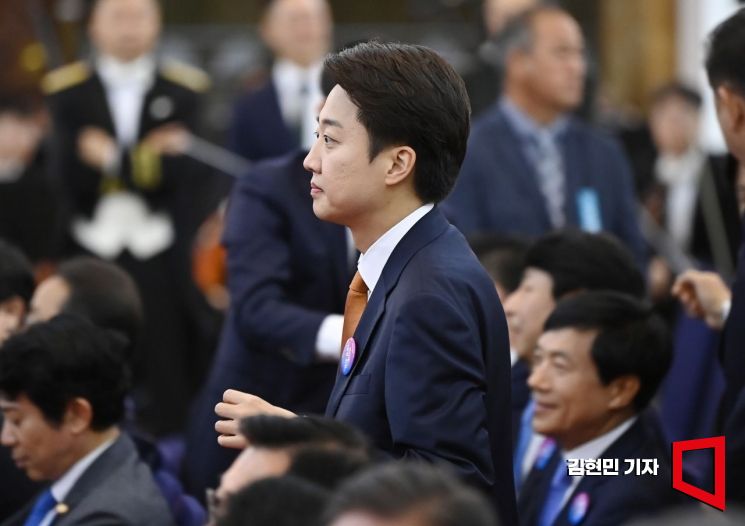
Regarding previous debate proposals, Lee explained, "Whenever I debated one person, another would pop up and repeat the same arguments," emphasizing, "This time, I will gather everyone in a large venue and take them all on myself." He also stated that there would be no restrictions on the debate time or format.
Participation Fee Donation Condition to Filter Out Noise Marketing
Lee set a participation fee of 1 million won per person for the debate. For university and graduate students, the fee was reduced to 500,000 won. He explained, "This is the minimum measure to filter out noise marketing and prank participation." The participation fees will not go to him personally but will be donated to a designated military unit. However, he added, "The final donation recipient will be announced after confirming with the National Election Commission whether the donation complies with the Public Official Election Act or the Political Funds Act."
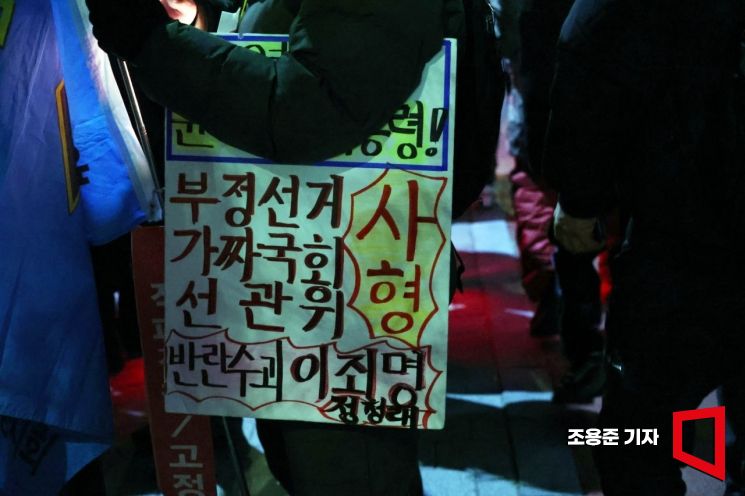
In South Korea, the controversy over alleged election fraud has mainly been raised on grounds such as the possibility of early voting manipulation, the reliability of electronic vote counting machines, limitations in vote counting observation, and statistical anomalies in vote shares. However, the Central Election Commission and the judiciary have repeatedly concluded that there is no objective evidence supporting claims of election fraud. In fact, the Supreme Court has consistently ruled against plaintiffs in lawsuits seeking to nullify general and presidential elections, and the Election Commission has also denied the possibility of manipulation, stating, "Every step of early voting and vote counting is monitored by party-appointed observers and CCTV."
"Baseless Conspiracy Theory" vs. "Avoiding Verification": Claims and Counterarguments Over Election Fraud
Lee Junseok has criticized such claims, stating that "dragging an issue that has already been legally and institutionally verified multiple times into the realm of conspiracy theory" is problematic. He has also publicly pointed out in the past that "election fraud claims are a self-destructive discourse that eats away at the conservative camp from within." This public debate proposal is an extension of previous disputes. In December last year, Park Saebeom, who runs the YouTube channel 'Everything About Self-Employment,' proposed a debate to Lee, stating, "If you refute the election fraud claims, I will give you 100 million won."
Lee accepted the proposal on the 6th, replying, "If I receive the money, I will donate books to a library." After the debate was delayed due to Lee's business trips to the United States and Mexico, Park's side publicly provoked him by asking, "Did he run away?" Some interpret Lee's recent '100 vs. 1' public debate proposal as a counterattack to this provocation.
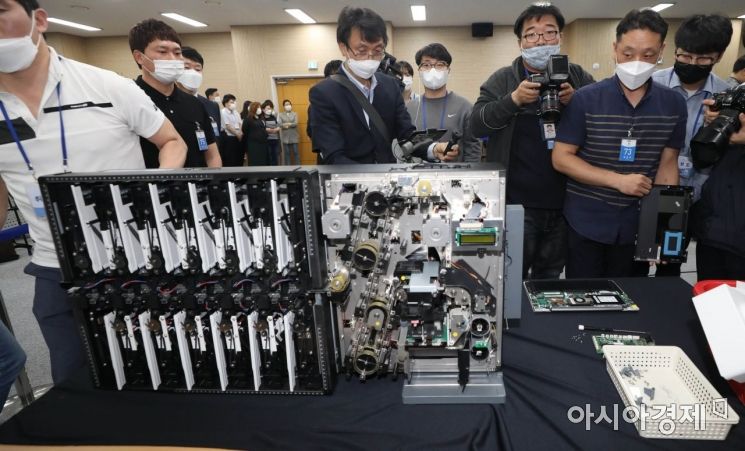 In 2020, officials at the Central Election Commission in Gwacheon, Gyeonggi Province, conducted a public demonstration of early voting and vote counting to dispel suspicions regarding allegations of election fraud in the April 15 general election. Photo by Kim Hyunmin
Meanwhile, Lee has recently emphasized not only the election fraud controversy but also the importance of a culture of public verification in political discourse. He has criticized political agitation centered on YouTube and social media, stating, "We need politics that are verified through logic in public forums, not a structure where the loudest voice wins." Observers within and outside the political sphere note that if this proposal is realized, it could become a symbolic event to gauge the social influence and limitations of the election fraud discourse. However, the impact will vary depending on whether the debate actually takes place and the outcome of the National Election Commission's interpretation.
© The Asia Business Daily(www.asiae.co.kr). All rights reserved.
![Clutching a Stolen Dior Bag, Saying "I Hate Being Poor but Real"... The Grotesque Con of a "Human Knockoff" [Slate]](https://cwcontent.asiae.co.kr/asiaresize/183/2026021902243444107_1771435474.jpg)


















