"Criticism of Public-Led Approach"
Yongsan Residential Capacity Capped at 8,000 Units
Limited Housing Supply Impact at Taereung Country Club Site
As the government announced plans to supply 32,000 new homes in downtown Seoul, the Seoul Metropolitan Government has strongly criticized the policy, arguing that it ignores key on-site issues. While agreeing on the need to expand housing supply, the city government maintains that excluding the revitalization of private redevelopment projects and focusing solely on a public-led approach makes it difficult to resolve the current supply shortage with this measure alone.
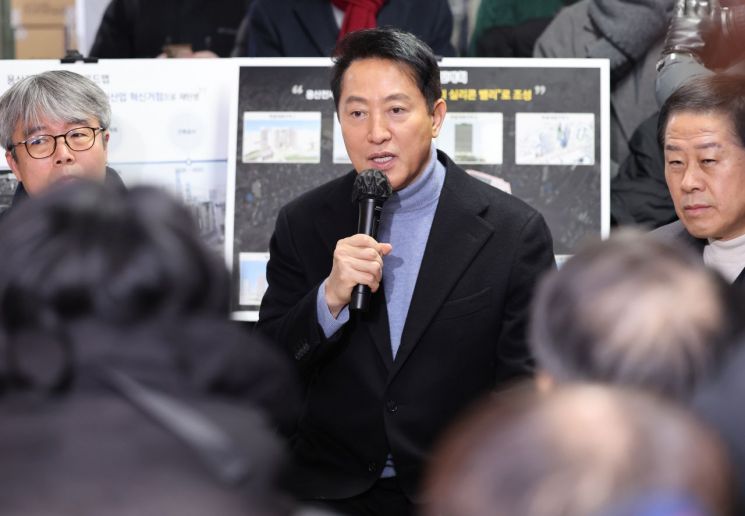
In a statement released on January 29, the Seoul Metropolitan Government said, "Housing supply is not a matter of confrontation between the central government and the city of Seoul, but a task that must be jointly addressed to ensure residential stability for citizens." However, it pointed out, "The minimum preconditions that Seoul has put forward for rapid housing supply have been excluded from this policy."
The Seoul Metropolitan Government has repeatedly emphasized to the government that revitalizing private redevelopment projects is the fastest route to increasing supply. In particular, it has argued that restrictions on relocation loan lending and limitations on the transfer of membership rights, which have been applied since the October 15 policy, are hindering the progress of redevelopment projects, and that the government should directly step in to improve these systems.
An official from the Seoul Metropolitan Government stated, "Revitalizing private redevelopment projects is the fastest way to resolve the supply shortage," adding, "Regulatory easing is necessary so that private entities, which are responsible for the majority of Seoul's housing supply, can supply more smoothly."
The Seoul Metropolitan Government diagnosed that the crisis in housing supply volume is bound to continue structurally. More than 90% of Seoul's housing supply has been driven by the private sector, and redevelopment projects, which are the main pillar of apartment supply preferred by citizens, accounted for 64% of all apartment supply last year. In particular, due to the cancellation of redevelopment zones and the suspension of new zone designations in the 2010s, the supply pipeline has been cut off, and the city predicts that the supply volume will significantly decrease over the next four years, starting this year.
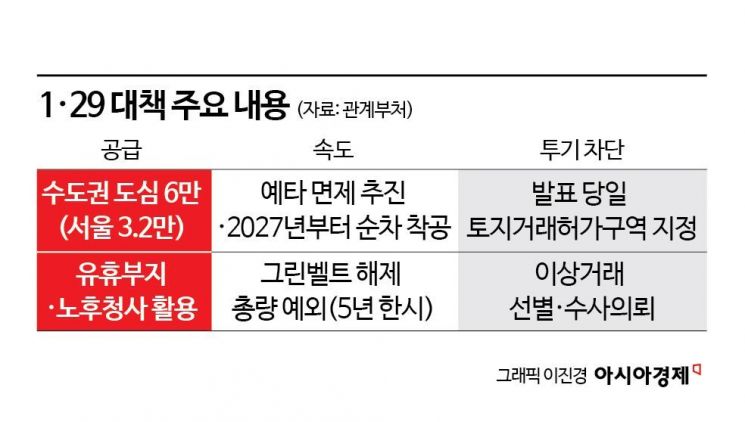
The Seoul Metropolitan Government also expressed concerns about the selection of supply locations. Regarding the Yongsan International Business District, where the government proposed supplying 10,000 homes, the city reaffirmed its position that 8,000 units is the appropriate scale. This is because, in order to maintain its function as an international business district, the residential proportion must be managed at a maximum of 40%.
Regarding the Taereung Country Club site, the city pointed out that the housing supply effect is limited compared to the area of greenbelt land being released, making the plan less effective. The Seoul Metropolitan Government stated, "The environmental conservation value of greenbelt areas should take precedence," and argued, "Since an additional 27,000 homes can be supplied through redevelopment and reconstruction of the aging downtown areas of Sanggye and Junggye nearby, supply through private redevelopment projects should be prioritized."
The city also stated that plans to supply housing by utilizing national and public land, as well as idle sites, cannot resolve the immediate supply issue. The Seoul Metropolitan Government explained, "Excluding the four sites currently being pursued by the city, construction on the announced sites cannot begin until 2029 at the earliest," adding, "This is insufficient to resolve the current supply shortage."
© The Asia Business Daily(www.asiae.co.kr). All rights reserved.


















