Pro-Trump Board Members Call for "Rate Cut"
U.S. Policy Uncertainty... Gold Hits All-Time High
Korean Economic Leaders Hold Expanded Meeting... "24-Hour Monitoring"
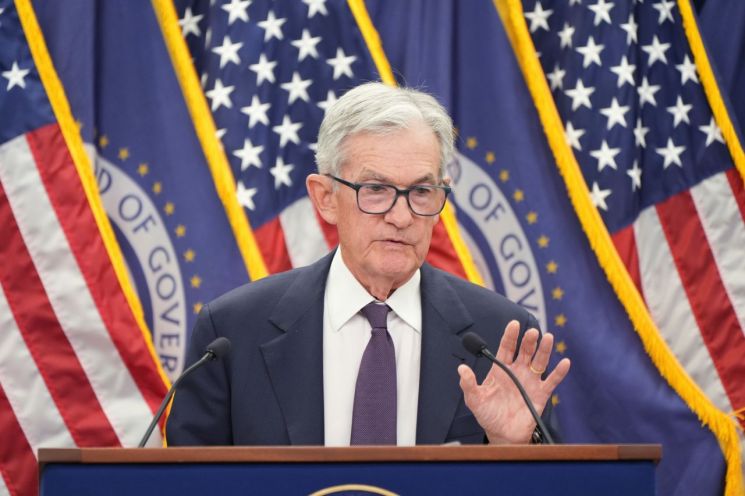 On the 28th (local time), Jerome Powell, Chairman of the U.S. Federal Reserve, spoke at a press conference following the Federal Open Market Committee (FOMC) meeting. Photo by AP
The U.S. Federal Reserve (Fed) has decided to keep its benchmark interest rate unchanged, despite pressure from President Donald Trump to cut rates. The Fed's streak of three consecutive rate cuts since September of last year has come to a halt, and concerns are mounting over potential conflict between the Fed and the Trump administration, fueling anxiety in asset markets. As a result, the price of gold, considered a safe-haven asset, has surpassed the $5,300 mark, setting a new all-time high. In response to the Fed's rate freeze, Korean financial authorities have announced the launch of an Expanded Macroeconomic and Financial Meeting and the implementation of a 24-hour monitoring system.
Fed Holds Rates Steady Despite Trump’s Pressure... Powell: "We Must Not Be Swayed by Politics"
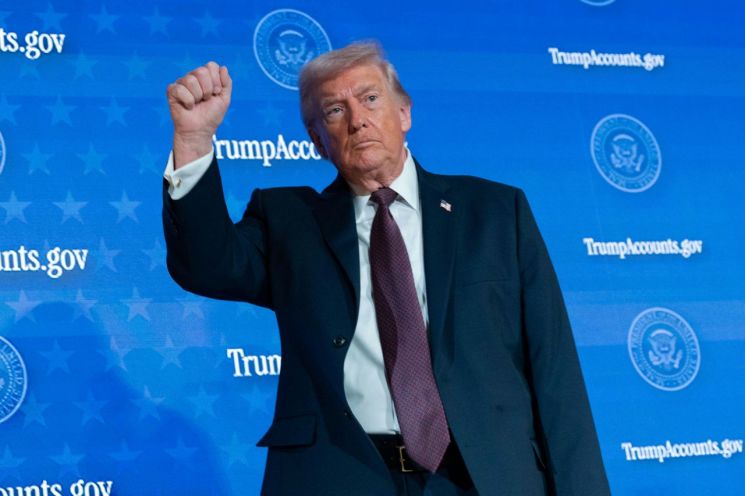
On the 28th (local time), the Fed held its first regular Federal Open Market Committee (FOMC) meeting of the year and decided to maintain the U.S. benchmark interest rate at 3.50-3.75%. This marks the end of the three consecutive rate cuts that had continued from September through December last year. In a statement, the Fed explained, "Uncertainty about the economic outlook remains high," and added, "We are closely monitoring risks to both employment and price stability."
During this decision, two of the twelve voting Fed members-Stephen Miran and Christopher Waller, both known for their pro-Trump leanings-opposed the rate freeze and called for a 0.25 percentage point cut. Their stance was seen as being mindful of President Trump. The previous day, during a campaign speech in Iowa, President Trump had openly pressured the Fed, saying, "I will soon announce a successor to Chairman Powell, and under the new chair, you will see rates fall significantly."
At the press conference following the FOMC, Chairman Powell emphasized the Fed's independence. He stated, "Preventing elected politicians from having direct control over the central bank's monetary decisions is for the benefit of the people," and added, "If monetary policy is used for political purposes to influence elections, it will become difficult for the central bank to maintain its credibility."
As friction between President Trump and Chairman Powell continues, both domestic and international markets are focusing on interest rate policy after Powell’s term ends in May. Kay Haigh, Global Co-Head of Fixed Income and Liquidity Solutions at Goldman Sachs, told CNBC, "The Fed may pause rate hikes for now, but there is a high likelihood they will resume in the second half of the year," and predicted, "If inflation eases in the future, a rate-cutting cycle could resume around the end of the year."
Asset Markets Roiled by Rate Freeze... Gold Hits New All-Time High
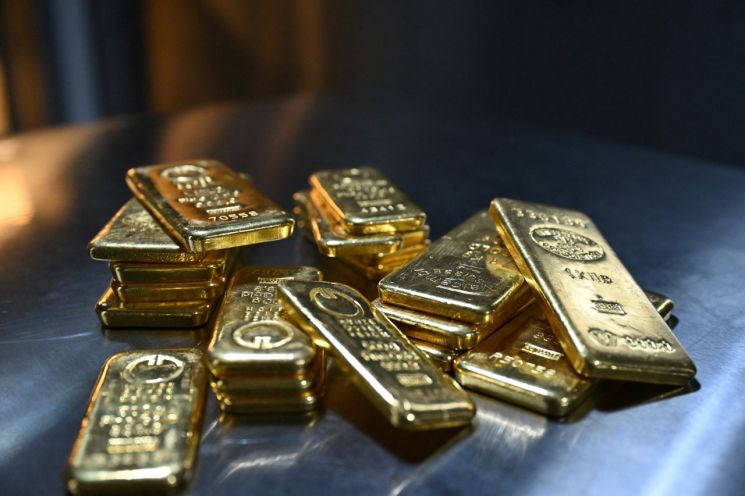
Following the Fed’s decision to hold rates steady, market preference for safe-haven assets increased. Concerns over possible discord between the Fed and the Trump administration heightened investor sentiment toward gold. On the 28th at the New York Mercantile Exchange (COMEX), gold prices surged 4.35% from the previous session to $5,303.60 per ounce, setting another record high.
U.S. Treasury yields initially rose after the rate freeze announcement but then fell slightly. The yield on the 10-year U.S. Treasury note dropped by 0.14 percentage points from the previous day to 4.245%. Although it climbed to 4.271% during the session, it declined again as speculation about future changes in rate policy emerged.
The value of the dollar, which had fallen to a four-year low of $95 the previous day, rebounded in response to the Fed’s rate decision. On the same day, the U.S. ICE Futures Exchange Dollar Index-which measures the average value of the dollar against the currencies of six major countries-rose 0.24% from the previous session to 96.45.
The New York stock market, which had been on an upward trend prior to the Fed’s announcement, ended mixed. On the New York Stock Exchange (NYSE), the Dow Jones Industrial Average closed up 0.02% at 49,015.60, while the Nasdaq rose 0.17% to 23,857.45. The S&P 500, which had surpassed the 7,000 mark for the first time ever early in the session, reversed course and closed down 0.01% at 6,978.03.
CNBC analyzed, "While the Fed cited rising inflation and uncertainty in the U.S. economy as reasons for the rate freeze, risk asset markets remained sluggish, whereas the prices of safe-haven assets like gold surged."
Expanded Macroeconomic and Financial Meeting Held for the First Time in Four Months to Assess FOMC Impact... "24-Hour Monitoring in Operation"
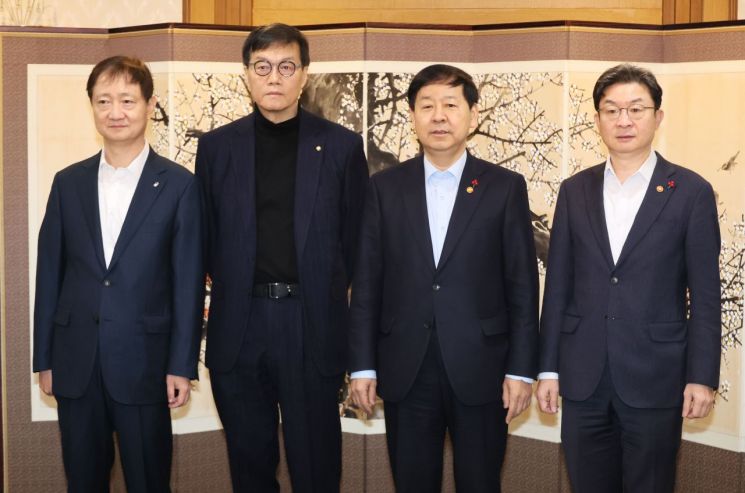 On the 29th, Deputy Prime Minister and Minister of Economy and Finance Koo Yoon-chul is taking a commemorative photo with participants at the Expanded Macroeconomic and Financial Meeting held at the Government Seoul Office. From left to right: Lee Chan-jin, Financial Supervisory Service Governor; Lee Chang-yong, Bank of Korea Governor; Deputy Prime Minister Koo; Lee Ok-won, Financial Services Commission Chairman. Photo by Yonhap News Agency
In response to global uncertainties such as changes in U.S. interest rate policy, Deputy Prime Minister and Minister of Economy and Finance Koo Yoon-chul convened an Expanded Macroeconomic and Financial Meeting with related agencies-including the Bank of Korea, the Financial Services Commission, and the Financial Supervisory Service-at the Government Seoul Office on the 29th. This was the first time in four months that Deputy Prime Minister Koo chaired the Expanded Macroeconomic and Financial Meeting, the last being in September of the previous year.
Deputy Prime Minister Koo emphasized, "Given the global uncertainties, including concerns over a U.S. federal government shutdown, tariff policy uncertainty, and geopolitical factors, the government, the Bank of Korea, the Financial Supervisory Service, and other relevant agencies will continue to operate a 24-hour monitoring system in close cooperation," and added, "By accelerating productive finance and capital market advancement, we will move beyond the Korea Discount and usher in an era of Korea Premium."
With the Fed’s latest decision, the interest rate gap between Korea (2.50%) and the U.S. remains at 1.25 percentage points. The Bank of Korea had previously held its benchmark interest rate steady at 2.50% for the fifth consecutive time at its Monetary Policy Board meeting on the 15th.
© The Asia Business Daily(www.asiae.co.kr). All rights reserved.
![Clutching a Stolen Dior Bag, Saying "I Hate Being Poor but Real"... The Grotesque Con of a "Human Knockoff" [Slate]](https://cwcontent.asiae.co.kr/asiaresize/183/2026021902243444107_1771435474.jpg)


















