Infection confirmed at Yeonggwang pig farm on January 26
Virus detected in Jeollanam-do without passing through Jeollabuk-do
Little change observed in wild boar populations near the farm
Growing concerns: "This is not the usual infection route"
Humans, vehicles, and mail under investigation...Biosecurity measures strengthened
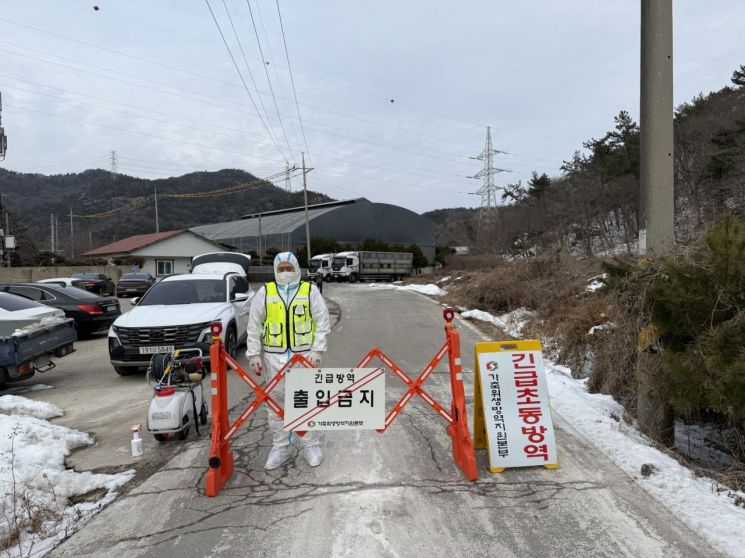 African swine fever infection has been confirmed at a pig farm in Yeonggwang, Jeollanam-do. Provided by Jeollanam-do
As African swine fever has been confirmed in Yeonggwang County, Jeollanam-do for the first time in the province, speculation is rampant regarding the route of infection. Officially, the spread of African swine fever in South Korea had previously stopped near the Chungcheong region, but the virus has now been detected in Jeollanam-do without passing through the neighboring Jeollabuk-do.
According to Jeollanam-do and Yeonggwang County on January 28, the African swine fever (ASF) virus was detected at a pig farm in Yeonggwang on January 26.
The farm owner reported to the quarantine authorities via a local veterinary officer that an average of about 10 pigs, including piglets, were dying each day (first noticed on January 25). A detailed inspection by the Jeollanam-do Animal Hygiene Laboratory confirmed a positive result for African swine fever.
The main issue is determining the route of infection. Generally, African swine fever is known to spread through direct contact between virus hosts and pigs.
In South Korea, wild boars are the primary vectors of infection, with the virus typically spreading to farms through wild boar saliva, feces, and other means. The incubation period is reported to range from as short as 3-4 days to as long as 20 days. The fatality rate is nearly 100%.
So far, there have been 59 confirmed cases of African swine fever in domestic pig farms (Incheon 5, Gyeonggi 27, Gangwon 20, North Gyeongsang 5, South Chungcheong 1, Jeollanam-do 1) and 4,326 cases in wild boars (Gyeonggi 679, Gangwon 1,997, North Chungcheong 545, North Gyeongsang 1,062, Busan 25, Daegu 18). The regional spread has generally progressed stepwise from the northern to the southern regions.
However, this case of African swine fever at the Yeonggwang pig farm is considered highly unusual, as it occurred without passing through Jeollabuk-do, which would typically be considered an intermediate region.
This farm, classified as a breeding farm, raises and distributes both mature pigs and piglets, with a total of 21,000 pigs. There are no special slaughter or processing systems in place, making it highly unlikely that pigs from other regions were brought into the farm.
Moreover, according to Yeonggwang County's official statement, there have been no abnormal changes, such as mass deaths, among wild boars living around the farm. Additional testing is underway, but no noticeable signs have been detected so far.
As a result, some speculate that the infection route may not be the typical one for African swine fever. There are suspicions that the infection could have been introduced by humans or vehicles, or even through mail delivered to the farm, rather than by wild animals. Since the farm owner also operates farms in Haenam, Gochang, and Jeongeup, the scope of the investigation may be expanded.
Jeollanam-do and Yeonggwang County have prepared all possible scenarios and have effectively launched a comprehensive investigation.
Separately, measures to prevent further infections have begun. Starting on January 27, the culling of pigs commenced and is scheduled to be completed by January 29.
Additionally, a 10-kilometer radius around the affected farm has been designated as a quarantine zone, with movement restrictions for pig farms, intensive disinfection, and thorough inspections being conducted to prevent further spread.
A temporary movement ban for pig farms, related workers, and vehicles has been imposed until 8 p.m. on January 28. All available disinfection resources, including 99 joint prevention teams and 85 disinfection vehicles owned by cities and counties, have been mobilized to strengthen biosecurity measures.
Yoo Deokgyu, Director of Agriculture, Livestock and Food at Jeollanam-do, stated, "African swine fever has a relatively short incubation period, so if an infection occurs, abnormal signs are quickly detected around the outbreak area. It is rare for the virus to be introduced into Yeonggwang, Jeollanam-do, despite no reported cases in Jeollabuk-do. We are conducting a detailed investigation, and it will take about three to four days to obtain the final results."
© The Asia Business Daily(www.asiae.co.kr). All rights reserved.

















