Won-Dollar Exchange Rate Plunges to 1,430 Level
Further Decline Expected if US-Japan Currency Coordination Proceeds
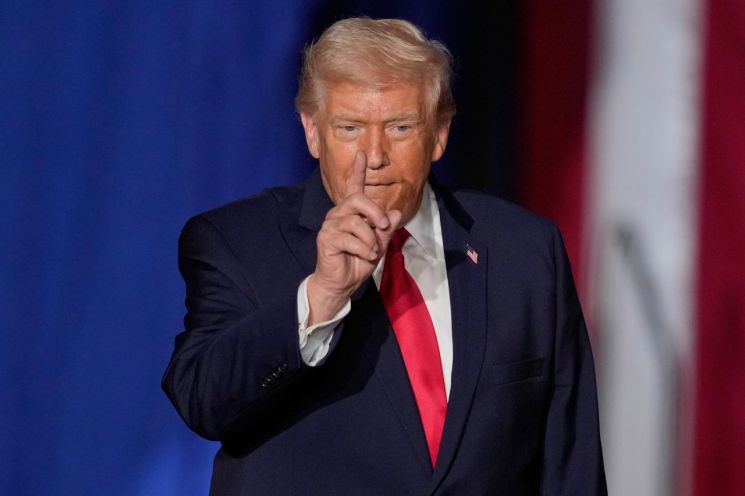 Donald Trump, President of the United States, is giving a speech at a rally held in Clive, Iowa, on the 27th (local time). Photo by AP News Agency
The value of the US dollar has fallen to its lowest level in four years after President Donald Trump stated that he does not care about the dollar's decline. Investor caution toward US assets was already heightened, and Trump's remarks further accelerated the drop in the dollar's value. Separately, there are growing expectations that Japanese authorities will begin full-scale intervention in the foreign exchange market alongside the US, suggesting that the dollar may continue to weaken for some time. As a result, the won-dollar exchange rate opened at its lowest level of the year on January 28.
Trump: "Dollar's decline is great"...Dollar Index plunges
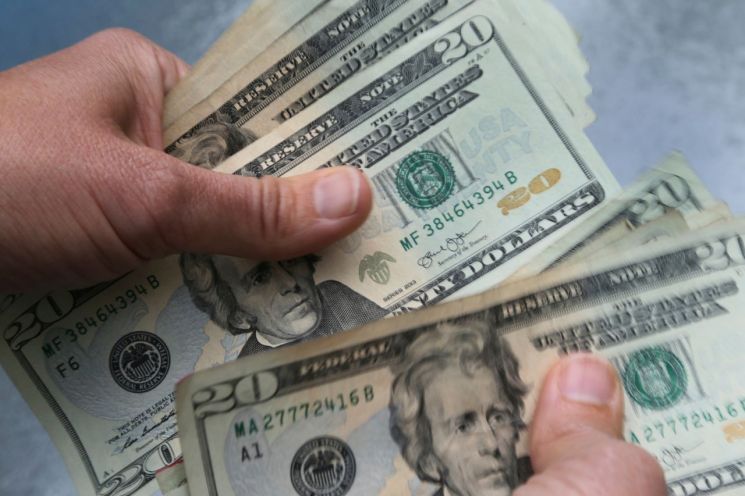
On January 27 (local time), President Trump visited Iowa and commented on the dollar's decline at a press conference, saying, "I think it's great," and "Look at the business we're doing. The dollar is doing very well." He added, "I want the dollar to find its own level. That is the fair way."
He explained, "China and Japan have always tried to devalue their currencies. They have continuously sought to lower the yen and the yuan," and "It is unfair because currency devaluation makes competition very difficult." He pointed out that the artificial exchange rate policies of China and Japan have made it difficult for US-made products to remain price competitive. In other words, the decline in the dollar's value can be interpreted as a positive for the price competitiveness of American products.
Following President Trump's remarks, the dollar's value plummeted. The Dollar Index (DXY), which measures the dollar's value against six major currencies, dropped to 95.55 during trading on January 27 after Trump's comments. This is the lowest level since February 2022. Conversely, the yen rebounded amid the dollar's weakness. In the New York foreign exchange market, the yen-dollar exchange rate fell by 1.11% to 152.37 yen, marking the lowest level since October of last year.
On this day, the won-dollar exchange rate opened at 1,431.0 won, down 15.2 won from the previous trading day, hitting a new low for the year. The sharp drop in the Dollar Index fueled the strength of the won. Concerns over a potential US government shutdown are expected to further intensify downward pressure on the exchange rate during the trading session. As market anxiety increased, gold prices once again reached an all-time high. On the New York Mercantile Exchange (NYMEX), the international gold price soared to $5,181.90 per ounce during trading. Silver prices also surged 7% to $113.38.
US diplomatic uncertainty and expectations of currency coordination with Japan...Further decline anticipated
Uncertainty stemming from the US's aggressive foreign policies, such as attempts to annex Greenland and reciprocal tariff pressure on South Korea, is weighing on the dollar's value. Lefteris Farmakis, Chief FX Strategist at Barclays, stated, "The Greenland issue has reignited the risk premium for the dollar. The breakdown of the post-World War II order will have a long-term negative impact on the dollar," adding, "Investors are being encouraged to sell dollar assets and buy other safe-haven assets."
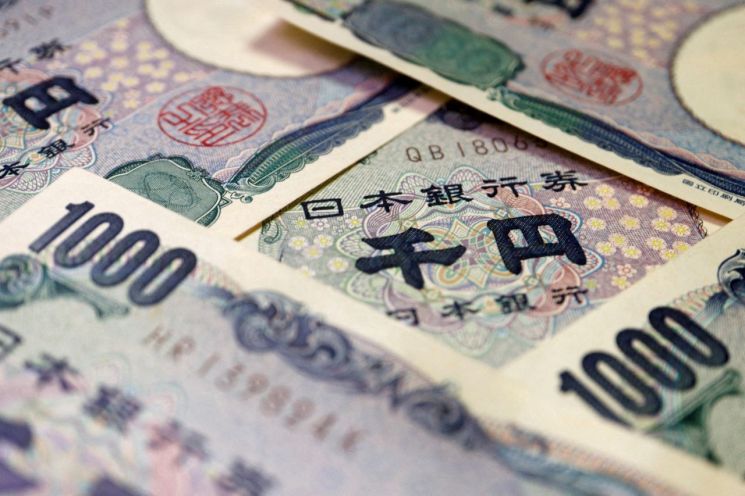
Expectations that the US and Japan will embark on full-scale currency intervention are also dragging down the dollar's value. According to the Wall Street Journal (WSJ), on January 23, the US Treasury Department conducted an unusual "rate check" to monitor the level of the yen exchange rate. This procedure involves authorities inquiring with market participants about exchange rate levels and trends. It is typically interpreted as a signal that precedes actual market intervention. Jonas Goltermann, an economist at Capital Economics, analyzed in a report on January 27, "There may be several reasons for the dollar's decline, but the main factor at present is the news that the US Treasury is considering direct intervention in the foreign exchange market."
The Japanese government has also indicated its intention to coordinate currency policy with the US. Japanese Finance Minister Satsuki Katayama stated at a press conference after attending the Group of Seven (G7) finance ministers' meeting online on January 27, "We will respond appropriately in close coordination with US authorities as necessary" regarding currency policy. Nihon Keizai Shimbun reported, "There are growing indications that US and Japanese authorities have begun to act jointly to curb excessive yen depreciation, leading to increased yen buying activity."
With expectations that US-Japan currency coordination will further boost the yen's value, there are also forecasts that the dollar's value will fall even more. Daniel Tobon, a strategist at Citigroup, told Bloomberg, "If Japanese investors shift funds into Japanese government bonds, it will ease fiscal concerns and further strengthen signals to buy the yen," adding, "If confidence grows in the yen's upward trend and the Japanese bond market, the yen could rise by more than 15% going forward."
© The Asia Business Daily(www.asiae.co.kr). All rights reserved.
![Clutching a Stolen Dior Bag, Saying "I Hate Being Poor but Real"... The Grotesque Con of a "Human Knockoff" [Slate]](https://cwcontent.asiae.co.kr/asiaresize/183/2026021902243444107_1771435474.jpg)


















