Sokcho City Establishes Roadmap Through 2031
Digital Transformation for a “Future-Oriented 9-Minute Living Zone”
Promoting a Citizen-Centered Smart City Vision
Service Models Covering Transportation, Disaster Response, and Care
Sokcho City in Gangwon Province is launching a citizen-oriented smart city vision to address local depopulation and realize a “9-minute living zone.”
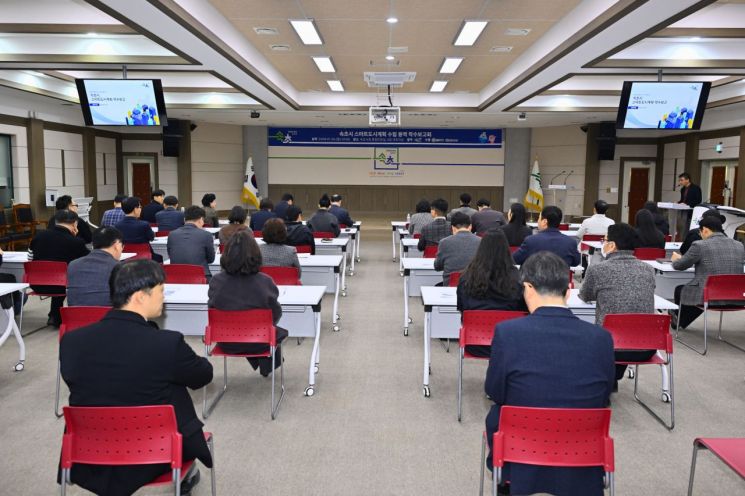 Sokcho City held a kickoff briefing session for the "Sokcho Smart City Plan (2027?2031) Establishment Project" on the 26th at the large conference room on the 5th floor of the City Hall General Civil Service Office, attended by Lee Byung-sun, Mayor of Sokcho, and officials from related departments. Provided by Sokcho City
On January 26, Sokcho City held a kickoff briefing session for the “Sokcho Smart City Plan (2027-2031) Establishment Project” at the large conference room on the 5th floor of the City Hall General Civil Service Office, attended by Mayor Lee Byungsun and officials from related departments.
The Smart City Plan is a statutory plan that aims to solve urban problems by integrating digital and information communication technologies across all sectors of the city, including transportation, safety, climate, and energy, and to provide practical, citizen-centered services that residents can experience in their daily lives.
During the briefing, the city comprehensively diagnosed Sokcho’s urban structure, including risk factors for local extinction such as declining resident population, aging demographics, and an increase in single-person households, as well as the concentration of tourism and visitor demand in specific periods and areas. The main focus was on strategies to realize a compact city based on the “9-minute living zone.”
The Sokcho-style compact city concept involves consolidating residential, transportation, welfare, cultural, and tourism functions within each living zone-such as areas around train stations, downtown, and the Seorak area-and connecting them efficiently. Under this concept, the need to establish a plan that incorporates smart transportation systems, disaster and climate crisis response, energy efficiency, and care services for single-person households and the elderly as smart city service models to counteract local depopulation was emphasized.
Key tasks presented included: establishing a vision and mid-to-long-term development roadmap for Sokcho’s smart city; identifying Sokcho-specific smart city strategic projects to support the completion of the compact city; deriving smart policy tasks based on population and living zone analysis to address local extinction; and preparing plans for the construction, management, and operation of smart city infrastructure and integrated urban operation systems (such as an integrated urban operations center).
Based on these tasks, the city plans to gradually expand its intelligent urban infrastructure. It will also develop “Sokcho-style compact city and smart city development guidelines” that can be commonly applied to major urban development projects, such as station area development in the railway era, the reconstruction of Seorak-dong, and urban regeneration by living zone. Through these efforts, Sokcho aims to reduce regional imbalances and transition to a sustainable urban structure.
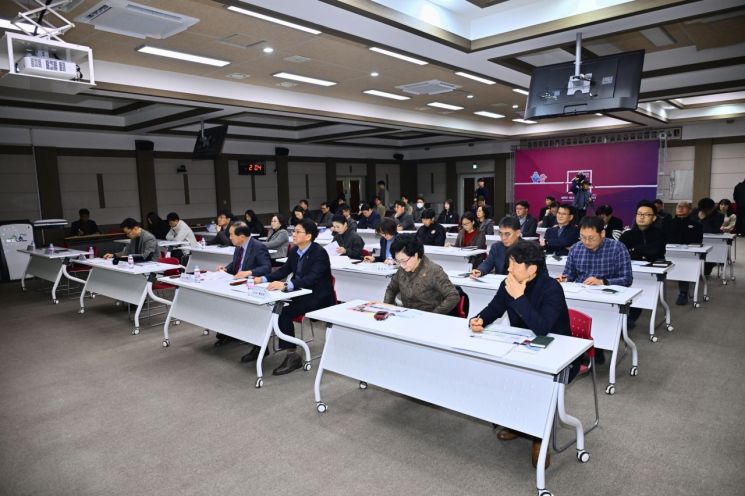 Sokcho City held a kickoff briefing session for the "Sokcho Smart City Plan (2027?2031) Establishment Project" on the 26th at the large conference room on the 5th floor of the City Hall General Civil Service Office, attended by Lee Byung-sun, Mayor of Sokcho, and officials from related departments. Provided by Sokcho City
The city will also gather feedback to enhance the effectiveness and feasibility of the plan. The voices of various groups will be reflected through interviews with public officials, surveys, expert consultations, and citizen living labs. The plan will be further detailed to practically improve residential conditions in each living zone and contribute to overcoming the local extinction crisis.
Mayor Lee Byungsun stated, “By focusing on the five living zones-including station areas, the Seorak area, and downtown-we will establish data-driven transportation systems, disaster and climate response, energy efficiency, and care services for single-person households and the elderly, in order to eliminate regional imbalances and build a sustainable urban foundation that overcomes the local extinction crisis.”
© The Asia Business Daily(www.asiae.co.kr). All rights reserved.


















