Ministry of Agriculture and Ministry of Food and Drug Safety to Inspect Fresh Eggs Imported from the US
The government is set to inspect fresh eggs imported from the United States as a pilot measure to prepare for a potential deterioration in domestic supply conditions, such as the spread of highly pathogenic avian influenza (AI). These eggs are scheduled to be distributed to the market through large supermarkets starting January 30.
The Ministry of Agriculture, Food and Rural Affairs and the Ministry of Food and Drug Safety announced on January 26 that they will inspect the entire process of importing 1.12 million fresh eggs from the United States, including quarantine, testing, washing, grading, and packaging.
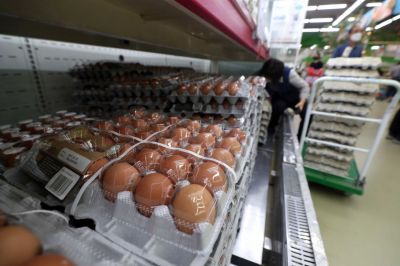
An official from the Ministry of Agriculture, Food and Rural Affairs stated, "Currently, the egg supply is relatively stable. However, considering that the occurrence of additional highly pathogenic avian influenza cases at layer farms could destabilize the supply situation, we have decided to inspect the entire egg import process as a precaution."
To minimize trial and error in the event of full-scale egg imports if the supply situation worsens in the future, the Ministry has decided to import a total of 2.24 million eggs through the Korea Agro-Fisheries & Food Trade Corporation (aT). The initial shipment of 1.12 million eggs arrived on January 23, and the remaining quantity is expected to be imported by the end of January.
The imported fresh eggs from the United States will be supplied to the market through distributors and food ingredient companies as early as January 30, provided they pass domestic quarantine and import food safety inspections.
The Ministry of Food and Drug Safety will conduct rapid import food inspections concurrently with the sorting and packaging process to facilitate swift customs clearance and ensure a stable supply of safe imported fresh eggs for consumers and price stability in the domestic market. At the same time, to protect public health, the agency will thoroughly verify the safety of imported eggs by conducting detailed inspections for veterinary drugs and salmonella, as well as checking labeling requirements such as the date of lay stamped on the eggshells.
The Animal and Plant Quarantine Agency will check for any damage to packaging, such as containers used to transport fresh eggs, and conduct epidemiological investigations to determine whether the eggs passed through regions subject to import bans, in order to prevent the introduction of foreign livestock disease pathogens into Korea. The agency will also carry out physical inspections, breaking tests (inspections involving cracking eggs), and monitoring for livestock infectious diseases to detect any product abnormalities or contamination.
Park Junghoon, Director General of the Food Policy Bureau at the Ministry of Agriculture, Food and Rural Affairs, stated, "The government will continue to pursue support measures such as lowering supply prices and providing discounts on agricultural and livestock products to stabilize egg prices. If the spread of highly pathogenic AI leads to instability in the egg supply, we will also consider additional measures such as importing fresh eggs to alleviate the perceived price burden on consumers."
© The Asia Business Daily(www.asiae.co.kr). All rights reserved.

















