U.S. Ousts Maduro to Seize Local Oil Industry
"Partial Tolerance of Chinese Activities for Pragmatic Reasons" Expected
The Wall Street Journal (WSJ) reported on the 23rd (local time) that the Donald Trump administration's move to oust Venezuelan President Nicolas Maduro and restructure the local oil industry has put China's interests, which have been cultivated in the Venezuelan oil market for over 20 years, to a critical test.
According to the report, Chinese state-owned oil companies are currently claiming ownership of more than 4 billion barrels of crude oil reserves in Venezuela. This is about five times the holdings of Chevron, the only major U.S. oil company operating in Venezuela.
After Venezuela expelled U.S. companies such as ExxonMobil in 2007 through nationalization measures, China quickly filled the gap by providing substantial funding and equipment. Under former President Hugo Chavez's policy of "oil sovereignty," China emerged as a key financial lifeline for Venezuela, and the Venezuelan government has described the relationship as an "ironclad brotherhood." In particular, China National Petroleum Corporation (CNPC) entered the Orinoco oil belt vacated by ExxonMobil and established the joint venture Sinovensa with Venezuelan state oil company PDVSA, securing its largest production base.
However, the landscape shifted dramatically earlier this month when the Trump administration arrested and extradited President Maduro and began restructuring Venezuela's oil industry. President Trump has stated that while he will allow China to import Venezuelan crude oil, he will no longer tolerate cut-rate deals or unofficial distribution as in the past. Until now, China has enjoyed a de facto monopoly by purchasing Venezuelan crude at low prices due to U.S. sanctions that blocked other buyers.
What poses a greater burden for China is the possibility that the United States may challenge China's ownership of oil assets in Venezuela itself. U.S. Secretary of State Marco Rubio recently reiterated in an interview that "we cannot allow China, a hostile power to the United States, to control one of the world's largest oil reserves," reaffirming the policy of blocking rival nations' access to strategic assets in the Western Hemisphere.
China also faces the possibility of financial losses. Venezuela owes China at least 10 billion dollars (approximately 14.5 trillion won) and has been repaying this debt through oil supplies. Depending on how the United States controls Venezuelan oil sales, China's ability to recover its loans could become uncertain.
The Chinese Embassy in the United States stated, "Chinese assets in Venezuela must be protected under international law," and added, "We will take all necessary measures to safeguard our legitimate rights and interests."
However, some analysts suggest that the impact on China from U.S. actions may be limited. Just before President Maduro's ouster, China was indirectly absorbing more than 80% of Venezuela's oil exports, but this accounted for less than 10% of China's total crude oil imports.
There is also a view that it would be practically difficult for the United States to completely exclude China in the short term. Although President Trump has called for large-scale investment to rebuild Venezuela's oil industry, U.S. companies have responded cautiously. ExxonMobil CEO Darren Woods drew a clear line, stating, "It is not possible to invest under the current circumstances."
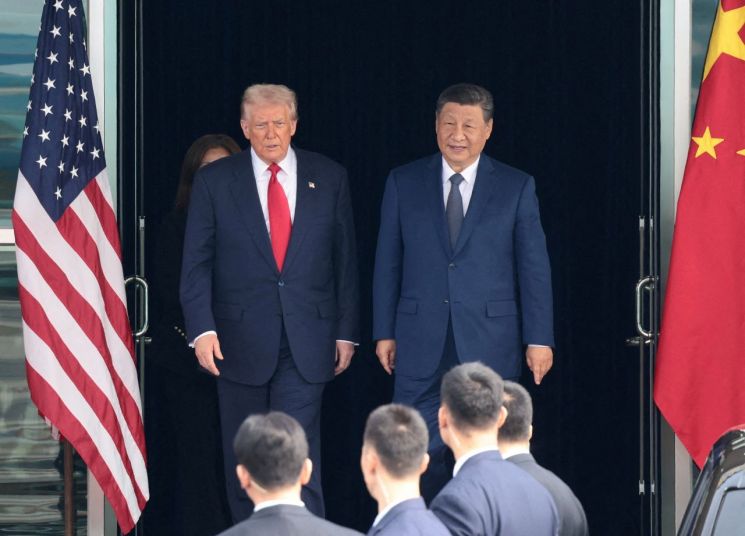
Another variable is that, ahead of the Beijing summit scheduled for April, President Trump is also mindful of maintaining a working relationship with Chinese President Xi Jinping.
Parsifal Dola Alvarado, a researcher at the Andres Bello Foundation, commented, "Argentine President Javier Milei maintains an anti-China stance but still allows some Chinese investment for economic reasons. Similarly, the Trump administration may also partially recognize China's production activities in Venezuela for pragmatic reasons."
© The Asia Business Daily(www.asiae.co.kr). All rights reserved.
![Clutching a Stolen Dior Bag, Saying "I Hate Being Poor but Real"... The Grotesque Con of a "Human Knockoff" [Slate]](https://cwcontent.asiae.co.kr/asiaresize/183/2026021902243444107_1771435474.jpg)
















