Trump Threatens to Freeze Iraq's Oil Export Revenues and Paralyze National Economy
58 Pro-Iranian Lawmakers Targeted... Iraq Faces Critical Juncture After Years of Balancing Diplomacy
Reuters reported on January 23 (local time) that the U.S. government has warned that it could block the flow of oil revenue, Iraq's main source of funding, if Iran-backed armed groups are included in Iraq's next government.
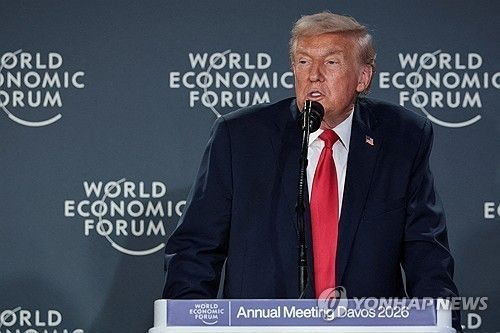
After successfully ousting the sitting president of Venezuela earlier this year and gaining confidence, the Donald Trump administration appears to be increasing its interference in the domestic affairs of smaller nations. This time, it is interpreted as the administration pulling out the "oil money" control card to curb the influence of pro-Iranian groups in Iraq.
Reuters, citing sources, reported that the United States has pressured senior Iraqi politicians by warning that if pro-Iranian armed faction figures are included in the next cabinet, sanctions targeting Iraq's national finances-particularly oil export revenues-could be imposed.
According to the report, Joshua Harris, the U.S. Charg? d’Affaires in Iraq, has conveyed this stance over the past two months in successive meetings with Prime Minister Mohammed Shia’ Al Sudani, Shia political leaders, and Kurdish leaders. The warning was also relayed through intermediaries to the heads of some pro-Iranian groups. Reuters noted that this position of the Trump administration is placing significant pressure on Iraq, which has tried to maintain a balance between the United States and Iran.
The U.S. demands are specific. Since the parliamentary elections last November, the United States insists that none of the 58 lawmakers it has classified as "linked to Iran" should be included in the newly formed cabinet. An Iraqi official explained, "The U.S. position is essentially that if any of the 58 lawmakers join the cabinet, it will sever relations with the new Iraqi government," adding, "This effectively means a halt to dollar transfers."
The reason the United States can make such threats lies in Iraq's unique oil revenue management structure. Iraq deposits most of its oil export proceeds in an account of the Central Bank of Iraq at the Federal Reserve Bank of New York. This structure, established after the U.S. invasion of Iraq in 2003, effectively gives the United States control over Iraq's national treasury. If the United States blocks dollar transfers, the Iraqi economy would inevitably be paralyzed.
The United States has also reportedly expressed strong opposition to the election late last month of Adnan Faihan, a member of the pro-Iranian armed group Asaib Ahl al-Haq (AAH), as the First Deputy Speaker of Iraq's parliament. AAH has been identified as a key organization in an oil smuggling network generating more than 1 billion dollars (about 1.45 trillion won) in annual revenue. Its leader, Qais al-Khazali, was placed on the U.S. sanctions list in 2019 for alleged human rights abuses. Perhaps as a result of mounting U.S. pressure, al-Khazali has recently indicated a willingness to have Faihan step down from the deputy speaker position.
The U.S. State Department spokesperson, in response to Reuters' inquiry on this matter, declined to provide specific answers but emphasized, "The United States supports Iraq's sovereignty, and there is no place for pro-Iranian militias that pursue malign interests and promote sectarian division and terrorism."
This measure is a high-intensity pressure tactic that follows President Trump's bombing of Iranian nuclear facilities last June and his recent hints at possible military intervention in response to anti-government protests.
In 1979, Iran shifted to an anti-American regime when the pro-U.S. Pahlavi dynasty was overthrown by the Islamic Revolution and power was concentrated in the hands of religious leaders. Hostile relations between the United States and Iran have since been entrenched by ongoing systemic and ideological conflict, regional power struggles in the Middle East, and nuclear issues.
President Trump has continued to take steps to weaken Iran's theocratic regime. Iran, meanwhile, has fostered proxy forces in the region and has used pro-Iranian groups in Iraq as a key channel to circumvent economic sanctions imposed by the United States and other Western countries.
© The Asia Business Daily(www.asiae.co.kr). All rights reserved.
!["The Woman Who Threw Herself into the Water Clutching a Stolen Dior Bag"...A Grotesque Success Story That Shakes the Korean Psyche [Slate]](https://cwcontent.asiae.co.kr/asiaresize/183/2026021902243444107_1771435474.jpg)
















