Safe-Haven Asset Demand Rises
Amid Expectations of Further Fed Rate Cuts
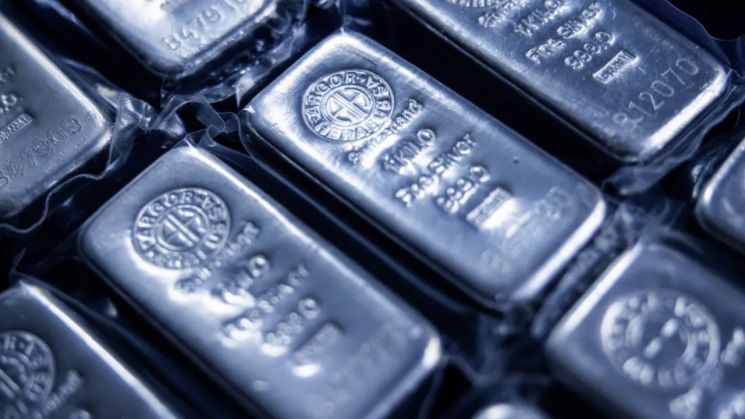
As demand for safe-haven assets continues, the international price of silver surpassed $100 per ounce for the first time ever during intraday trading. Gold prices also reached a new all-time high of $4,979 (approximately 7.31 million won), coming close to the $5,000 mark.
On January 23 (local time) at around 1:48 p.m. on the New York Mercantile Exchange, the spot price of silver was trading at $100.94 per ounce, up 5% from the previous session. This is the first time that silver prices have exceeded $100 per ounce.
Gold prices also continued to rise, with the February gold futures contract closing at $4,979.7 per ounce, up 1.4% from the previous session, bringing the price just shy of the $5,000 milestone for the first time ever. The spot price of gold during the session was $4,988.17 per ounce.
Gold prices surged 27% in 2024 and soared by 65% in 2025, with the rally continuing into the new year. International silver prices skyrocketed by more than 150% in 2025 and have risen by over 40% so far this year.
As global investors reduce their holdings of the U.S. dollar, the world's key reserve currency, and increase demand for gold as an alternative safe-haven asset, gold prices have been on an upward trajectory.
Silver, which tends to move in tandem with gold prices, has also continued its rally amid rising industrial demand and persistent concerns over chronic supply shortages.
Central banks around the world, major players in the gold market, have increased their gold holdings in recent years as part of efforts to diversify their reserves away from the dollar.
Expectations for further benchmark interest rate cuts by the U.S. central bank are also fueling the rise in gold prices. The U.S. central bank lowered the benchmark rate from 5.25-5.50% to the current 3.50-3.75%, a decrease of 1.75 percentage points, between September and December 2024.
Wall Street experts expect the U.S. central bank to cut rates an additional one to three times this year, and believe that expectations for further cuts could grow depending on who is appointed as the next chair.
© The Asia Business Daily(www.asiae.co.kr). All rights reserved.

















