Concerns Over Workplace Relocation and Job Security
Calls for Explicit Provisions in the Special Law
During an information session for Gwangju Metropolitan City officials regarding the promotion of administrative integration between Gwangju and Jeonnam, concerns were repeatedly raised about potential relocations and job security. The officials demanded that the special integration law include clear provisions guaranteeing their status and treatment.
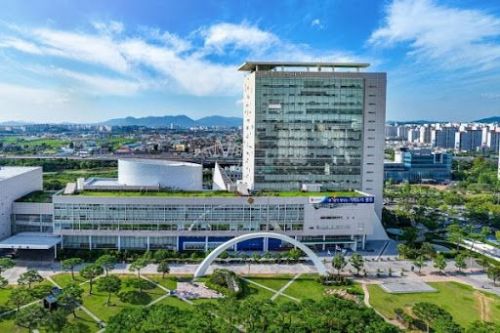
On January 23, Gwangju Metropolitan City held an "Administrative Integration Staff Briefing for Gwangju and Jeonnam" in the main conference room at City Hall. The session, presided over by Planning and Coordination Office Director Lee Byungcheol, explained the progress of the integration initiative and the results of a union survey, followed by responses to pre-submitted questions.
Through these questions, public officials expressed significant anxiety about the overall work environment, particularly the possibility of being relocated to Jeonnam. Despite the stated "principle of maintaining current workplaces," there were concerns about the potential for personnel transfers to island areas in Jeonnam.
There was also criticism that the draft special law for administrative integration, currently being prepared by Gwangju and Jeonnam, contains only vague provisions regarding the status and treatment of public officials. Many called for clear language such as "guarantee" and "provide support" instead of ambiguous terms like "make efforts," "in principle," or "may support."
Jang Sunhee, Secretary General of the Gwangju City Public Officials Union, stated, "The special law expresses employment and work guarantees in abstract terms," adding, "It should be stipulated as 'must' rather than 'make efforts' or 'may support' so that actual support is ensured." She continued, "The clearer the minimum standards, the less anxiety there will be, and the more constructive the integration discussions will become."
In response, Planning and Coordination Office Director Lee Byungcheol said, "This will depend on how meticulously the system is designed," and added, "While we cannot predict everything five or ten years after integration, the immediate and key principle is to guarantee each person's current workplace." He further stated, "There will be no personnel appointments against an individual's wishes."
Vice Mayor for Administrative Affairs Ko Gwangwan commented, "We have said we will include as much as possible in the law, but there are still opinions that these should be mandatory provisions," adding, "We will consult thoroughly and reflect the requirements as much as possible."
There was also concern that specifying in the draft special law that "both the Gwangju and Jeonnam Muan government buildings will be used" could inevitably lead to controversy over the location of the main government office in the future. Director Lee explained, "If we specify the main location now, it could generate opposition," and stressed, "It is strategically necessary to integrate first and discuss the main office location afterward."
Kim Joungho, Chairman of the Gwangju City Public Officials Union, emphasized, "If the anxiety about having to move to Jeonnam with every personnel change is not resolved, opposition and dissatisfaction are inevitable," adding, "Even after the launch of the special city, the voices of public officials must be clearly reflected in the law."
© The Asia Business Daily(www.asiae.co.kr). All rights reserved.

















