Private Companies Join Military Supply Production Amid Security Concerns
Fears of Russian Escalation Contribute to Cracks in the Atlantic Alliance

Renault, a leading French automobile manufacturer, has announced that it will begin producing combat drones at the request of the French government, drawing significant attention. This move is seen as a response to heightened military tensions in Europe, following Russia's invasion of Ukraine and the controversy surrounding the United States' attempt to annex Greenland. It is expected that private companies will increasingly expand their production of military supplies in the future.
Renault Begins Production of Long-Range Drones in France... Mobilized for Military Buildup

According to Bloomberg News on January 19 (local time), Renault stated in an official announcement, "We have received a request from the French Ministry of Defense to contribute our expertise to the development of the French drone industry," adding, "We will collaborate with the French aerospace and defense company Turgis Gaillard, and the overall project will be managed by the Ministry of Defense."
Renault, as one of France’s leading automobile manufacturers, is making a full-fledged entry into the defense industry with this drone production initiative. While Renault previously supplied military vehicles, tanks, aircraft engines, and shells to the French army during World War I, it has since focused primarily on vehicle manufacturing.
The French automotive media outlet L’Usine Nouvelle reported, "Renault plans to assign its vehicle factories in Cleon and Le Mans to the drone project," and stated, "The contract with the Ministry of Defense could reach up to 1 billion euros (approximately 1.724 trillion won) over ten years." However, Renault has not disclosed specific details regarding the contract size or drone production due to security reasons.
This announcement is seen as part of France’s military expansion efforts. Previously, French President Emmanuel Macron emphasized the need for additional defense spending, citing growing global security threats during a press conference on January 15. President Macron stated, "An additional 36 billion euros (approximately 62 trillion won) is needed to achieve a 'scale transformation' of France’s military capabilities by 2030." However, with France’s fiscal situation continuing to deteriorate and the budget outlook remaining uncertain, securing the necessary funds is expected to be challenging.
Simultaneous Pressure from the US and Russia... European Private Companies Rushing into Military Production
Not only in France but also in Germany, the automaker Volkswagen announced in March last year that it would officially enter the defense industry. Volkswagen CEO Oliver Blume stated in an interview with local media, "We are open to discussions about entering the defense sector, including the production of military vehicles," and added, "Two or three factories, which were scheduled to be closed due to poor performance, could also be considered for defense purposes."
German shipbuilder Meyer Werft has also recently shifted from cruise ship construction to building warships. After the German Bundestag amended the law last year to effectively allow unlimited defense spending (by exempting the debt ceiling rule) and launched a 500 billion euro (approximately 862 trillion won) investment in defense infrastructure, private companies have been rapidly moving into military production. German defense company Rheinmetall recently converted two of its automotive parts factories entirely into military supply plants.
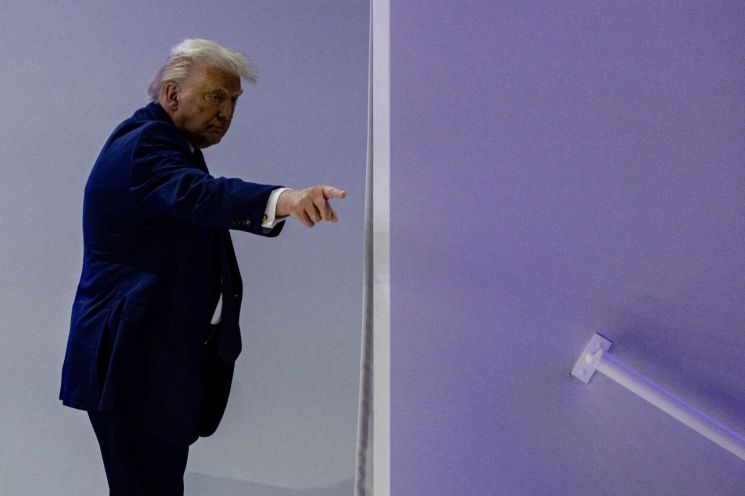
This acceleration in Europe’s military buildup is attributed to both Russia’s invasion of Ukraine and provocations by the United States in Greenland. The Financial Times, citing an official from the European Union, reported, "President Donald Trump is making threats in ways that are unacceptable under international law," adding, "He is crossing red lines and is reaching the limits of what can be reasonably managed through diplomacy."
There are also growing concerns about cracks in the Atlantic alliance. In a survey conducted by the European Council on Foreign Relations (ECFR) in November last year, only 16% of Europeans considered the United States a 'like-minded ally.' This figure represents a 5 percentage point drop compared to 21% in 2024.
© The Asia Business Daily(www.asiae.co.kr). All rights reserved.
![Clutching a Stolen Dior Bag, Saying "I Hate Being Poor but Real"... The Grotesque Con of a "Human Knockoff" [Slate]](https://cwcontent.asiae.co.kr/asiaresize/183/2026021902243444107_1771435474.jpg)


















