Brett Taylor, Chairman of the OpenAI Board
Shares Outlook for the AI Market at Davos Forum
"Adjustment Will Follow Intense Competition"
The Chairman of the Board at OpenAI has suggested that the current artificial intelligence (AI) boom may be a bubble.
According to Yonhap News, Brett Taylor, Chairman of the Board at OpenAI, said in an interview with CNBC on the 22nd (local time) in Davos, Switzerland, where the World Economic Forum (WEF) is being held, "AI might probably be a bubble," but added, "I think that's a good thing."
 Brett Taylor, Chairman of the Board at OpenAI, said in an interview with the US economic broadcaster CNBC on the 22nd (local time), "AI might probably be a bubble," but added, "I think that's a good thing." Photo by AP Yonhap News
Taylor explained, "As everyone recognizes that AI will have a massive impact across the economy and various industries, funding is pouring in," adding, "As a result, whether it's 'smart money' or 'dumb money,' the number of competitors in every sector has increased dramatically." He continued, "Competition is a good thing, and ultimately, the free market will identify the best products and the highest value," predicting, "There will be a period of adjustment and consolidation over the next few years." He emphasized that innovation cannot be achieved without competition.
He stated, "The current AI market is similar to the early days of the internet in 1996," and noted, "While it is clear that AI will have a significant impact on commerce, search, payments, and more, just like the internet, it will take time to build the infrastructure and for the regulatory environment to evolve." He added, "I am an AI optimist," and said, "I believe we are at the starting point of the (AI growth) curve."
Regarding the lawsuit filed by Elon Musk, CEO of Tesla, who claims that "OpenAI broke its promise to operate as a non-profit," Taylor said, "We have consistently stated that these claims are unfounded." He continued, "We are focused on building the OpenAI Foundation as one of the world's largest non-profit foundations," and added, "Especially at the board level, we are considering how the new (governance) structure can expand our mission, and whether going public is the way to achieve that."
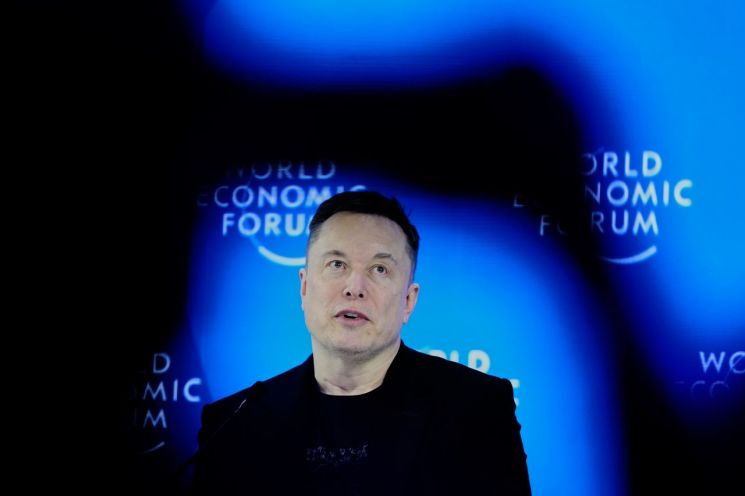 Elon Musk, CEO of Tesla, has reportedly demanded damages approaching $134 billion (approximately 200 trillion won) against OpenAI and Microsoft. Photo by AP Yonhap News
Previously, on January 17, it was reported that Musk had demanded damages approaching $134 billion (approximately 200 trillion won) from OpenAI and Microsoft. Musk claims that although he donated $38 million as initial funding when OpenAI was founded in 2015, his rights have been violated as OpenAI has since deviated from its non-profit purpose.
He argues that he invested a large sum at the time of OpenAI’s founding, trusting the words of Sam Altman, CEO of OpenAI, in 2015, but OpenAI has since abandoned its original mission, pursued profit by accepting investments from Microsoft, and deceived him. Accordingly, Musk asserts that he has rights to a significant portion of OpenAI’s current corporate value of $500 billion (approximately 732.5 trillion won).
Meanwhile, OpenAI is preparing for an initial public offering (IPO) with plans to go public at the end of this year or early next year, targeting a corporate value of $1 trillion. Currently, OpenAI discloses its business status only to a limited extent, but the IPO process is expected to provide a more detailed look at its business model.

© The Asia Business Daily(www.asiae.co.kr). All rights reserved.
![User Who Sold Erroneously Deposited Bitcoins to Repay Debt and Fund Entertainment... What Did the Supreme Court Decide in 2021? [Legal Issue Check]](https://cwcontent.asiae.co.kr/asiaresize/183/2026020910431234020_1770601391.png)


















