Strengthening Customized Education for Local Talent, Employment, Entrepreneurship, and Settlement Environment
Eight New Experts from Economic and Industrial Sectors Appointed to the Committee
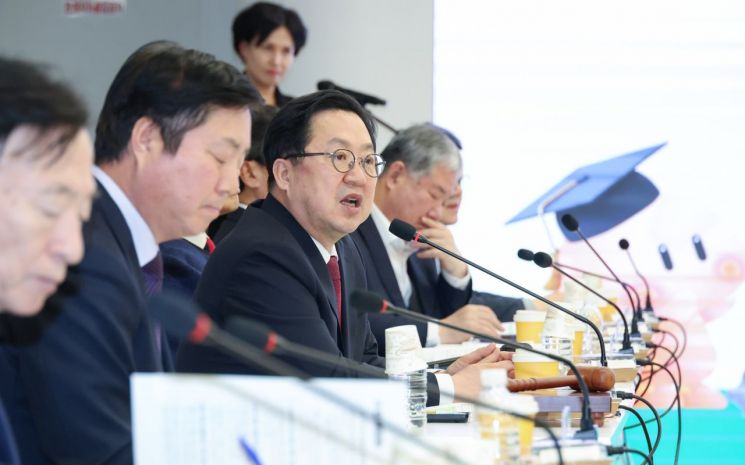
On January 22, Daejeon City held the first committee meeting of the year at Daejeon Technopark D-Station to mark the second year of the Regional Innovation-led University Support System (RISE) project and finalized the implementation plan for 2026.
Entering its second year, Daejeon City used this committee meeting to solidify the foundation established in the first year and to advance five major projects and twelve sub-tasks. By reviewing concrete action plans that can drive qualitative growth across the entire project, the city aims to strengthen its project execution capabilities.
The meeting was attended by 27 committee members, including co-chairs Lee Jangwoo, Mayor of Daejeon, and Kim Jeonggyeom, President of Chungnam National University, as well as Seol Dongho, Daejeon Superintendent of Education, local university presidents, and experts from the economic and industrial sectors.
Notably, Daejeon City appointed eight new experts from the business and industrial sectors to the RISE Committee on this day. This follows the enactment in December last year of the "Ordinance on the Establishment and Operation of the Daejeon RISE Committee," the first of its kind nationwide, and is significant as it further strengthens the governance system for the co-growth of the region and its universities.
In accordance with the 2026 implementation plan confirmed on this day, the city will continue to work with thirteen local universities selected in April last year to push forward five major projects and twelve sub-tasks: ▲ specialization of university education tailored to lead the region, ▲ revitalization of local settlement-based employment and entrepreneurship, ▲ advancement of cooperation among local government, industry, academia, and research institutes, ▲ strengthening of vocational lifelong education, and ▲ RISE-driven solutions to local issues. The city plans to accelerate efforts to achieve tangible results in the second year.
The key directions for 2026 include: ▲ strengthening organic linkages among sub-tasks to foster an environment for education, employment, entrepreneurship, and settlement; ▲ enhancing support centered on the flagship task of research cooperation with government-funded research institutes; ▲ providing feedback-based budget support according to performance evaluation results; and ▲ reflecting the Ministry of Education’s national agenda to restructure RISE.
This year, Daejeon City will conduct its own evaluation of each university's project performance for 2025. The evaluation results will be linked to a feedback system, including differential budget allocation, to encourage universities to operate their projects with a focus on outcomes.
Lee Jangwoo, Mayor of Daejeon, stated, "If last year was about laying the groundwork for the RISE project, 2026 is the time to produce visible results," adding, "We will focus support on universities that make a substantial contribution to regional development through fair and objective evaluation."
Meanwhile, Daejeon City will officially launch the second-year projects starting in March. The city plans to support performance improvement through a thorough review of each university's project progress and consulting for areas identified as weak points.
© The Asia Business Daily(www.asiae.co.kr). All rights reserved.
!["The Woman Who Threw Herself into the Water Clutching a Stolen Dior Bag"...A Grotesque Success Story That Shakes the Korean Psyche [Slate]](https://cwcontent.asiae.co.kr/asiaresize/183/2026021902243444107_1771435474.jpg)
















