Dr. Shin Hyunwoong Calls for Comprehensive Regional Doctor System at Medical Workforce Forum
Strict Measures Proposed, Including License Revocation for Non-compliance with Mandatory Service
Emphasizes Need for Public Medical Schools and New Regional
There has been a call to apply the regional doctor system to all additional admissions for medical schools in order to secure essential medical personnel in local areas.
Shin Hyunwoong, Director of the Health and Medical Policy Research Division at the Korea Institute for Health and Social Affairs, made this statement as a presenter at the "Forum on Training Medical Personnel" held at The Westin Chosun Seoul in Jung-gu, Seoul, on January 22.
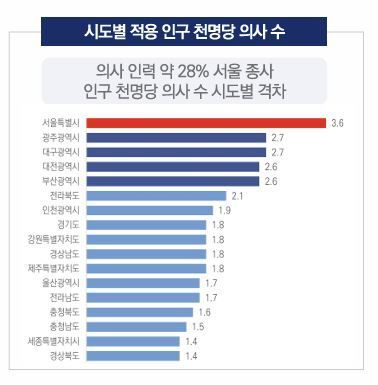
Director Shin emphasized that simply increasing the number of doctors would not resolve the current healthcare crisis. This is because about 28% of Korea's doctors are concentrated in Seoul, where there are 3.6 doctors per 1,000 people, while Sejong and North Gyeongsang Province have only 1.4 per 1,000, highlighting a significant regional disparity.
To prevent the concentration of newly trained doctors in the Seoul metropolitan area, he proposed the introduction of a regional doctor system as an institutional safeguard. Under this system, students selected as regional doctors would receive full support for admission fees, tuition, and textbook costs from the government and local authorities. In return, they would be required to serve in the designated region for 10 years after obtaining their medical license.
If a regional doctor fails to fulfill the 10-year mandatory service requirement, the government could issue a corrective order, and failure to comply could result in suspension or revocation of their license. The system would also require the repayment of all financial support received if the individual withdraws before completing the obligation.
In addition to the regional doctor system, he suggested establishing a "public medical school (national graduate medical school)" to train specialized personnel for public healthcare sectors such as national hospitals, infectious disease response, and forensic medicine-fields often avoided by general practitioners. This institution would operate as a four-year graduate medical school, with a mandatory service period of 15 years. He also stressed the need to establish new regional medical schools to train regional doctors.
Director Shin stated, "Increasing medical school admissions is only the beginning of securing local medical personnel; the journey from the first admissions to the placement of specialists and eventual settlement in the region after completing mandatory service is a long-term process," adding, "Co-evolution among the medical community, government, and universities is necessary."
At the forum, Shin Jungwoo, Director of the Medical Workforce Supply and Demand Projection Center, presented the results of a statistical model estimating the supply and demand for doctors. The analysis showed that, taking into account future changes in the healthcare environment and policy variables, there will be a shortage of at least 2,530 to as many as 4,800 doctors by 2037.
The Ministry of Health and Welfare plans to report the results of this forum at the upcoming 5th Health and Medical Policy Review Committee meeting scheduled for January 27.
© The Asia Business Daily(www.asiae.co.kr). All rights reserved.
![Clutching a Stolen Dior Bag, Saying "I Hate Being Poor but Real"... The Grotesque Con of a "Human Knockoff" [Slate]](https://cwcontent.asiae.co.kr/asiaresize/183/2026021902243444107_1771435474.jpg)












