The government has decided to strengthen customs clearance management for imported onions in response to requests from the domestic onion industry. The onion industry has long complained of damages caused by low-priced onion imports and has called on the government to step up enforcement and penalties.
On January 22, the Korea Customs Service announced that it had held an "inter-agency meeting to block illegal imported onions" the previous day at the Government Complex Daejeon, together with the Ministry of Agriculture, Food and Rural Affairs, the Ministry of Food and Drug Safety, and the Korea Agro-Fisheries & Food Trade Corporation.
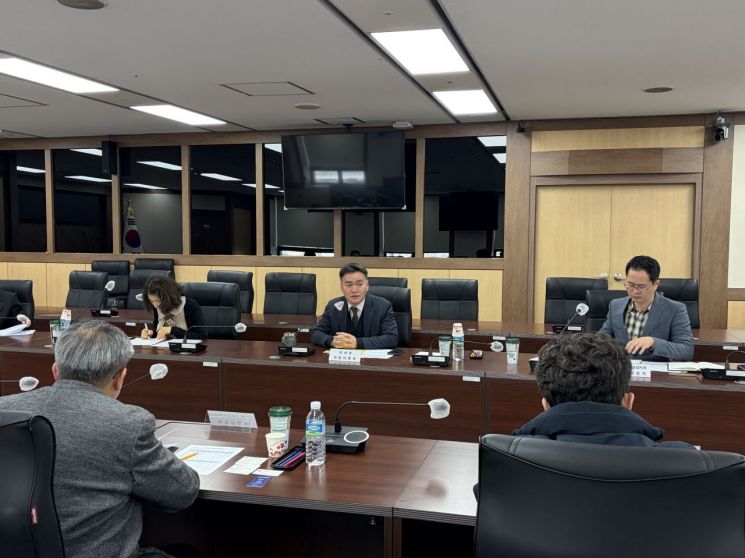 Lee Jongwook, Deputy Commissioner of the Korea Customs Service (center), is presiding over an inter-agency meeting to block illegal imported onions at the Government Complex Daejeon on the 21st. Photo by Korea Customs Service
The meeting was convened to address the requests of the onion industry, specifically to discuss strengthening customs inspections of low-priced imported onions, enhancing residual pesticide testing to ensure safety, and reviewing the reference prices used for customs investigations of imported onions.
The reference price for collateral is the standard price set for each item to calculate the amount of collateral required for customs duties when imported goods are released before import declaration is completed (the principle is to release after clearance). The Korea Customs Service calculates this reference price based on price data, such as farm gate prices, received from the Korea Agro-Fisheries & Food Trade Corporation.
As a result of the meeting, the Korea Customs Service plans to conduct full inspections at the customs clearance stage to ensure that the weight of imported onions matches the declared and shipped quantities. The agency will also review its operating procedures and inspection systems to establish more effective management measures.
In particular, for importers suspected of underreporting prices, the Korea Customs Service will immediately launch targeted customs investigations during the high-risk period from January to March, when import volumes typically increase. If any violations are found, strict action will be taken.
The Ministry of Food and Drug Safety will conduct residual pesticide testing during the customs clearance process, while the Korea Agro-Fisheries & Food Trade Corporation will collect overseas local prices through pre-verification and enhance the effectiveness of information sharing with the Korea Customs Service.
Lee Myunggu, Commissioner of the Korea Customs Service, stated, "We will strengthen the management of illegally imported agricultural products, such as low-priced declarations, to protect domestic farmers and prevent harm to legitimate importers. To this end, the Korea Customs Service will continue to maintain close cooperation with the industry and related agencies."
© The Asia Business Daily(www.asiae.co.kr). All rights reserved.

















