Seoul Releases 24-Year Population Movement Analysis
Net Outflow Drops Significantly from 113,000 to 44,000
Number of Young People Moving Increases Since 2019
Over the past 24 years, the number of people leaving Seoul has decreased, and since 2019, the number of young people in their 20s and 30s moving into Seoul has surpassed those leaving.
On the 22nd, the Seoul Metropolitan Government released the "Seoul Population Movement Analysis," which comprehensively examines structural changes in the scale and direction of population movement, reasons for moving in, and age-specific migration characteristics. This analysis utilized microdata from the National Data Agency's domestic migration statistics, focusing on residential moves across eup, myeon, and dong administrative boundaries.
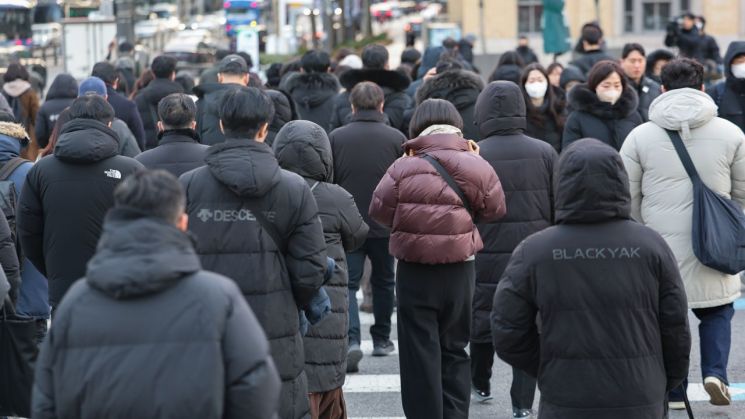 According to the "Seoul Population Movement Analysis" announced by the Seoul Metropolitan Government on the 22nd, the number of people leaving Seoul has decreased over the past 24 years, and since 2019, the number of young people in their 20s and 30s moving into the city has been higher. The photo shows the morning commute at Gwanghwamun. Photo by Yonhap News
The analysis found that Seoul has continued to experience a net outflow, meaning more people have left than moved in. However, the net outflow in 2024 was 44,692 people, a significant decrease from the net outflow of 113,949 people in 2001.
Among all new residents in Seoul, the proportion moving from other areas within Seoul decreased from 72.2% in 2001 to 64.9% in 2024. In contrast, the proportion moving into Seoul from other cities and provinces increased from 27.8% in 2001 to 35.1% in 2024.
Notably, since 2019, the number of people in their 20s and 30s moving into Seoul from other regions has exceeded those leaving Seoul for other regions. In the past, there was a net outflow, but in 2019, this shifted to a net inflow of 19,000 people, and except for 2021, there has been a net inflow every year since.
As of 2024, among those who moved to Seoul from other regions, 53% came from Gyeonggi Province, making it the largest source, followed by Incheon at 7.7%. The net outflow from Seoul to Gyeonggi Province decreased from 120,000 in 2021 to 60,000 in 2024.
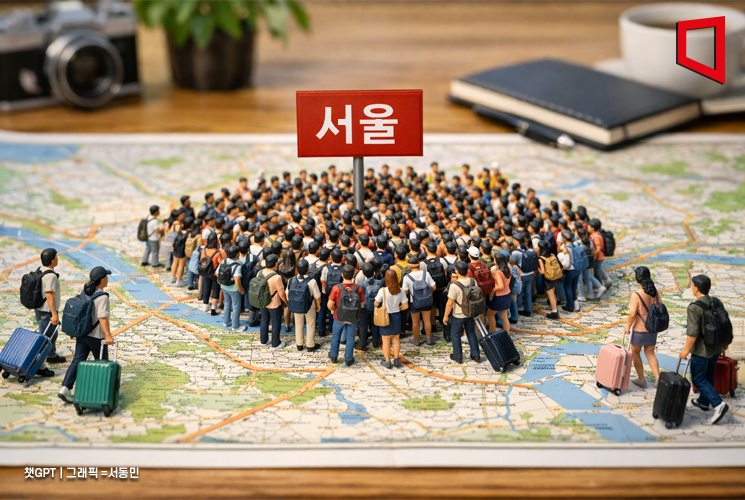
Among those who moved from Gyeonggi Province to Seoul, "work" was the most increased reason, rising from 24.2% in 2013 to 30.6% in 2024. The proportion citing "housing" decreased from 32.5% in 2013 to 20.5% in 2024. For those in their 20s and 30s, 39.2% moved from Gyeonggi Province to Seoul for work in 2024, a significant increase from 29.8% in 2013.
In 2024, single-person moves accounted for 79.8% of all moves into Seoul, a substantial rise from 57.7% in 2001. Among these single-person movers, those aged 19 to 39 made up 68.8%, with "work" being the main reason at 36.5%, followed by "family" at 22.7%.
Kang Okhyun, Director of the Digital City Bureau at the Seoul Metropolitan Government, stated, "When it comes to population inflow into Seoul, it is important to focus on the changing purposes and patterns of migration rather than just the scale," adding, "We will enhance the precision of policy analysis and urban strategy development based on population movement data, in line with the growing trend of individual and youth migration."
© The Asia Business Daily(www.asiae.co.kr). All rights reserved.


















