Foreign Tourist's Bizarre Stunt in Da Nang, Vietnam
Concerns Raised Over Aggression and Disease Transmission
Local Authorities to Step Up Patrols and Enforcement
Similar Incidents Reported in Bali, Thailand, and Beyond
On the Son Tra Peninsula in Da Nang, Vietnam, a foreign tourist sparked controversy by attaching bananas to his body and entering a wild monkey habitat in an attempt to lure the animals. According to Vietnamese daily Tuoi Tre and Singaporean media outlet The Straits Times on January 18 (local time), a recently circulated online video shows a man entering a monkey habitat with dozens of bananas taped to his waist, arms, and legs using transparent tape. As the monkeys rushed to snatch the bananas off his body, the tourist appeared to enjoy the experience.
 A foreign tourist in Vietnam was spotted covering their entire body with bananas to lure wild monkeys and attempting to enter the monkey habitat. Screenshot from social media
Resort staff in the vicinity who witnessed the scene immediately intervened, warning that feeding wild animals is dangerous and demanding that he stop. However, the tourist reportedly left the area on a motorcycle without facing any significant restraint. As the video spread rapidly, local criticism mounted. Social media users pointed out, "This is not a unique experience, but a clear violation of wildlife protection regulations," and "Irresponsible behavior for attention is damaging nature." Numerous warning signs prohibiting the feeding of monkeys are installed throughout the Son Tra Peninsula area.
The Da Nang Tourism Beach Management Committee stated, "Such actions can disrupt the survival instincts of wild animals," and added, "We are taking the matter seriously and are currently verifying the facts." The committee further explained, "We have promoted the feeding ban for years, but violations continue to occur." Experts warn that if wild monkeys become accustomed to high-calorie food provided by humans, their ability to forage independently diminishes, and if they cannot obtain food, the likelihood of them attacking people increases. Additionally, monkeys and other primates can be carriers of diseases transmissible to humans, so close contact itself raises the risk of infection.
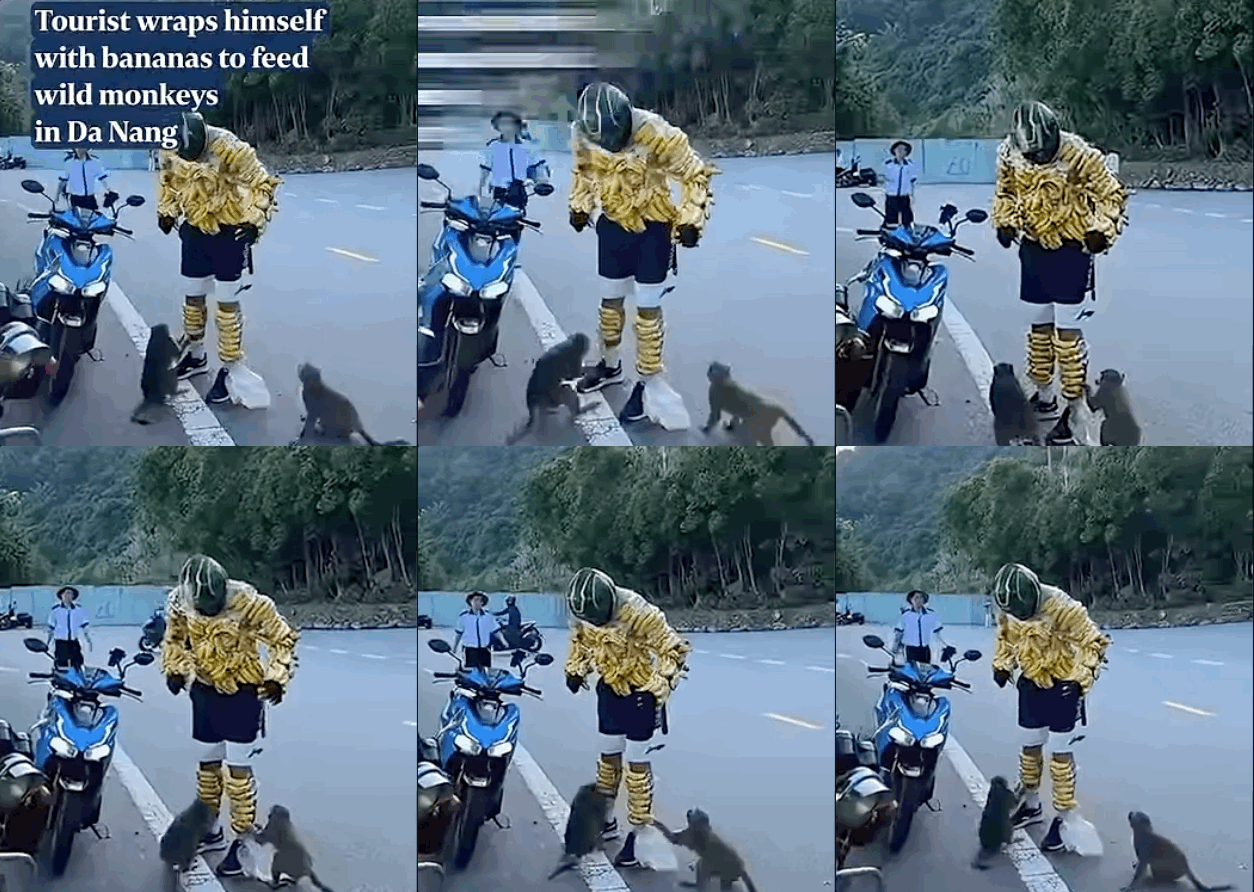 A foreign tourist in Vietnam was spotted covering their entire body with bananas to lure wild monkeys and attempting to enter the monkey habitat. Screenshot from social media
Similar incidents have frequently occurred at tourist destinations across Southeast Asia. In Bali, Indonesia, a series of accidents have been reported in which tourists are bitten or have their belongings snatched while feeding monkeys, prompting some temples and protected areas to introduce fines. In Lopburi, Thailand, monkeys accustomed to food provided by tourists and merchants have taken over city centers in groups, resulting in shop raids and traffic disruptions that have become social issues. In Japan and India, there have also been numerous reports of attacks following contact or feeding for the purpose of taking photos with wild animals.
Authorities in these regions commonly emphasize that actions driven by tourists' curiosity or the desire to attract attention ultimately pose risks to both humans and wildlife, underscoring the need for strict regulations. Da Nang authorities also stated, "Preserving the natural ecosystem and ensuring tourist safety are values that must coexist," and asserted, "We will respond firmly to any violations of the regulations." The authorities plan to strengthen patrols and on-site monitoring around the Son Tra Peninsula and expand guidance and public awareness activities for tourists.
© The Asia Business Daily(www.asiae.co.kr). All rights reserved.
![Clutching a Stolen Dior Bag, Saying "I Hate Being Poor but Real"... The Grotesque Con of a "Human Knockoff" [Slate]](https://cwcontent.asiae.co.kr/asiaresize/183/2026021902243444107_1771435474.jpg)

















