Government Sets Digital Inclusion Plans, Private Sector Participation Encouraged
Impact Assessment System Introduced, Policy Effectiveness to Be Monitored and Managed
Obligations for Kiosk Manufacturers and Lessors, Guidance and Grace Periods Provided
The "Digital Inclusion Act," aimed at creating a digitally inclusive society where everyone can equally benefit from artificial intelligence (AI) and digital technologies, will come into effect on January 22.
The Digital Inclusion Act was established based on a consensus that existing policies to bridge the information gap are insufficient to prevent the social and economic disparities that may arise from the rapid advancement of AI and digital technologies.
With the implementation of the law, the government will establish a basic digital inclusion plan every three years and an annual implementation plan each year. The private sector will participate in the formulation and execution of digital inclusion policies. The Ministry of Science and ICT will specify the direction of this year’s basic plan and establish a regular channel for collecting public feedback to ensure that diverse private sector opinions are reflected throughout digital inclusion policies.
A digital inclusion impact assessment system will also be introduced. The digital inclusion impact assessment consists of: ▲ an "internal impact assessment," which is conducted in advance when national or local governments and public institutions introduce new intelligent information services or products or promote major plans or projects; and ▲ an "individual impact assessment," which the Minister of Science and ICT may conduct as necessary for policies or projects closely related to digital inclusion.
As the enforcement decree stipulates that the Ministry of Science and ICT will set and notify guidelines for selecting and evaluating targets for internal impact assessments, the ministry plans to develop concrete operational measures to enhance the effectiveness of the system through close cooperation with relevant ministries.
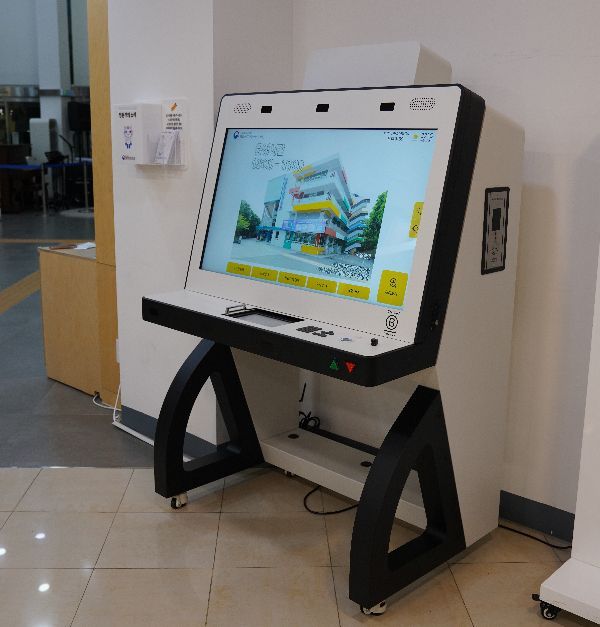
Measures to improve user convenience will also be newly implemented at the manufacturing and leasing stages of unmanned information terminals (kiosks). Reflecting the reality that most restaurants and cafes purchase or lease ready-made products, manufacturers and lessors are now required to share certain obligations. Manufacturers must produce unmanned information terminals that support the installation and operation of barrier-free kiosks, while lessors cannot refuse rental requests for such products without justifiable reasons.
The Ministry of Science and ICT expects that by encouraging manufacturers to consider features such as staff call buttons and voice guidance services from the production stage, it will support operators in fulfilling their legal obligations and robustly protect accessibility for digitally vulnerable groups.
A phased guidance period and implementation grace period will also be applied. Small and medium-sized enterprises engaged in kiosk manufacturing or leasing must fulfill their obligations as manufacturers or lessors starting six months after the law takes effect (from July 22), while small businesses and micro-enterprises must comply starting one year later (from January 22, 2027). To allow large and mid-sized companies time to recognize and prepare for these measures, a three-month guidance period will be provided until April 22, during which compliance will be encouraged without corrective orders or fines.
Additionally, the government plans to: ▲ systematically monitor and manage the effectiveness of digital inclusion policies through fact-finding surveys; ▲ build and operate a comprehensive information system for digital competency development to be used in capacity-building education; and ▲ foster a virtuous cycle for the digital inclusion industry, connecting standardization and the discovery of promising technologies and services with research and development (R&D), commercialization, and overseas expansion.
Lee Dogyu, Director General for Information and Communication Policy at the Ministry of Science and ICT, stated, "We will do our utmost to address the social and economic inequalities brought about by technological advancement and to achieve a balance between technological innovation and social integration in building a digitally inclusive society."
© The Asia Business Daily(www.asiae.co.kr). All rights reserved.

















