National Heritage Administration Takes Follow-up Action After Kim Keonhee Privilege Controversy
Abolishes "Post-Event Reporting" Exception Clause
"No One Should Receive Such Privileges"
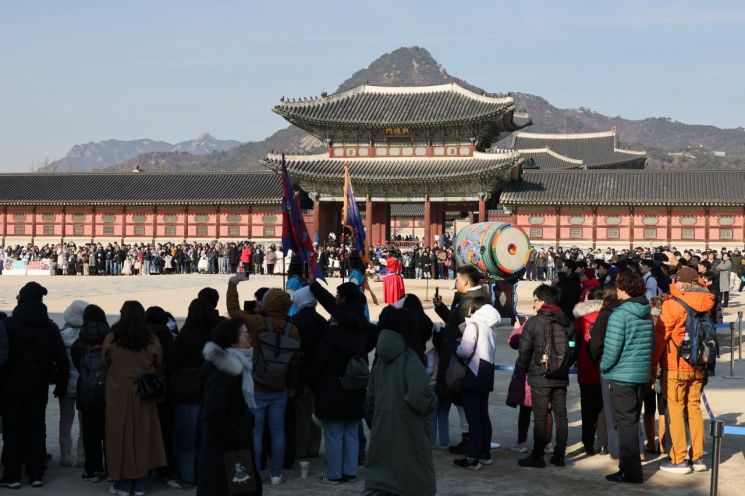
From now on, even for events attended by the President, it will be mandatory to submit official documents and obtain formal approval when using palaces or royal tombs. The previous exceptions that allowed such usage for reasons of 'security' or 'urgency' have been eliminated, thereby strengthening institutional measures to prevent the private use of national heritage sites by those in power.
The National Heritage Administration's Palaces and Royal Tombs Heritage Headquarters announced on January 21 that it has issued an administrative notice for a partial revision of the "Regulations on Palace and Royal Tomb Visits," with the main focus on ensuring procedural transparency. The previous regulations included an exception clause stating, "In cases where government events require urgency or cannot be publicly announced, post-event reporting is permitted." This clause had been criticized for potentially allowing VIP (President and spouse) events to take place without official records or prior review.
In response, the National Heritage Administration has boldly removed this clause and stipulated that, without exception, even events hosted by government agencies must follow the same venue approval procedures as the general public. In particular, by making the submission of official documents mandatory, the administration has ensured that records are kept and managed regarding who uses national heritage sites, when, and for what purpose. This reflects a firm intention to prevent any "secret events" from taking place.
This regulatory overhaul stems from reflection on a series of privilege-related controversies surrounding former President Yoon Suk Yeol's wife, Kim Keon Hee. During last year's National Assembly audit, it was revealed that in September 2024, Mrs. Kim held a private tea meeting with outsiders at Jongmyo, a UNESCO World Heritage site, and made an undisclosed visit to Gyeonghoeru Pavilion in Gyeongbokgung Palace. These actions sparked intense criticism for being "private use" of public heritage. Public opinion further deteriorated due to additional controversy involving the Geunjeongjeon Throne, a national treasure.
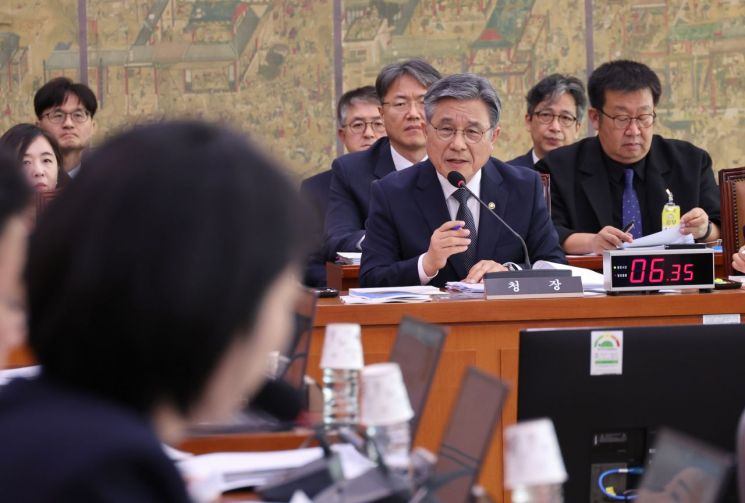
At the time, National Heritage Administration Commissioner Heo Min acknowledged, "This was a private act that no citizen can understand, and a privilege that no one should receive," and offered an apology. The current revision can be seen as a concrete implementation of his previous pledge to "strictly revise the regulations and ensure there are no procedural oversights." Last year, the Palaces and Royal Tombs Heritage Headquarters had already deleted the exception clause that deemed visits by heads of state as automatically approved, and with this measure, the practice of those in power arbitrarily using cultural assets is now firmly blocked.
The amendment also addresses blind spots in the current regulations. It clarifies the definitions of terms such as "special opening" and "special viewing," which had previously been used interchangeably, thereby reducing confusion. The safety management guidelines to be followed during filming within palace and royal tomb heritage sites have been specified in detail. In line with amendments to the Enforcement Decree of the "Act on the Preservation and Use of Cultural Heritage," the revised regulations also stipulate that if a person is found smoking in a palace, which is a designated non-smoking area, their visit may be suspended or they may be asked to leave.
© The Asia Business Daily(www.asiae.co.kr). All rights reserved.
![Clutching a Stolen Dior Bag, Saying "I Hate Being Poor but Real"... The Grotesque Con of a "Human Knockoff" [Slate]](https://cwcontent.asiae.co.kr/asiaresize/183/2026021902243444107_1771435474.jpg)

















