Four Strategic Technology Measurement Standard Projects Selected, Including 6G and Quantum
Securing Approximately 500 Million Won Over Three Years
First Achievement Since Associate Membership
A Signal of Korea's Full-Scale Entry into the European Research Ecosystem
The Korea Research Institute of Standards and Science (KRISS) has successfully secured direct research funding from Horizon Europe, the European Union's (EU) large-scale research and innovation program. This marks the first time since South Korea joined Horizon Europe as an Associate Member in January last year that a domestic research institution has been selected for a project as a 'Beneficiary,' enabling it to directly manage EU budget funds.
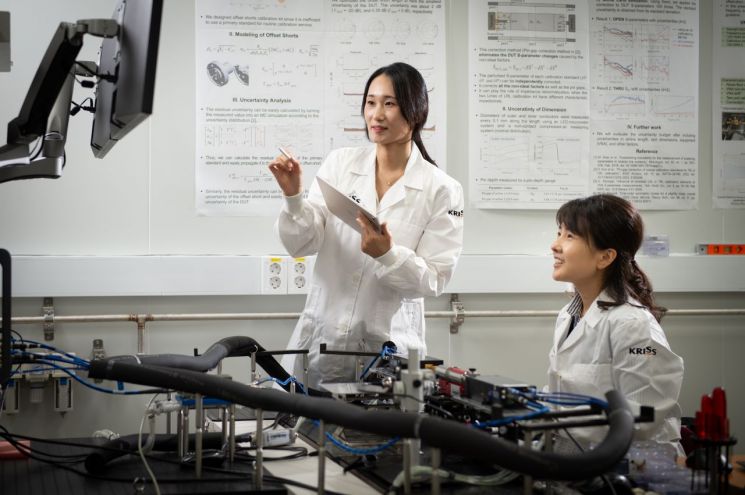
KRISS had a total of four projects selected in the European Partnership on Metrology (EPM) under Horizon Europe, and will receive approximately 285,000 euros (about 500 million Korean won) in research funding over three years for three of these projects, starting in 2026. Until now, even when Korean research institutions participated in joint research under Horizon Europe, they were classified as 'Associated Partners' from third countries and were not eligible for EU funding. However, with Korea's accession as an Associate Member, these institutional barriers have been removed.
The selected projects focus on core measurement standard technologies in national strategic technology fields such as next-generation communications, advanced biotechnology, and quantum technology. KRISS has formed a consortium with major European national metrology institutes, including the National Physical Laboratory (NPL) in the United Kingdom and the Physikalisch-Technische Bundesanstalt (PTB) in Germany, to jointly conduct research on: ▲ on-wafer electromagnetic wave measurement for electromagnetic devices and 6G communications, ▲ establishing measurement standards for rapid and accurate infectious disease diagnostics, ▲ adoption of advanced technologies for thermodynamic temperature dissemination, and ▲ development of quantum-based nanoscale magnetic field measurement technologies.
The European Partnership on Metrology, which includes these projects, is part of the 'Digital, Industry, and Space' cluster within 'Global Challenges and European Industrial Competitiveness (Pillar 2),' a core pillar of Horizon Europe. Led by the European Association of National Metrology Institutes (EURAMET), this partnership aims to advance measurement technologies to address global challenges such as healthcare and climate change, with broad participation from national metrology institutes (NMIs), research institutes, universities, and industry.
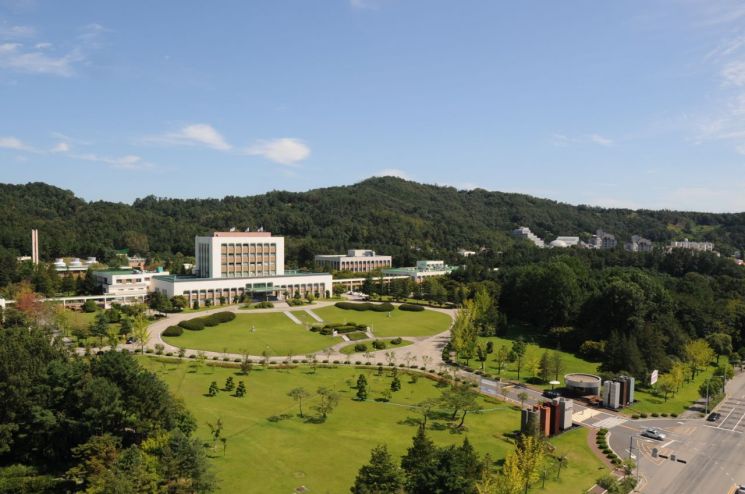
KRISS has established a long-term collaborative network with leading European research institutions in countries such as the United Kingdom and Germany. This achievement is seen as a result of that trusted relationship translating into tangible research funding. KRISS is currently awaiting the results of several additional project applications within Horizon Europe, making further achievements highly likely.
Lee Hosung, President of KRISS, stated, "This is official recognition that Korea's measurement standard technology is at the highest level within Europe's leading research ecosystem. We will further strengthen our cooperation with Europe's top researchers to help secure global leadership in strategic technology fields such as 6G and quantum technology."
■ What is Horizon Europe?
Horizon Europe is the world's largest multilateral research and innovation (R&I) program, operated by the European Union (EU) with a total budget of 95.5 billion euros from 2021 to 2027. As the EU's ninth Framework Programme, it covers the entire cycle from basic science to industrial and societal problem-solving, structured around three pillars: 'Excellent Science (Pillar 1)', 'Global Challenges and European Industrial Competitiveness (Pillar 2)', and 'Innovative Europe (Pillar 3)'. Until now, the budget was primarily allocated to EU member states and some neighboring countries, but with Korea's accession as Asia's first Associate Member in 2025, Korean institutions can now directly secure and manage research funding. As a result, the participation of domestic research institutions and companies in joint research with Europe is shifting from simple collaboration to direct budgetary benefit.
© The Asia Business Daily(www.asiae.co.kr). All rights reserved.
![From Bar Hostess to Organ Seller to High Society... The Grotesque Con of a "Human Counterfeit" [Slate]](https://cwcontent.asiae.co.kr/asiaresize/183/2026021902243444107_1771435474.jpg)

















