Rial Plunge and Bank Collapse Spark Protests
From "Women and Freedom" to a Struggle for Survival
Iranian Discontent Persists Despite Repression
Claims have been raised that, during the recent crackdown on anti-government protests in Iran, authorities prevented injured individuals from receiving proper medical treatment. Many protest participants who suffered gunshot wounds were reportedly left untreated, and there are testimonies that a doctor who attempted to treat them was arrested.
On January 20, Yonhap News, citing the Norway-based human rights organization Iran Human Rights (IHR), reported that around 1,000 protestors were arrested in the Shiraz area of southwestern Iran on January 7, when the protests intensified, and were detained in facilities such as Adel Abad Prison.
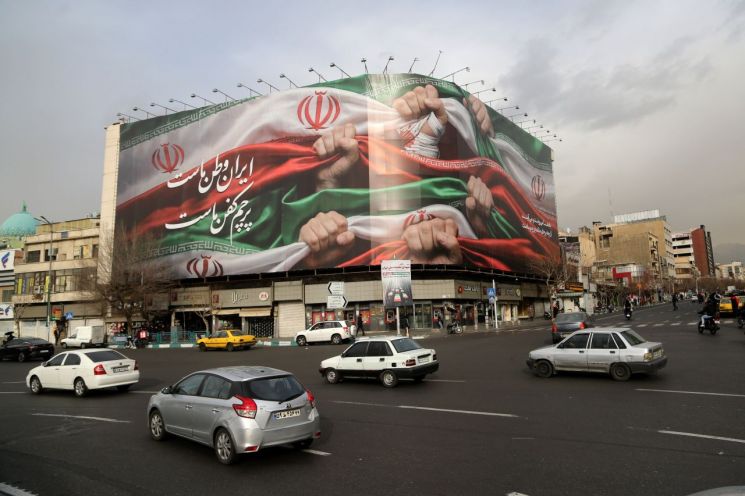 The direct cause of this protest is the rapid economic deterioration. As the value of the Iranian rial plummeted, prices soared, and citizens took to the streets saying, "It's hard to make a living." Photo by Xinhua News Agency Yonhap News
According to a source cited by IHR, "A significant number of detainees suffered severe injuries from shotgun wounds and other firearms, and many of them were teenagers aged 16 to 18." Teenage protestor Hossein Ahmadzadeh was left blind in both eyes and had multiple bullets lodged in his skull, while 16-year-olds Kourosh Fatemi and Omid Farahani were reportedly paralyzed from the waist down due to gunshot wounds. The source stated, "Prison medical staff were instructed not to treat the wounded, with the apparent intent to let them die from excessive bleeding," and claimed, "Dr. Jafarzadeh, who refused this order and attempted to provide treatment, was arrested."
IHR has announced that at least 3,428 protest participants have died since the Iranian government began its violent crackdown. However, the organization pointed out that "this figure is lower than both eyewitness accounts and our own estimates," and emphasized that "the actual number of deaths is likely much higher." Notably, both Iran's Supreme Leader Ayatollah Seyyed Ali Khamenei and Speaker of Parliament Mohammad Bagher Ghalibaf have referenced "thousands" of deaths related to the protests, with IHR claiming that statistics on state violence are being systematically underreported.
IHR also stated, "Over the past five years, the number of executions announced by Iranian authorities amounted to only about 12% of the cases actually confirmed," adding, "We will suspend the publication of daily death tolls until sufficient data is available."
40,000 Starlink Terminals Shut Down... Further Blocking Communication with the Outside World
Iranian authorities are also intensifying their information blockade. According to dpa News Agency, which cited Iran's state broadcaster on January 20, the authorities have deactivated approximately 40,000 Starlink satellite internet terminals. However, it remains unclear whether the terminals were physically confiscated or remotely disabled. Previously, Hossein Afshin, Iran's Vice President for Science, Technology, and Knowledge Economy, stated, "The internet will be restored to normal this week," but in reality, the government continues to restrict connections with the outside world.
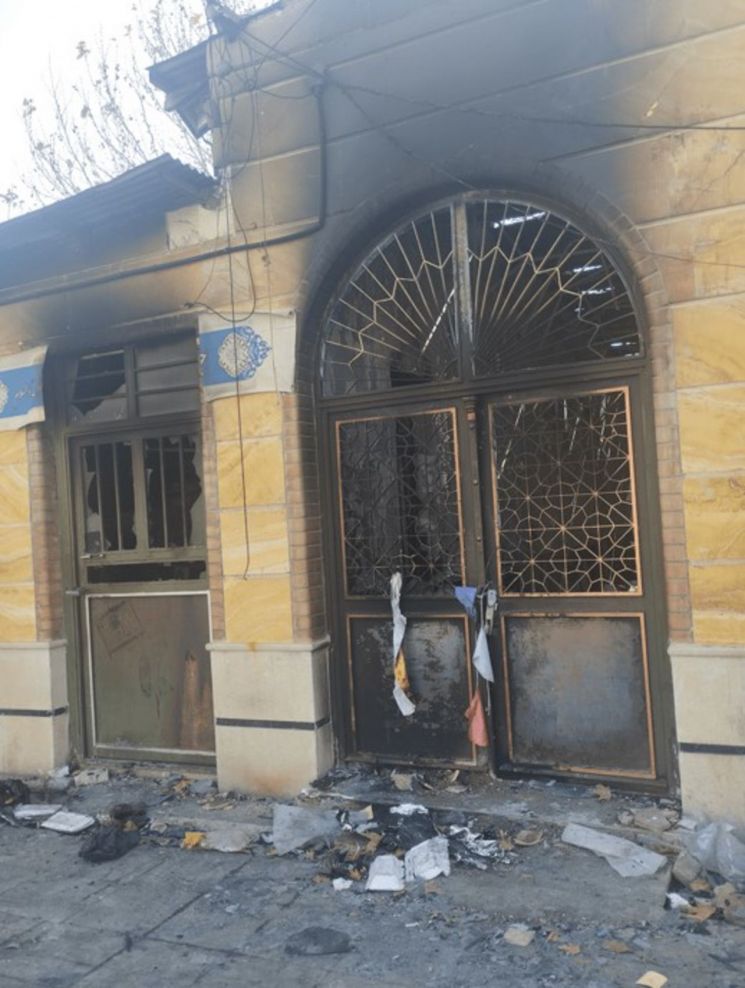 Earlier, Iranian authorities, after protests against economic hardship escalated into anti-government slogans on the 28th of last month, completely cut off the internet and communications on the 8th of this month and launched a violent crackdown. Despite this, the horrors of the protest sites were conveyed to the outside world through some Starlink users. Photo by TASS Yonhap News
The internet censorship monitoring group Filterwatch recently released a report stating that the Iranian government is seeking to make permanent a system that allows only a select few, approved by the government, to access the international internet. According to the report, ordinary citizens would be limited to using a domestic national network disconnected from the global internet. In Iran, up to 20 million people-about a quarter of the total population-are estimated to depend on online platforms such as the ride-hailing service Snapp and delivery apps for their livelihoods. There are concerns that prolonged internet shutdowns could further worsen living conditions.
Earlier, on the 28th of last month, after protests against economic hardship escalated into anti-government slogans, Iranian authorities completely cut off the internet and communications on the 8th of this month and launched a violent crackdown. Despite this, the horrors at protest sites were relayed to the outside world through some Starlink users. Recently, hackers intercepted the satellite signal of Iran's state broadcaster and aired a video in which Reza Pahlavi, the last crown prince of the Pahlavi dynasty, urged the military not to turn their guns on the people. This incident also became widely known after Starlink users shared it on social media.
Why Did People Take to the Streets? Economic Collapse as the Catalyst
The direct cause of the current protests is the rapid economic deterioration. As the value of the Iranian rial plummeted, prices soared, and citizens took to the streets, saying, "It's hard to make a living." Long-standing economic sanctions stemming from prolonged conflict with the United States have blocked oil exports and foreign currency inflows, and the bankruptcy of Ayandeh Bank last October was the final blow. The bank closed after losing about 5 billion dollars, leaving countless depositors unable to reclaim their savings. Additionally, the official exchange rate and the market rate diverged by as much as 30 times, effectively paralyzing imports and sending inflation out of control.
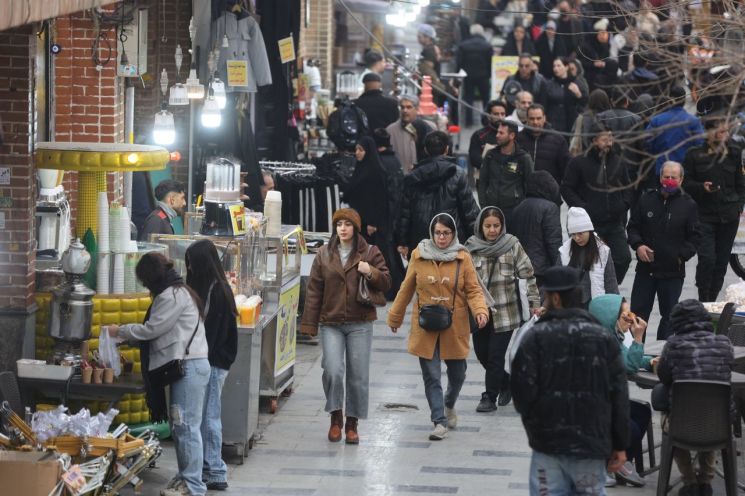 The direct cause of this protest is the rapid economic deterioration. As the value of the Iranian rial plummeted, prices soared. Photo by Reuters Yonhap News
Initially, the protests were directed at economic hardship, but the expansion into anti-government and anti-regime demonstrations is rooted in Iran's unique political structure. While Iran has a president and parliament, real power is concentrated in the hands of the Supreme Leader, the Islamic religious authority. In this context, whereas the 2022 protests against the compulsory hijab focused on women's rights and freedom, analysts note that the current protests are fundamentally about survival, transcending ideological lines.
Major international media outlets, including The New York Times and BBC, have described the current Iranian protests as "a challenge to the regime's economic management." Although street demonstrations have decreased due to the authorities' harsh crackdown, most observers agree that the underlying discontent over economic hardship and distrust in the system persists.
© The Asia Business Daily(www.asiae.co.kr). All rights reserved.
![Clutching a Stolen Dior Bag, Saying "I Hate Being Poor but Real"... The Grotesque Con of a "Human Knockoff" [Slate]](https://cwcontent.asiae.co.kr/asiaresize/183/2026021902243444107_1771435474.jpg)


















