Only Two Companies Submit Proposals for New Operator Selection
Two domestic companies, Lotte Duty Free and Hyundai Department Store Duty Free, have entered the competition to become the new operators of the duty-free stores at Incheon International Airport, after Shilla Duty Free and Shinsegae Duty Free returned their business licenses.
According to industry sources on January 20, these two companies submitted applications for the bidding process, which closed on this day. Shilla Duty Free did not even submit a letter of intent, the first step in the process. A representative from Shilla Duty Free stated, "Due to ongoing uncertainties caused by changes in consumption patterns and the overall environment, we have decided not to participate in this bidding."
Shinsegae Duty Free weighed its options until the last minute but ultimately decided not to submit a proposal. A Shinsegae Duty Free official said, "After a comprehensive review of market conditions, shifting consumer trends, and the profitability of the business, we have decided not to participate in this Incheon International Airport duty-free bidding. This decision aligns with our management principle of prioritizing profitability and financial soundness. Moving forward, we will continue to pursue sustainable growth through selective focus and concentration." Among foreign operators, Avolta (formerly Dufry), which had attended the bidding briefing and was considered a potential participant, also reportedly did not submit an application.
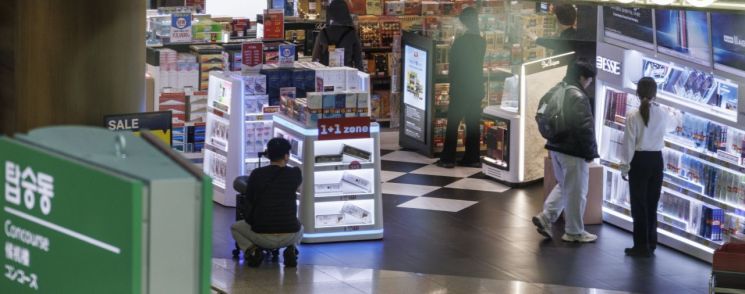
This bidding process is to select new operators for the duty-free stores in the DF1 and DF2 zones at Incheon Airport, which handle cosmetics, perfumes, liquor, and tobacco. Previously, Shilla Duty Free and Shinsegae Duty Free returned their business licenses for these zones, citing the burden of rent due to deteriorating market conditions.
When Incheon International Airport Corporation announced the selection of new operators on December 11, it set the minimum acceptable rent per passenger at 5,031 won for the DF1 zone and 4,994 won for the DF2 zone. These amounts are 5.9% and 11.1% lower, respectively, than those set during the public bidding in 2023. The rent system remains based on the 'per passenger rent' method, where the rent is calculated by multiplying the number of passengers using Incheon Airport by the unit price proposed by the operator. The corporation explained, "We have lowered the minimum rent compared to the previous bidding to reflect the current situation in the duty-free industry, which has been affected by recent changes in consumption and tourism trends."
The duty-free zones handling cosmetics, perfumes, liquor, and tobacco attract high customer demand, making them the most expensive among the duty-free business areas at Incheon Airport. In the public bidding held more than two years ago, the minimum acceptable amounts were 5,346 won for DF1 and 5,617 won for DF2, which were two to five times higher than those for other zones dealing with fashion and boutiques. At that time, Shilla Duty Free and Shinsegae Duty Free bid 8,987 won and 9,020 won for DF1 and DF2, respectively, securing the business licenses. However, in this round of bidding, it is reported that participating companies have submitted more conservative unit prices, considering the ongoing slump in the duty-free industry.
This bidding process will proceed through registration of participants, proposal submission and evaluation, and a special license review by the Korea Customs Service. Once Incheon International Airport Corporation selects eligible operators for each business license, it will notify the Korea Customs Service, which will then select the successful bidder through a license review. The contract period is approximately seven years, from the start of operations until June 30, 2033. In accordance with relevant laws, operators may request a contract renewal for up to 10 years.
© The Asia Business Daily(www.asiae.co.kr). All rights reserved.

















