Agenda Disclosed at Economic Ministers' Meeting on January 21
Up to 15 Billion Won Allocated to Regional Areas... Expansion of Intensive Care Units and Advanced Operating Rooms
Swift Implementation Through Simplified Administrative Procedures, Including Exemption from Local Fiscal Investment Reviews
The government will significantly strengthen the final treatment capabilities of regional hub medical institutions to reduce the medical gap between Seoul and other regions.
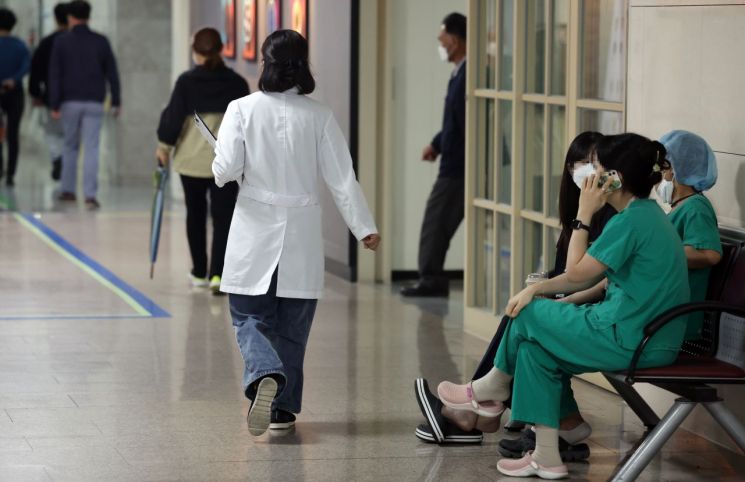
On January 21, Deputy Prime Minister and Minister of Economy and Finance Koo Yooncheol presided over the Economic Ministers' Meeting at the Government Complex Seoul, where he discussed the "Plan to Strengthen Final Treatment Capabilities of Regional Hub Medical Institutions to Address Regional Healthcare Disparities," which was jointly prepared by relevant ministries.
The core of this measure is to equip 17 regional hub medical institutions (14 national university hospitals and 3 private university hospitals), which serve as key hospitals in their respective regions, with infrastructure capable of performing high-level surgeries and treating critically ill patients.
Currently, the gap in treatable mortality rates between Seoul and North Chungcheong Province reaches 12.7 percentage points, and the annual cost incurred by patients traveling to large hospitals in Seoul due to lack of trust in local hospitals exceeds 4.6 trillion won. In particular, there have been concerns that the major medical equipment at national university hospitals has already exceeded its service life, leading to severe facility deterioration and even threatening patient safety.
In response, last year the government invested a total of 203 billion won, including 81.2 billion won in national funds, to actively support the expansion of intensive care units and the introduction of advanced critical care equipment such as robotic surgical systems and linear accelerators. This year, the government plans to maintain a similar level of support, but will adjust the amount of funding according to the medical conditions of each region. For the one regional hub medical institution in Seoul, 6.5 billion won will be allocated to strengthen critical care, while for the 15 regional institutions outside Seoul, 5.25 billion won each will be provided to enhance surgical and treatment capabilities as well as critical care.
In particular, when evaluating project proposals, the government will prioritize the medical conditions and relevance to the objectives of each region, ensuring that regions with weaker medical infrastructure receive greater benefits. The support method will also adopt a "bottom-up" approach that reflects the needs of the field.
Recognizing this initiative as a key national policy task to prevent the collapse of regional healthcare, the government will also provide exceptional administrative support to ensure swift implementation. It plans to exempt or greatly simplify existing complex administrative procedures, such as local fiscal investment reviews.
Furthermore, a selection committee composed of experts in health, clinical medicine, and architecture will evaluate the relevance to support objectives and the appropriateness of project plans, after which the Ministry of Health and Welfare, local governments, and the National Medical Center will cooperate to thoroughly monitor execution results.
© The Asia Business Daily(www.asiae.co.kr). All rights reserved.

















