Ministry of Employment and Labor Announces Additional Inspection Planned for Year-End
Following a labor inspection of six companies, including terrestrial broadcasters and general programming channels, the labor authorities have recognized the employee status of a total of 216 freelancers working at these broadcasters.
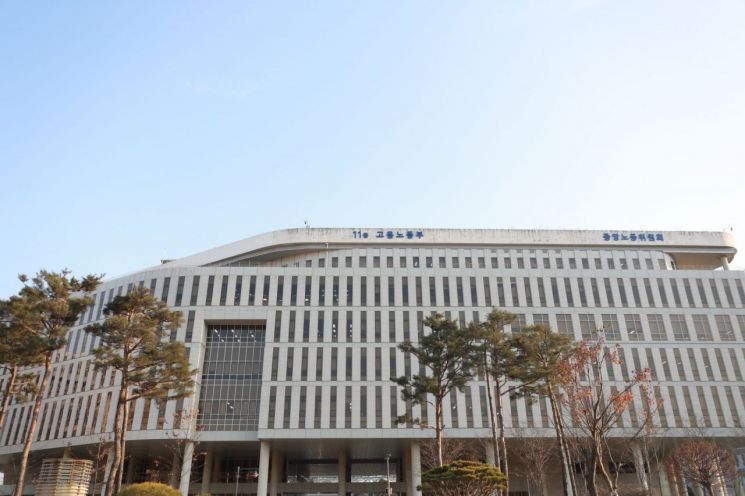
The Ministry of Employment and Labor announced on January 20 the results of its labor inspection conducted from July 30 to December 31 of last year on six companies, including terrestrial broadcasters (KBS, SBS) and general programming channels (Channel A, JTBC, TV Chosun, MBN). This follows a special labor inspection of MBC conducted for three months starting in February last year, and this time, a comprehensive inspection was carried out targeting major broadcasters.
The broadcasting industry has traditionally operated with a variety of employment types, including freelancers. As a result, some workers have been left outside the protection of labor laws. The Ministry of Employment and Labor conducted this inspection to fundamentally improve these entrenched employment practices, focusing on the determination of employee status for freelancers working in the current affairs and news divisions of major broadcasters.
For the two terrestrial broadcasters, individual interviews were conducted with workers in key job categories within the current affairs and news divisions, and the overall command and supervision systems were reviewed to determine employee status. As a result, at KBS, 58 freelancers in 7 out of 18 job categories (out of a total of 212 freelancers) were recognized as employees. At SBS, 27 freelancers in 2 out of 14 job categories (out of a total of 175 freelancers) were recognized as employees.
The individuals whose employee status was recognized this time were mainly PDs, FDs, editors, CG operators, and VJs. Although they had signed service contracts with the broadcasters as freelancers, the Ministry of Employment and Labor explained that, in practice, they received specific and ongoing work instructions and supervision from main PDs and others. The fact that they performed work continuously and alongside regular employees was also a factor in determining that they should be considered employees, not independent contractors.
KBS was also ordered to correct an issue where it failed to pay KRW 167 million in employee welfare benefits to 22 temporary workers engaged in video editing and news preparation work similar to that of regular employees. Some unreasonable aspects of organizational culture, including procedures for reporting workplace harassment and sexual harassment, were also identified, and the broadcaster was advised to establish internal guidelines or policies to improve its culture.
The four general programming channels established their own voluntary improvement plans for freelancer management and organizational culture through a preliminary meeting before the inspection. After commencing the inspection, the Ministry of Employment and Labor assessed the adequacy of these plans and determined the employee status of freelancers in disputed job categories through interviews. As a result, out of a total of 276 freelancers at the four companies, 131 are expected to be converted to employee status by the end of this month.
For job categories recognized as employees, the Ministry instructed that those who have worked for more than two years be converted to permanent contracts when signing employment contracts, and that their working conditions should not be downgraded, with a transition to similar types of work. The Ministry also specified plans to conduct a follow-up inspection at the end of this year to check whether the results of this inspection have been implemented. In the future, if the same legal violations are found, the Ministry plans to take strict measures, including legal action.
Additionally, to improve the treatment of non-regular workers in the broadcasting industry, the Ministry plans to consult with the Broadcasting Media and Communications Committee regarding broadcaster license renewal requirements. It also intends to create a framework for social dialogue within the broadcasting industry to discuss structural issues and solutions related to employment, and to seek alternatives. Minister of Employment and Labor Kim Younghoon stated, "We will continue our efforts to fundamentally improve the employment structure in the broadcasting industry."
© The Asia Business Daily(www.asiae.co.kr). All rights reserved.

















