Despite decades of balanced development policies and the construction of new towns, a recent analysis has found that the persistent concentration of population in the Seoul metropolitan area is fundamentally driven by the 'productivity gap' between regions.

According to the FOCUS report, "Why Does Metropolitan Concentration Persist: Determinants of Population Distribution and Implications for Spatial Policy," published by the Korea Development Institute (KDI) on January 20, the concentration in the Seoul metropolitan area is not simply a matter of residential preference or infrastructure disparity. Rather, it is the result of structural factors such as urban productivity, amenity, and population accommodation costs. The report analyzed the characteristics of 161 cities and counties nationwide from 2005 to 2019 using urban economics and spatial general equilibrium models. The findings revealed that the growing productivity advantage of the metropolitan area has drawn population migration at the national level.
According to the report, in 2005, the average productivity of metropolitan cities was 101.4% of the national average, not significantly different from the non-metropolitan areas (98.7%). However, by 2019, productivity in the metropolitan area had risen to 121.7%, while non-metropolitan areas only reached 110.6%. Over the 15-year period, productivity growth in the metropolitan area was 20.0%, nearly 8 percentage points higher than the 12.1% seen in non-metropolitan regions. The report identifies this widening productivity gap as the key factor behind the increased population share of the metropolitan area.
In contrast, non-metropolitan areas held a relative advantage in terms of amenity. Throughout the analysis period, non-metropolitan areas consistently scored higher in amenity-reflecting non-economic factors such as natural environment and living conditions-and the gap even widened. However, improvements in amenity alone were insufficient to offset the metropolitan area’s productivity advantage. This is because the decisive factors driving actual population movement are productivity indicators, such as wages and jobs.
The structural strength of the metropolitan area was also evident in terms of population accommodation costs. Thanks to a dense public transportation network and concentrated infrastructure, the additional congestion costs associated with population growth were relatively low in the metropolitan area. In 2005, the population accommodation cost in the metropolitan area was just 62.0% of the national average, half the level of non-metropolitan areas (134.8%). Although the creation of innovation cities and Sejong City later helped reduce accommodation costs in non-metropolitan regions, the fundamental gap with the metropolitan area remained largely unchanged.
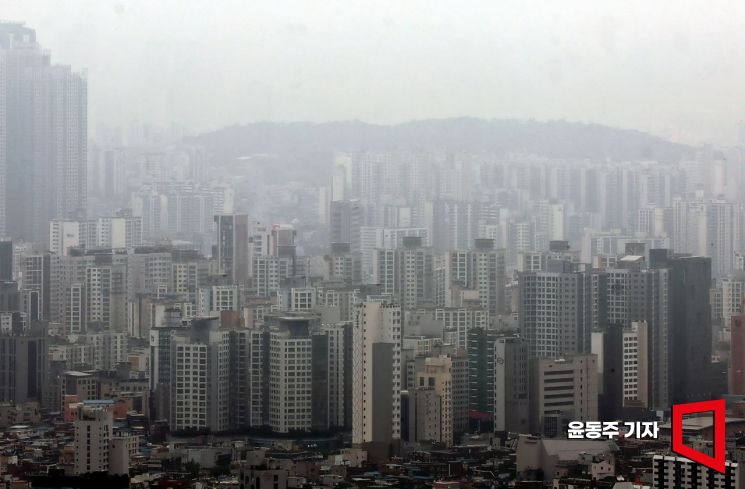 On the 27th, apartment prices in Mapo and Seongdong districts of Seoul were announced to have risen the most sharply since related statistics began to be published in 2013. The price of apartments in Seoul is expected to continue rising for the time being due to optimistic expectations. The photo shows a view of apartment complexes in downtown Seoul from Namsan, Seoul. 2025.06.27 Photo by Yoon Dongju
KDI broke down how each of these factors contributed to changes in the population share of the metropolitan area. The analysis showed that the metropolitan population share rose from 47.4% in 2005 to 49.8% in 2019, with changes in productivity playing a decisive role. If only productivity had changed between 2005 and 2019, while all other factors remained constant, the metropolitan share was estimated to have soared to 62.1%. However, changes in amenity and population accommodation costs provided some buffering effect, limiting the actual increase to 2.4 percentage points.
The report also found that the decline of non-metropolitan industrial cities in the 2010s accelerated metropolitan concentration. As traditional manufacturing industries such as shipbuilding, automotive, and steel contracted, the productivity of major industrial cities-including Geoje, Gumi, Yeosu, and Gunsan-declined, prompting population shifts toward the metropolitan area. Simulation results suggested that if the productivity of these industrial cities had remained at 2010 levels, the metropolitan population share in 2019 would have been 47.2%. If industrial city productivity had increased to the national average, the metropolitan share could have dropped to as low as 43.3%.
Regarding the government’s innovation city and Sejong City policies, the report concluded that "while population accommodation capacity improved, there were limits to boosting productivity." Although large-scale fiscal investments greatly improved transportation and residential infrastructure in Sejong City, its productivity growth rate since the 2010s has lagged behind the national average. As a result, population growth fell short of targets and stagnated at around 400,000 people. The report pointed out, "Infrastructure investment alone is insufficient to drive sustained population inflows."
KDI called for a shift in balanced development strategy as a policy implication. To ease metropolitan concentration, it is necessary to move beyond approaches centered on new town construction or social overhead capital (SOC) expansion, and instead adopt policy tools that can genuinely boost productivity in non-metropolitan cities. The report emphasized the importance of attracting businesses and talent, as well as strengthening agglomeration effects through selective industrial policies.
Additionally, the report suggested that narrowing the gap with the metropolitan area may require accepting some widening of disparities within non-metropolitan regions. Rather than trying to revitalize all areas equally, it would be more realistic to focus resources on a few large non-metropolitan cities and industrial centers to enhance productivity. The report stated, "If the goal of balanced development is to maximize national economic welfare rather than achieve complete population dispersal, then spatial policy must inevitably involve selection and concentration."
© The Asia Business Daily(www.asiae.co.kr). All rights reserved.


















