Commissioner Heo Min: "Eliminating Sunk Costs at the Outset with 'Screening' Before Construction"
UNESCO Recommends "Suspension of Approval," but Seoul Remains Silent
Diplomatic Fallout Feared Ahead of the July 'Busan Assembly'
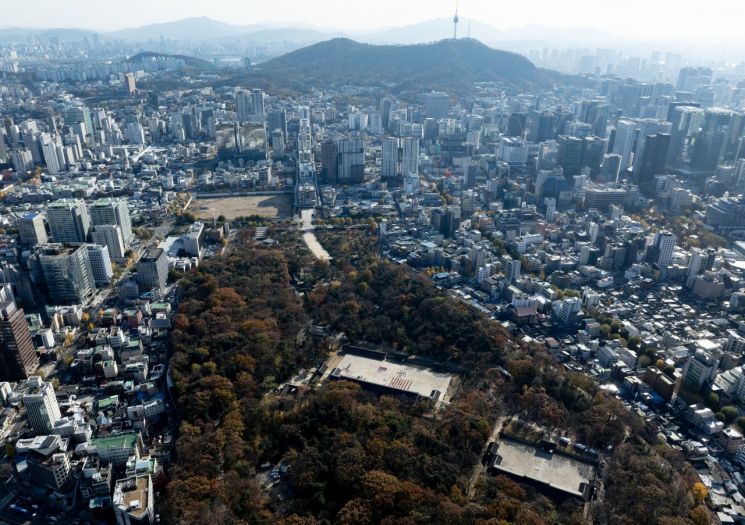
The Sewoon Urban Renewal Promotion District (Sewoon District) development project has reached a critical crossroads. The plan to create a forest of buildings up to 170 meters tall has come into direct conflict with UNESCO's concerns about "damage to the Jongmyo landscape." On January 19, the Cultural Heritage Administration officially announced the institutionalization of the Heritage Impact Assessment (HIA) system at a press briefing held at the Government Complex Seoul, stepping in to mediate. The agency made a bold proposal to the Seoul Metropolitan Government, offering to shorten the assessment period to within one year. This is a decisive move aimed at dispelling the misunderstanding that the HIA is an obstacle to development.
Demolish After Construction? ... 'Preliminary Assessment' Essential to Prevent Sunk Costs
In the construction industry, "sunk costs" are a nightmare. If a project financing (PF) deal worth hundreds of billions of won is secured and the Cultural Heritage Committee intervenes at the final stage of construction, there is no way to reverse the situation.
Heo Min, Commissioner of the Cultural Heritage Administration, has proposed "screening" as a solution. This is a procedure to diagnose potential impacts at the planning stage, before a full-scale assessment. Commissioner Heo promised, "We will minimize administrative procedures to carry out the process quickly and efficiently," and added, "If it is confirmed that there is no impact, the project will be excluded from evaluation altogether, reducing unnecessary administrative costs and time."
 Heo Min, Commissioner of the Cultural Heritage Administration, is giving opening remarks at the World Heritage Impact Assessment press briefing held at the Government Complex Seoul in Jongno-gu, Seoul on January 19, 2026. Photo by Jo Yongjun
Lee Yoonjung, Director of the World Heritage Policy Division at the Cultural Heritage Administration, also stated, "If the Seoul Metropolitan Government participates in the HIA, we will fully support the procedures and deliberations so that the process can be completed within one year." This means that by confirming the scope of development (height, design) before construction begins, the agency guarantees an economic benefit by fundamentally eliminating the risk of the project being halted mid-construction.
Seoul's Silence Drags On ... The Looming 'Busan Risk'
The issue is time. According to the Cultural Heritage Administration, in November of last year, the UNESCO World Heritage Centre recommended that "the impact of the Sewoon District 4 redevelopment project on Jongmyo should be assessed" and requested that "project approval be suspended until the assessment is reviewed." The Seoul Metropolitan Government has not yet responded to a request to provide a status update within a month. Two meetings have been held, but no agreement has been reached.
Experts warn that this situation could lead to a decline in international trust. With the UNESCO World Heritage Committee set to convene in Busan this July, there are concerns that if the host country fails to implement the recommendations, its leadership could suffer a serious blow.
 Heo Min, Commissioner of the Cultural Heritage Administration, is giving a speech at the World Heritage Impact Assessment press briefing held at the Government Seoul Office in Jongno-gu, Seoul on the 19th. January 19, 2026 Photo by Jo Yongjun
Kim Jihong, a professor at Hanyang University, pointed out, "If Korea, as the chair country, delays or responds insincerely to UNESCO's recommendations, its credibility in the international community could be undermined." Director Lee Yoonjung also urged a proactive change in attitude from the Seoul Metropolitan Government, saying, "If we do not comply with the recommendations, it will ultimately bring national dishonor."
Why, then, has UNESCO so strongly recommended a "suspension of approval"? While "building height" is the visible point of contention, beneath the surface lies a major shift in the paradigm of heritage protection. It is not simply a matter of whether or not to construct buildings; rather, the very perspective on heritage has fundamentally changed.
'Preserving the Landscape, Not Just Buildings' ... A Paradigm Shift in Evaluation
The core issue in the Sewoon District development is that the evaluation standard has evolved from "physical preservation" to "visual preservation." Kang Dongjin, a professor of urban planning at Kyungsung University, noted, "The concept of world heritage protection has expanded from focusing on individual structures to the 'historic urban landscape.'" He suggested, "Cities with world heritage sites must consider ways to harmonize development with heritage." If the skyline from the Woldae in front of Jongmyo Jeongjeon to Namsan is blocked by high-rise buildings, it constitutes damage to the site's "Outstanding Universal Value (OUV)," even if the physical distance is considerable.

Commissioner Heo reiterated his request to the Seoul Metropolitan Government, saying, "The HIA is not a system for opposing development or strengthening regulations, but a strategic coordination tool to find the optimal development plan for coexistence. I hope you will provide an innovative and wise solution."
© The Asia Business Daily(www.asiae.co.kr). All rights reserved.
![User Who Sold Erroneously Deposited Bitcoins to Repay Debt and Fund Entertainment... What Did the Supreme Court Decide in 2021? [Legal Issue Check]](https://cwcontent.asiae.co.kr/asiaresize/183/2026020910431234020_1770601391.png)

















