National Heritage Administration Confirms Next Nominee
Shift Toward "Joint Inscription" in Response to North Korea's Move
Two-Track Strategy Expected, Including "Expanded Inscription"
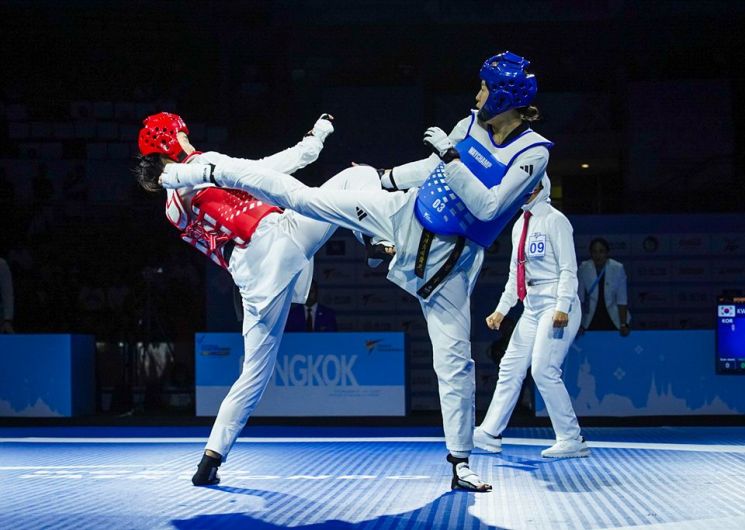
The government has begun the process of registering Taekwondo as a UNESCO Intangible Cultural Heritage. The ultimate goal is a joint listing by both South and North Korea. Attention is focused on whether the two Koreas will join hands once again for a cultural heritage inscription, eight years after the joint inscription of Ssireum in 2018.
The National Heritage Administration announced on the 19th that it recently held a meeting of the Cultural Heritage Committee and selected Taekwondo as the next candidate for UNESCO Intangible Cultural Heritage registration. The government plans to submit the application to the Secretariat of the Intergovernmental Committee for the Safeguarding of the Intangible Cultural Heritage in March.
This decision is closely related to North Korea's swift actions. In March 2024, North Korea submitted an application under the name "Traditional Martial Art Taekwon-Do of the Democratic People's Republic of Korea." UNESCO is currently reviewing the application. The outcome will be announced at the 21st Committee meeting to be held in Xiamen, China, in December this year.
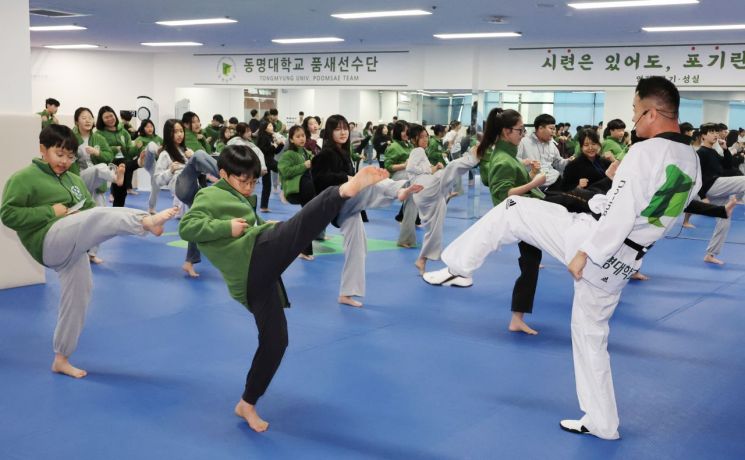
At the time of North Korea's solo application, authorities in South Korea had drawn a clear line, stating that "there were no joint discussions." However, their stance has shifted rapidly in recent days. Since Taekwondo is an indigenous martial art of the Korean Peninsula, the government aims to preemptively avoid disputes over authenticity and unnecessary diplomatic friction that could arise if the two Koreas were to register it separately.
The government's strategy consists of two main approaches. The first is to follow the precedent set by the joint inscription of Ssireum in 2018. Back then, both Koreas submitted separate applications, but through diplomatic efforts by the Moon Jae-in administration and mediation by UNESCO, a historic joint inscription was achieved. The committee unanimously approved the agenda, calling it "an unprecedented decision for peace and reconciliation."
The second approach is an "expansion inscription" method. If North Korea's application, which is already under review, is approved first, South Korea could join later by expanding the scope of the inscription. An official from the National Heritage Administration stated, "We are keeping all options open as we proceed with the process," adding, "Given the precedent of Ssireum, we are prioritizing a joint inscription, but we will respond flexibly depending on the situation."
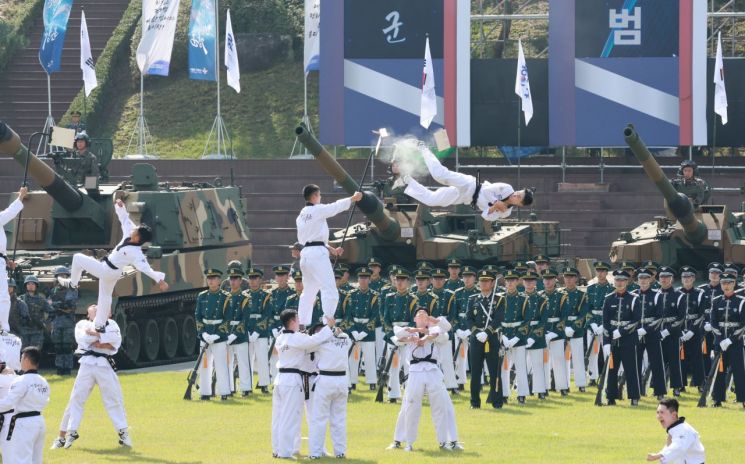
Since 2001, starting with "Jongmyo Jerye and Jongmyo Jeryeak," South Korea has secured a total of 23 UNESCO Intangible Cultural Heritage items, with "The Traditional Knowledge and Skills of Hanji (Korean Paper) Making" up for review this year. Whether Taekwondo will be inscribed will be determined through a review process after the application is submitted, with a decision expected as early as 2028. However, if the process for a joint inscription between the two Koreas gains momentum, a fast-track process, similar to what was applied for Ssireum, cannot be ruled out.
© The Asia Business Daily(www.asiae.co.kr). All rights reserved.
!["The Woman Who Threw Herself into the Water Clutching a Stolen Dior Bag"...A Grotesque Success Story That Shakes the Korean Psyche [Slate]](https://cwcontent.asiae.co.kr/asiaresize/183/2026021902243444107_1771435474.jpg)


















