401 Entries and Over 400 Photographs Included
The National Folk Museum of Korea announced on January 19 that it has published "Social Organization," the second volume of the "Korean Folklore Society Dictionary."
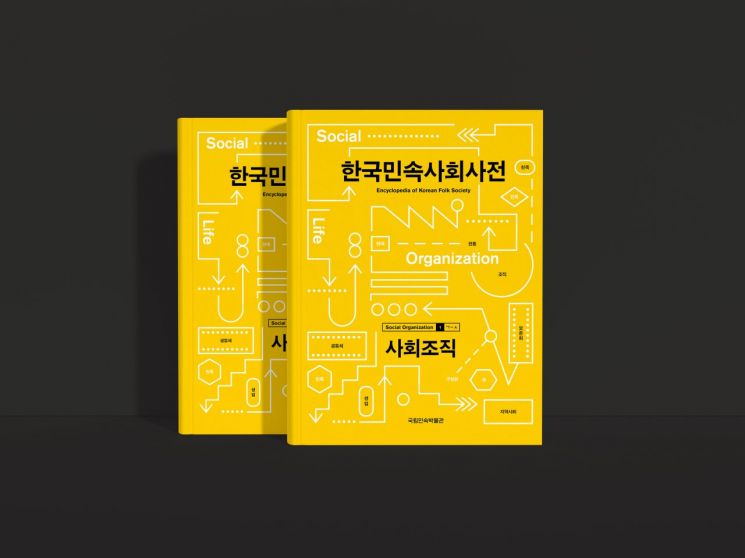
This dictionary systematically compiles and organizes the communities and social organizations of Korean society, encompassing both tradition and modernity, as they have evolved through industrialization, urbanization, and digital transformation. It demonstrates that folklore is not a concept limited to rural societies of the past, but a living culture that continues in modern cities and everyday life.
The "Social Organization" volume consists of 401 entries, approximately 4,800 manuscript pages, and over 400 photographs. It categorizes and details the types and characteristics of Korean social organizations by community living spaces, organizational forms, members, systems, activities, and shared resources.
Alongside local organizations such as women's associations, youth associations, and senior citizens' associations, the dictionary also covers the evolution of administrative organizations from neighborhood offices to residents' self-governing centers and administrative welfare centers, illustrating how the operation of communities has changed as systems and daily life have become intertwined.
New types of community organizations that have emerged amid urbanization and population movement-such as hometown associations, family clan associations, and alumni associations-are also highlighted as key examples. These organizations have restructured traditional community relationships in modern society through kinship, regional ties, and school connections.
Hobby-based groups such as mountaineering clubs, soccer clubs, and baseball clubs are also treated as a type of modern social organization. These clubs serve as communities that not only facilitate leisure activities but also foster intergenerational exchange and social bonds.
Additionally, the volume demonstrates that Korean social organizations have been restructured and maintained beyond national borders in migrant environments, as seen through Korean associations in countries such as Germany, the United States, and Central Asia.
© The Asia Business Daily(www.asiae.co.kr). All rights reserved.

















