Official Campaign to Begin on January 27, Voting Likely on February 8
Majority Sought Based on High Approval Ratings
According to reports from Nikkei and Kyodo News, Japanese Prime Minister Sanae Takaichi is expected to announce her intention to dissolve the House of Representatives at a press conference on the evening of January 19, ahead of the regular session of the National Diet scheduled to convene on January 23. Although she is making this decisive move based on high cabinet approval ratings, it appears unlikely that the ruling Liberal Democratic Party (LDP) will easily secure a majority of seats. The most likely schedule for the House of Representatives election is for the official campaign to begin on January 27, with voting and ballot counting to take place on February 8. If this timeline is followed, it will take 16 days from dissolution to the vote, marking the shortest period in history.
At the press conference, Prime Minister Takaichi is expected to explain the rationale behind dissolving the House of Representatives. The Yomiuri Shimbun, citing sources close to Takaichi, reported that she will likely state the need to seek public confidence in order to establish a stable government foundation capable of advancing economic, diplomatic, and security policies. Citing multiple senior LDP officials, the report also stated that the party aims to secure a majority of 233 seats.
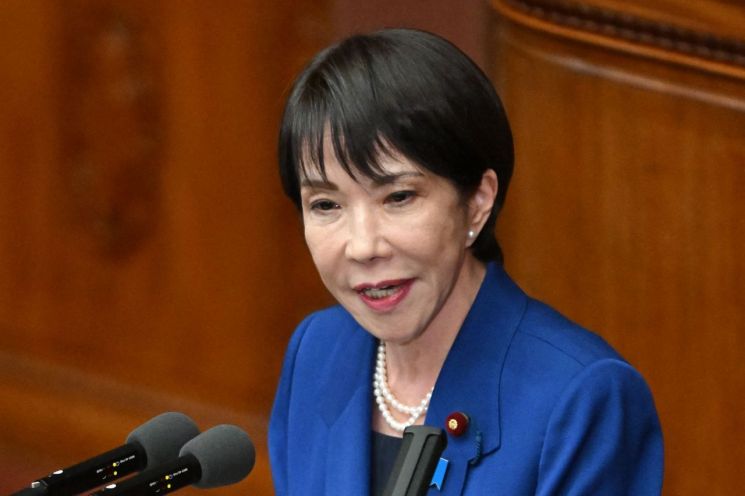
The reason for calling a snap general election is the calculation that a majority can be secured based on the high cabinet approval rating. This move could allow the government to break free from the current situation where opposition parties hold more seats in the upper house and strengthen its grip on state affairs. Until now, Prime Minister Takaichi had been reluctant to hold an early general election, but she has suddenly changed her stance. Currently, the LDP holds only 199 seats on its own, and even with the 34 seats held by its coalition partner, Nippon Ishin no Kai, it barely achieves a majority. Holding the election quickly also has the effect of limiting the opposition's ability to respond.
According to an Asahi Shimbun poll conducted on January 17 and 18, the Takaichi cabinet's approval rating stands at 67%. However, support for the ruling LDP is only half that of the Takaichi cabinet. In a public opinion poll conducted by NHK from January 10 to 12, support for the LDP was only 32.2%.
With the dissolution of the House of Representatives inevitably delaying deliberations on the 2026 budget bill, the aim is to proceed with the review as quickly as possible and to minimize the political vacuum amid an unstable international situation.
This election will see the ruling coalition of the LDP and Nippon Ishin no Kai challenged by the new "Centrist Reform Alliance," formed by the main opposition Constitutional Democratic Party and the third-largest party, Komeito. Komeito has left its coalition with the LDP, formed a new party with the opposition Constitutional Democratic Party, which is critical of the Takaichi cabinet, and is seeking to appeal to centrist voters. On this day, the new party will announce its platform in the morning and its basic policies in the afternoon, officially kicking off the election race. If the new party significantly increases its number of seats in the general election, it will inevitably deal a political blow to the ruling coalition. Competition with the far-right Sanseito, which has gained prominence for its ultranationalist policies, is also a burden for the LDP.
The main issue in the election for both the ruling and opposition parties is expected to be measures to address high inflation. The Yomiuri Shimbun predicted that each party will propose policies such as reducing the consumption tax.
© The Asia Business Daily(www.asiae.co.kr). All rights reserved.
![A Woman Who Jumps Holding a Stolen Dior Bag... The Mind-Shaking, Bizarre Con of a "Human Knockoff" [Slate]](https://cwcontent.asiae.co.kr/asiaresize/183/2026021902243444107_1771435474.jpg)
















