Goyang City Designs Customized Education for Students
Moving Beyond Uniform Support to Stage-Based Innovation
From Special Lectures on Unique Careers to Emotional Recovery
Future Talent 'JUMP UP' Projects Tailored to Each School
From F
Goyang Special City in Gyeonggi Province (Mayor Lee Donghwan) has begun a full-scale restructuring of its education policy framework to align with students’ developmental stages, aiming to establish the “Goyang-Style Education Model.”
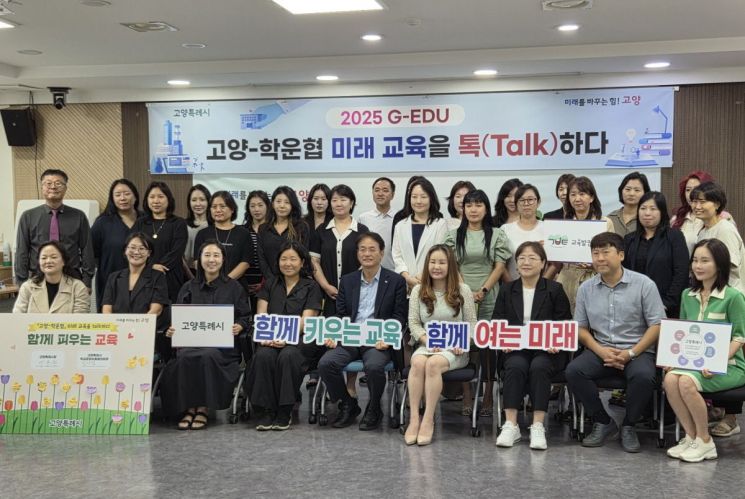 Education policy communication meeting between Goyang City and the School Management Council held in July last year. Provided by Goyang Special City
According to Goyang Special City on January 19, the city is moving away from its previous fragmented and uniform support methods and is promoting the “Goyang EDU-Roadmap,” which connects the entire process from school admission to entry into society as a single flow. This roadmap is characterized by its design, which reflects both students’ developmental stages and the actual needs of the educational field.
Centered on the “Goyang EDU-Roadmap,” which links the entire life cycle of elementary, middle, and high school as a continuous process, the city is actively operating a student growth-oriented education support system by connecting it with the “Goyang Future Talent JUMP UP Project” that expands school autonomy and the “High Goyang” student self-governance project.
The roadmap sets out the competencies students need at each stage, presenting a flow of education that progresses from care and safety to basic skills, emotional development, future technologies, and career exploration. The city is differentiating itself from existing education support methods by restructuring its policy framework based on students’ developmental stages and the actual educational needs of schools.
Goyang EDU-Roadmap: Connecting the Entire Life Cycle of Elementary, Middle, and High School
The Goyang EDU-Roadmap is a customized education support system that takes into account the developmental characteristics and educational needs of each grade, rather than providing uniform support for all grades.
The city determined that supporting individual projects alone could not sufficiently address the rapidly changing educational environment and the needs of schools. Through various communication processes, such as meetings between School Management Council members and parents, and workshops with education office officials, a consensus was reached on the need for tailored support by grade. As a result, the EDU-Roadmap, which connects the entire life cycle from elementary to high school as a single flow, was completed.
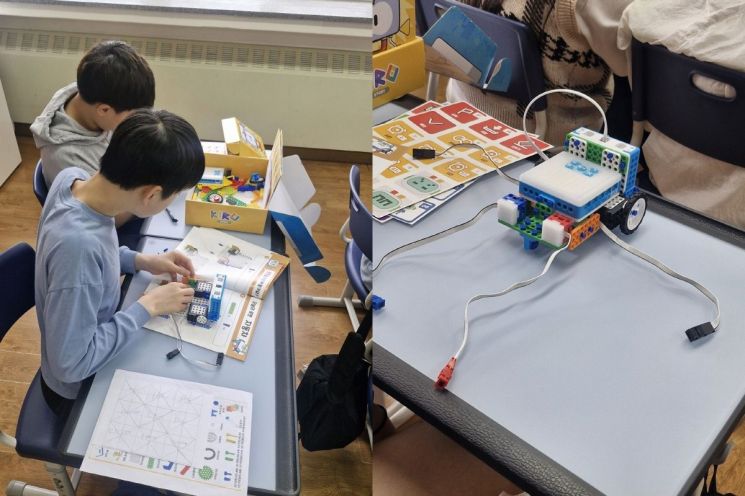
First, the elementary school stage focuses on adapting to school life, ensuring safety, and building basic skills. For first and second graders, after-school care classes are provided to reduce gaps in care; for third and fourth graders, safety education is enhanced with an emphasis on survival swimming. Fifth and sixth graders receive AI coding education to develop basic digital skills.
In middle school, the focus shifts to supporting emotional stability for adolescents and providing experiences with future technologies. First-year students participate in the “Bright School Culture” program to cultivate character and digital citizenship, while second and third-year students expand their career exploration by experiencing future technologies through drone education.
In high school, practical support for transitioning into society is provided. Career and academic counseling teachers visit schools to offer one-on-one customized counseling; career and academic information sessions involve both parents and students; and after the college entrance exam, third-year students participate in youth economics classes to assist with career planning and understanding society.
School-Designed Education: Boosting Students’ Future Competencies with the JUMP UP Project
A representative example of implementing the EDU-Roadmap’s direction in schools is the “Goyang Future Talent JUMP UP Project.” Amid a rapidly changing educational environment, schools independently design their curricula, and students actively participate in project-based learning aimed at strengthening core future competencies such as problem-solving, creativity, and career exploration.
In the first call for applications last year, 35 middle and high schools in the city applied, and 14 middle schools and 18 high schools were selected. A total budget of 540 million won was allocated across four areas: Talent UP, Level UP, Mental UP, and Build UP.
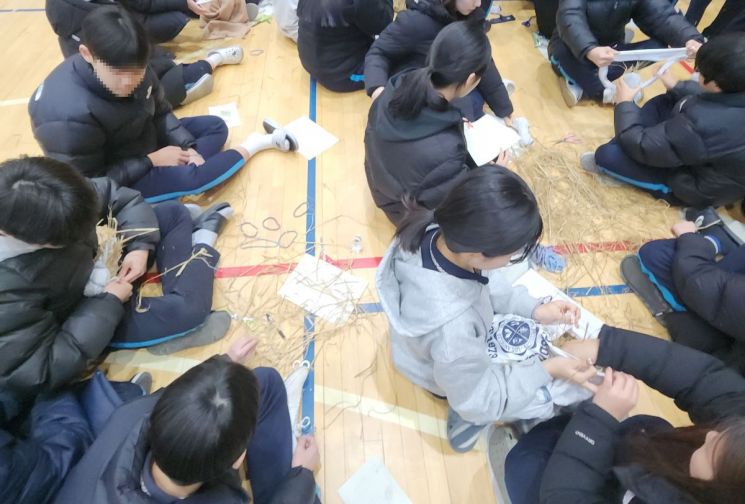 Goyang Middle School JUMP UP Project Early Morning Life Sanctuary Toy Making Activity. Provided by Goyang Special City
At Goyang Middle School, special lectures featuring professionals with unique careers were held to promote “Level UP” and broaden students’ career awareness. Lectures by a financial influencer with 100,000 followers and an Early Morning Life Sanctuary activist introduced students to the evolving world of work and social value activities, expanding their career exploration. Deogi Middle School utilized the academic break at the end of the semester to run the “Mental UP” program, supporting communication and emotional recovery among students through activities such as cooperative tree building, healing coaster making, and baking cookies for emotional recovery.
Additionally, science-focused schools, autonomous public high schools, and specialized high schools have enhanced their competitiveness and students’ learning experiences by creating AI and media education spaces and expanding scientific experiment equipment, thereby “Building UP” educational environments tailored to each school’s characteristics.
“High Goyang” Student Self-Governance Project: Student-Led Planning and Execution
The “High Goyang” student self-governance project strengthens student initiative by allowing students to directly plan and operate school events and programs, creating a fully autonomous model. Last year, nine high schools were selected through a call for applications, each receiving a budget of around 5 million won to run student-led festivals, club fairs, sports festivals, and more.
At Hyangdong High School, the student council led the entire process of planning, organizing, promoting, and operating the festival. Last month’s festival, themed “Everyone is the Main Character: Happier Hyangdong through Festivals,” featured club performances such as band and theater, hands-on and exhibition booths, and a free busking stage. In addition, a parent association snack booth was operated, expanding the event into a community-linked school festival involving students, parents, and the local community.
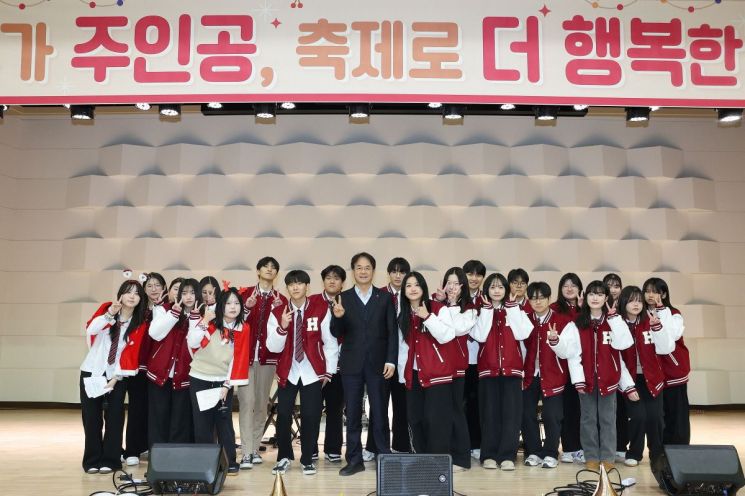 Last month's festival at Hyangdong High School, led by the student council. Provided by Goyang Special City
By planning school events themselves, students gained experience in collaboration, decision-making, and responsible budget management, effectively running a “small society” within the school. This went beyond mere participation in events, resulting in educational effects such as acquiring the leadership and execution skills needed in real society.
This year, the city plans to further develop the student-led education model by expanding participatory projects centered on student councils, school-community linked project-based classes, and future technology-based education such as AI and drones.
Mayor Lee Donghwan of Goyang Special City stated, “We are moving beyond standardized support to create a Goyang-style education model where schools and students work together according to students’ developmental stages. By connecting a variety of programs that meet the actual needs of the educational field, we will provide students with broader and more diverse learning opportunities.”
© The Asia Business Daily(www.asiae.co.kr). All rights reserved.
![From Bar Hostess to Organ Seller to High Society... The Grotesque Con of a "Human Counterfeit" [Slate]](https://cwcontent.asiae.co.kr/asiaresize/183/2026021902243444107_1771435474.jpg)


















